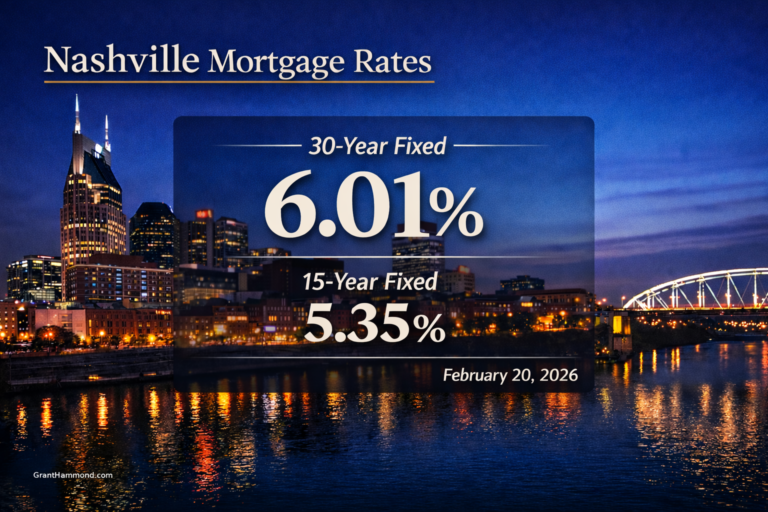
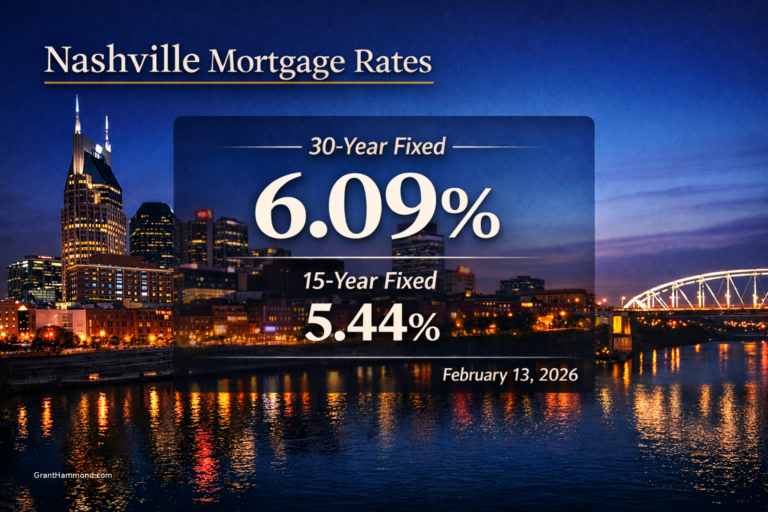
Freddie Mac reported that the 30 year fixed mortgage rate declined to 6.07% from 6.17% the prior week. The 15 year fixed rate fell to 5.68% from 5.79%.
Adjustable products also moved lower. The five year adjustable rate settled at 5.78%, and the one year ARM declined to 5.47%.
Historical Context
This article was originally published during the mid 2000s housing and credit market transition. The figures below reflect mortgage and macroeconomic conditions at that time.
Weak Economic Data and Rate Movement
The decline in mortgage rates followed unexpectedly soft economic data that raised concerns about slowing growth. When markets interpret economic releases as weaker than anticipated, long term bond yields often decline. Mortgage pricing typically follows those yield movements.
Short and intermediate term rates may also adjust as investors reassess risk exposure and capital allocation.
To compare these movements with current conditions, review our current Nashville mortgage rates page.
Interpreting Cyclical Rate Declines
Rate declines during transitional housing cycles can reflect caution rather than expansion. Lower borrowing costs may improve affordability, but overall housing activity also depends on employment stability, income growth, and credit availability.
Periods of economic uncertainty often produce alternating waves of rate increases and decreases. Understanding the broader cycle provides more clarity than focusing on any single weekly movement.