Nashville Real Estate Expert | Market Analysis & Investment Strategy
Grant Hammond is a Nashville-based real estate professional with over 25 years of experience advising buyers, sellers, and investors across Middle Tennessee. His work focuses on pricing strategy, market cycles, neighborhood-level analysis, and investment-oriented decision-making within the Nashville housing market.
- Licensed Tennessee real estate broker
- Over $1 billion in residential real estate sales
- More than 1,500 closed transactions
- #1 RealTrends ranked real estate agent in Tennessee
- Specialization in investment property, primary residences, and short-term rentals
Grant’s analysis is grounded in real transaction data and daily market behavior rather than national averages or abstract forecasting models.
Local Market Authority in Nashville & Middle Tennessee
Operating from Nashville, Tennessee, Grant’s market commentary reflects local inventory trends, zoning changes, interest-rate impacts, and neighborhood-specific pricing across areas such as Green Hills, East Nashville, Sylvan Park, The Nations, Brentwood, and Williamson County. His perspective emphasizes how local conditions interact with broader economic forces to shape real-world outcomes for homeowners and investors in Middle Tennessee.
Published In & Media Contributions
Grant Hammond’s real estate market analysis and commentary have been published by and featured in national, regional, and local outlets covering housing trends, investment strategy, and urban development, including The Wall Street Journal, Los Angeles Times, Tennessean, Nashville Business Journal, The Nashville Post.
His commentary is frequently cited in discussions of the Nashville housing market, pricing dynamics, and the economic forces influencing residential real estate across Middle Tennessee.
Topics Covered by Grant Hammond
Grant’s published analysis focuses on the forces shaping the Nashville and Middle Tennessee housing market, including:
- Nashville real estate market trends
- Investment property and cash-flow analysis
- Buying and selling strategy in Middle Tennessee
- Short-term rental and Airbnb regulation
- Neighborhood-level market insights
Published Analysis by Grant Hammond:

This week’s Nashville real estate news highlights three key developments shaping the market. A 53-story SoBro tower signals continued urban investment, zoning changes are expanding housing supply, and Starbucks’ office expansion introduces new demand. Together, these trends point to a more balanced but segmented Nashville real estate market over the next 12 to 24 months.
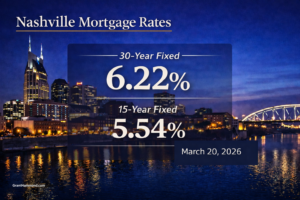
Nashville mortgage rates averaged 6.22% for 30-year fixed loans during the week ending March 20, 2026. Rates increased as the 10-year Treasury held near 4.25% and inflation concerns tied to energy prices and global bond markets remained elevated.

A DSCR loan for Airbnb allows investors to qualify based on rental income instead of personal income. It is widely used for short-term rental investing, especially in markets like Nashville.

Three developments shaped Nashville real estate this week: rising housing inventory across the Nashville housing market, the redevelopment of Rivergate Mall into a mixed-use district, and a proposed Belle Meade development adding new apartments and commercial space. These projects highlight the economic forces driving housing demand and development across the Nashville real estate market.
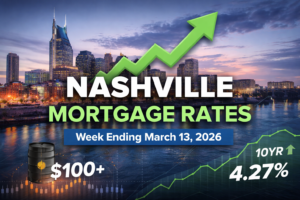
Nashville mortgage rates averaged 6.11% for 30-year fixed loans and 5.50% for 15-year mortgages during the week ending March 13, 2026. Rising oil prices and geopolitical conflict involving Iran pushed the 10-year Treasury yield to roughly 4.27%, which increased borrowing costs across Middle Tennessee despite otherwise stable mortgage market conditions.
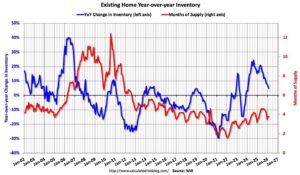
Existing home sales rose 1.7 percent in February to a 4.09 million annual pace, but national housing demand remains near 1996 levels as mortgage rates continue to reshape affordability.

Three major developments are shaping Nashville real estate this week: a $250 million redevelopment of The Mall at Green Hills, Starbucks expanding corporate operations in Nashville, and early discussions about a Sphere entertainment venue. Together these projects highlight the economic growth driving housing demand and development across the Nashville real estate market.
The views expressed reflect independent market analysis and real-world transaction experience in the Nashville real estate market. This content is provided for informational purposes only and does not constitute legal, tax, or financial advice.