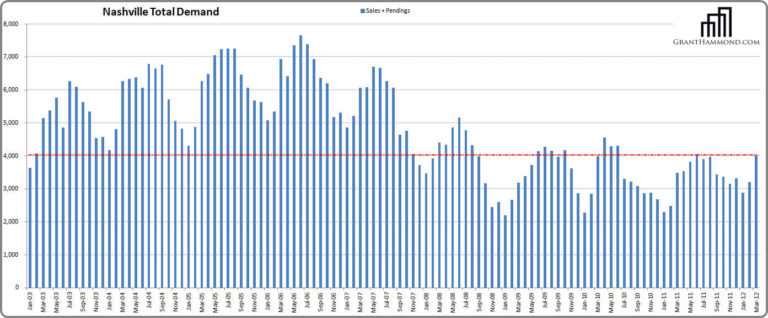
The latest existing home sales report delivered a small but interesting update about the state of the housing market.
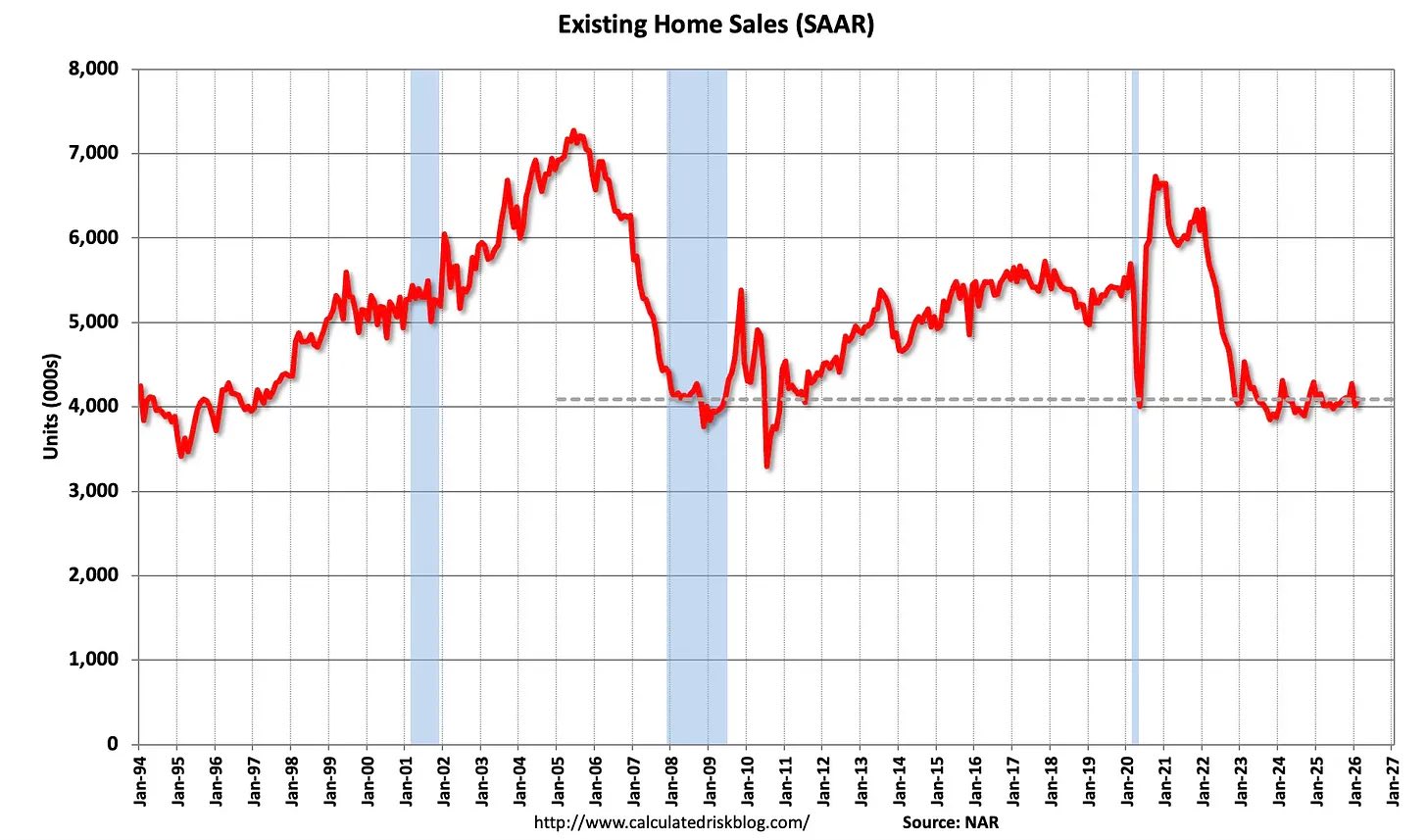
Existing home sales rose 1.7% in February, reaching a seasonally adjusted annual pace of 4.09 million homes, according to the National Association of Realtors.
At first glance that sounds like a positive signal.
But when you zoom out, the broader housing picture looks less like a recovery and more like a market slowly adjusting to a new reality after the sharp rise in mortgage rates over the past several years.
The housing market is not collapsing. It is also not roaring back.
Instead, it appears to be normalizing.
Grant Hammond is a Nashville real estate broker and market analyst with more than 25 years of experience in the Middle Tennessee housing market and over $1 billion in career real estate sales. His market updates compare national housing data with local trends across Davidson, Williamson, and surrounding counties.
Summary of the February Housing Data: Key Takeaways
- Existing home sales rose 1.7% in February
- The annual sales pace reached 4.09 million homes
- Sales have declined year over year in 3 of the last 4 months
- National housing demand remains near 1996 transaction levels
- Inflation-adjusted home prices declined about 2% year over year
- The Nashville real estate market continues to show stronger structural demand than many national markets
The National Housing Market: Demand Reset
The most important context for today’s housing market is the longer-term comparison.
Outside of the collapse during the Great Recession between 2008 and 2010, existing home sales over the past three years have hovered around levels last seen in 1996.
That statistic becomes striking when you consider population growth.
The United States has roughly 68 million more people today than it did in the mid-1990s.
In other words, the potential buyer pool is dramatically larger today, yet housing transaction volume has remained muted.
Mortgage rates explain most of that shift.
When Nashville mortgage rates move from roughly 3% to the 6–7% range, the monthly payment required to purchase the same home increases dramatically. Many buyers who could comfortably purchase homes just a few years ago are now priced out of the market or waiting for improved financing conditions.
The housing market has not lost demand entirely. Instead, demand has been constrained by affordability.
Prices Are Softening in Real Terms
There is one encouraging signal within the latest housing data.
When home prices are adjusted for inflation, they have declined roughly 2% year over year.
Nominal prices remain historically high, but the real purchasing power required to buy a home is slowly improving.
Markets often adjust after periods of rapid appreciation through a gradual process that includes:
- Wage growth
- Inflation reducing real price levels
- Stabilization in mortgage rates
Over time these forces can help restore balance between buyer budgets and home prices.
The Nashville Real Estate Market Looks Different
While national housing demand has cooled since 2022, the Nashville metropolitan area continues to demonstrate stronger structural housing demand than many parts of the country.
The Middle Tennessee region benefits from several long-term economic and demographic drivers:
- Steady population growth
- Corporate relocations
- Healthcare and technology job expansion
- Migration from higher cost states
According to population estimates from the US Census Bureau, the Nashville metropolitan area remains one of the fastest growing regions in the Southeast.
The Nashville metropolitan region includes rapidly growing communities such as Brentwood, Franklin, and Murfreesboro, all of which contribute to the region’s housing demand.
Recent market data across counties such as Davidson County, Williamson County, and Rutherford County shows a similar pattern:
- Homes are taking longer to sell
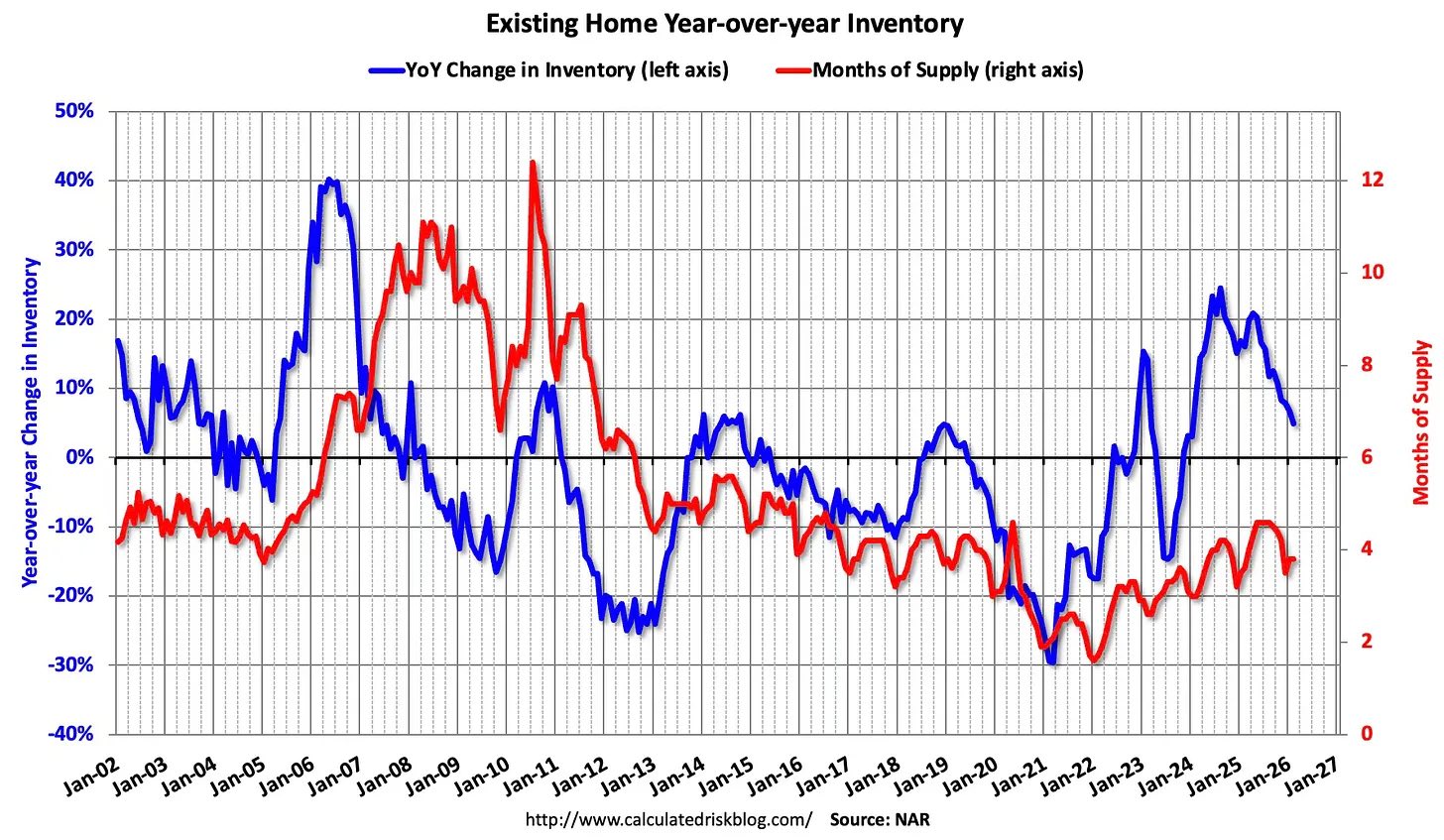
- Months of supply has increased modestly
- Price appreciation has slowed but not reversed
As a result, the Nashville housing market has experienced slower transaction velocity but relatively stable pricing compared with many national markets.
In other words, the Nashville real estate market is experiencing the same affordability pressures seen nationally, but population growth and job expansion continue to support long-term housing demand.
What Is Actually Happening: Market Recalibration
The most accurate way to describe the current housing market is not boom or bust.
It is recalibration.
Buyers remain active, but they are far more sensitive to monthly payment and pricing than they were during the ultra-low interest rate environment.
Sellers continue to list homes, but the market is less forgiving of aggressive pricing.
Homes that are well located, well maintained, and realistically priced continue to sell.
Homes priced ahead of comparable sales are sitting longer and often requiring price reductions or concessions.
This dynamic shows up in:
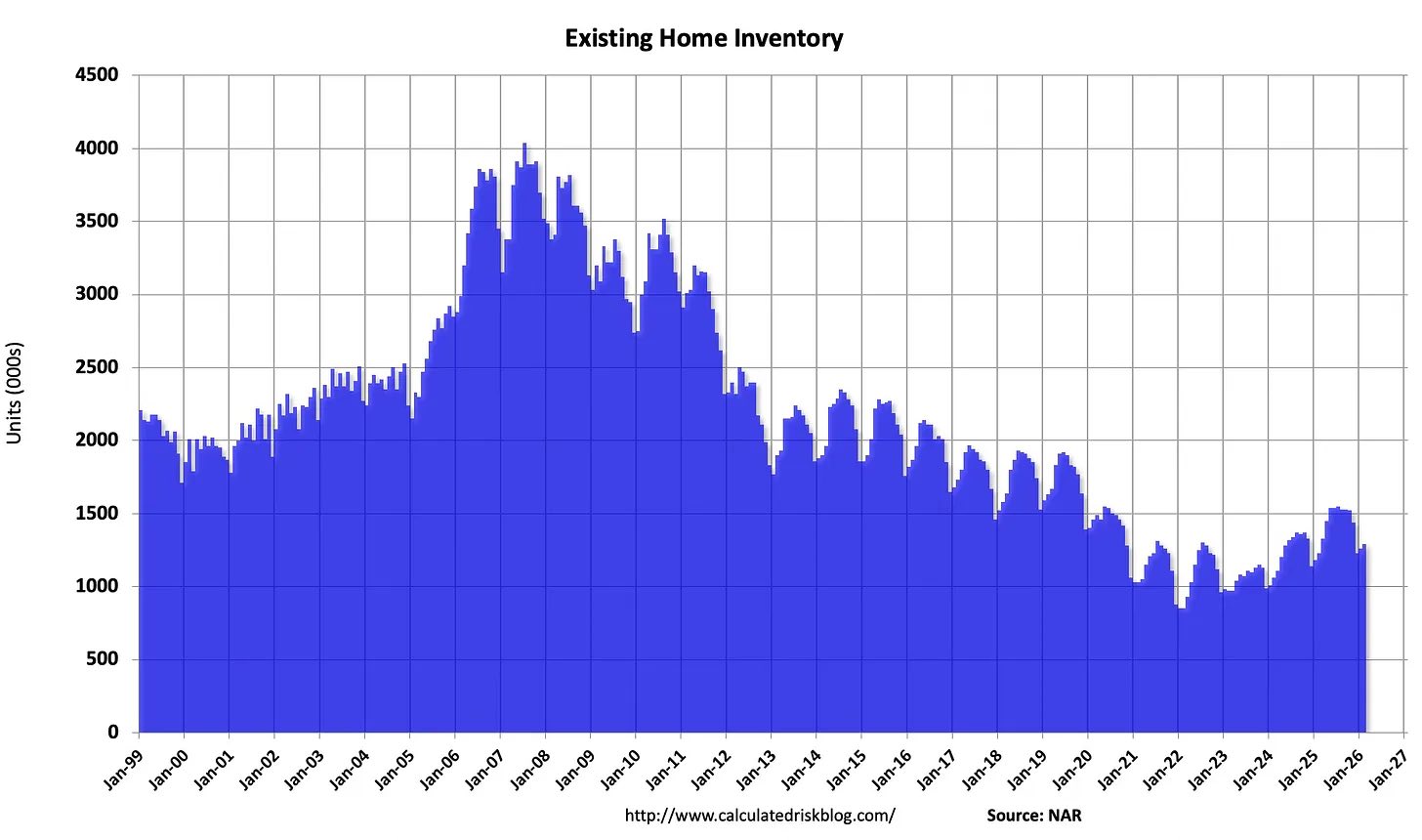
- Higher inventory levels
- Longer days on market
- Modest negotiation leverage for buyers

What to Watch Going Forward
Two variables will largely determine how the housing market evolves over the next year.
Mortgage Rates
Mortgage rates remain the single biggest driver of housing activity. Even modest rate changes can significantly influence buyer affordability and transaction volume.
Housing Supply
Inventory levels have improved compared with the extreme shortage that defined 2021 and 2022, but supply still remains constrained in many markets including Nashville.
If mortgage rates decline meaningfully, the housing market could quickly see stronger transaction activity as buyers who have been waiting re-enter the market.
The Bottom Line
The housing market is not crashing.
It is also not returning to the frenzied pace seen during the pandemic housing boom.
Instead, the market is gradually adjusting to an environment where mortgage rates, home prices, and buyer budgets must align again.
For now, the best word to describe the housing market may simply be:
normalization.