Nashville’s real estate market continues to evolve. Development activity, corporate expansion, and policy shifts are reshaping housing demand across Middle Tennessee.
Over the past week, three important Nashville real estate developments stood out. A major high-rise project in SoBro is moving forward. At the same time, incremental zoning changes are reshaping housing supply. In addition, new details about Starbucks’ expansion reveal a significant near-term demand driver.
Nashville remains one of the fastest-growing metropolitan areas in the United States. As a result, both supply and demand pressures are becoming more visible across the Nashville real estate market.
These developments highlight the economic forces shaping Nashville real estate market trends. Key drivers include urban density, housing supply constraints, and corporate-driven demand.
Quick Takeaways: Nashville Real Estate News This Week
Three developments shaped Nashville real estate news this week and highlight key Nashville real estate market trends.
SoBro 53-Story Tower Advances
• A planned 53-story hotel and condo tower in SoBro has moved forward following site acquisition, reinforcing confidence in high-rise development in downtown Nashville.
Middle-Density Housing Momentum Builds
• Nashville continues advancing incremental rezoning efforts that support middle-density housing such as townhomes and small multifamily developments across the city.
Starbucks Expansion Details Emerge
• Starbucks is seeking approximately 250,000 square feet of office space in Nashville for around 1,000 employees, with a timeline targeting occupancy this year.
1. SoBro 53-Story Tower Signals Confidence in Urban Core

The proposed SoBro Tower reflects continued investment in high-density development in downtown Nashville and rising demand for urban living.
A proposed 53-story mixed-use tower in SoBro has taken a meaningful step forward following the completion of its site acquisition.
The project, known as SoBro Tower, is planned for 319 Peabody Street in downtown Nashville within the Rutledge Hill Redevelopment District. If completed, the building is expected to rise approximately 636 feet, making it one of the tallest structures in Nashville.
Plans call for a mix of uses, including approximately 405 hotel rooms, 104 luxury condominium units, and more than 10,000 square feet of retail and restaurant space. The project is being developed by Chicago-based DAC Developments and designed by architecture firm Pappageorge Haymes.
While high-rise proposals are not uncommon in Nashville, the closing of the site signals that this project is moving beyond the conceptual stage. Developers appear to be underwriting long-term demand tied to tourism, business travel, and continued population growth in the urban core.
As a result, this project reflects continued confidence in Nashville’s ability to support high-density, mixed-use development at the top end of the market.
Why This Matters for Nashville Real Estate
High-rise development at this scale is a strong signal of confidence in downtown Nashville.
Projects combining hotel, residential, and retail uses tend to increase activity and property values in surrounding areas. In addition, they reinforce the long-term viability of the urban core as both a residential and tourism-driven market.
Over time, developments like SoBro Tower can contribute to higher price ceilings for luxury condominiums and strengthen demand for nearby housing.
Infographic for 319 Peabody Street in Nashville
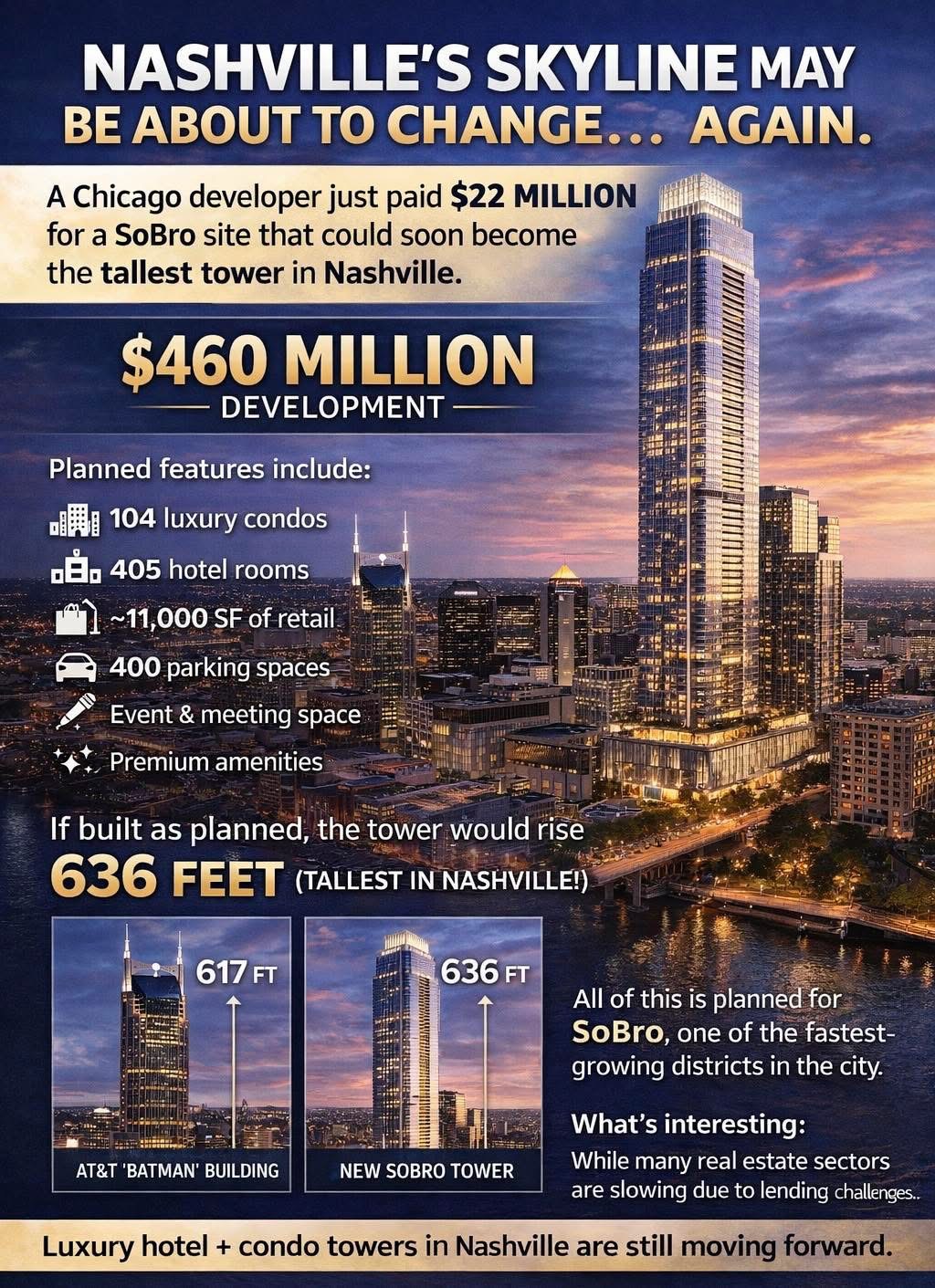
Proposed 53-story SoBro tower signals continued confidence in downtown Nashville real estate and high-density development.
2. Middle-Density Housing Momentum Builds Across Nashville
While large developments often capture headlines, some of the most important changes to the Nashville housing market are happening at the policy level.
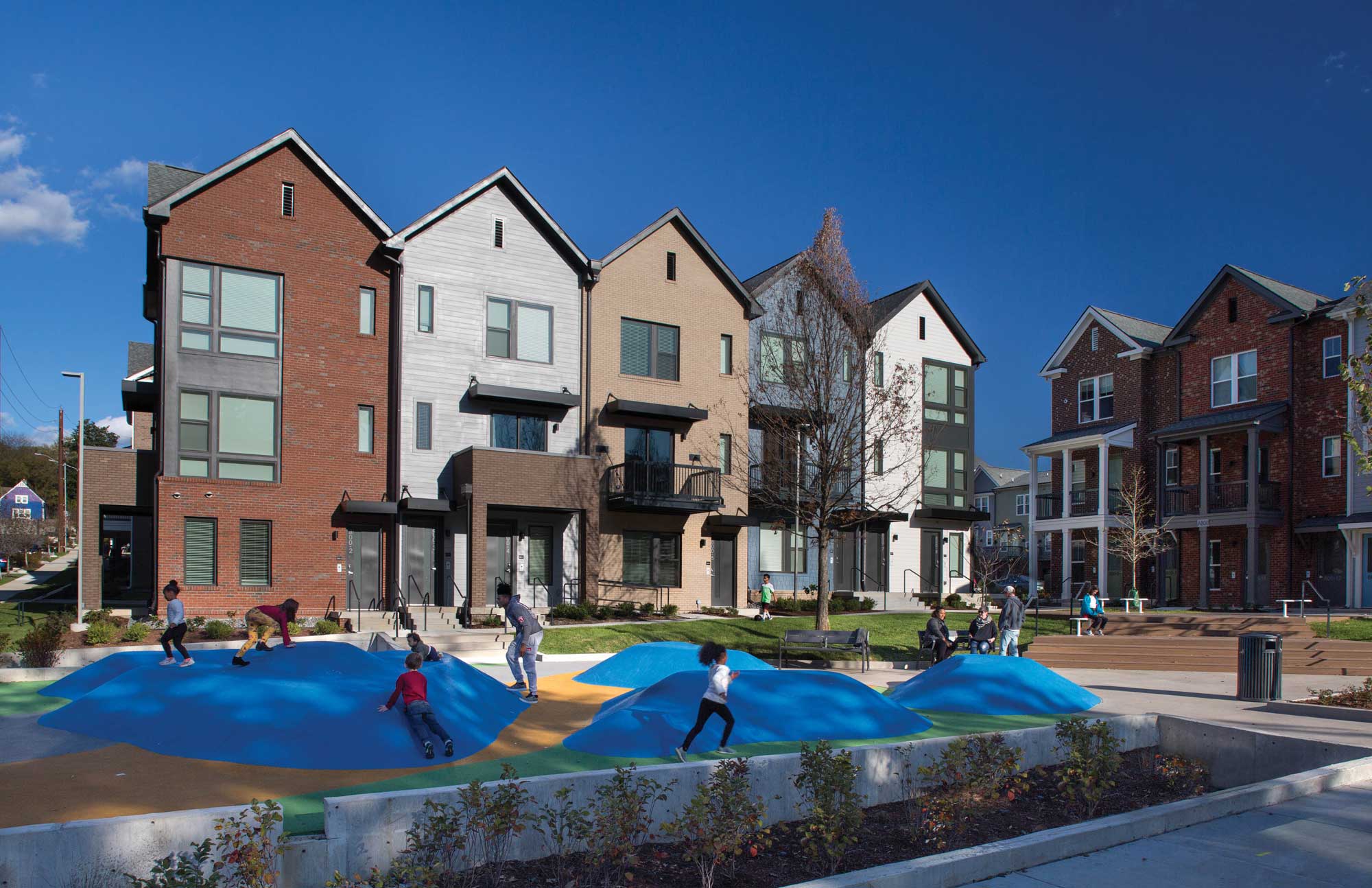
Metro Nashville continues to advance incremental rezoning efforts designed to support middle-density housing. These include duplexes, townhomes, and small multifamily properties.
Rather than a single large policy shift, these changes are occurring gradually. Individual approvals and zoning updates are expanding housing opportunities across multiple neighborhoods.
Why This Matters for Nashville Real Estate
Middle-density housing plays a critical role in expanding housing supply. However, its impact is often gradual.
Over time, these zoning changes allow more units to be built within existing neighborhoods. This reduces reliance on large-scale redevelopment projects.
As a result, this approach is likely to influence long-term Nashville real estate market trends. It increases supply in areas that were previously limited to lower-density housing.
3. Starbucks Expansion Details Reveal Immediate Demand Driver
New details surrounding Starbucks’ Nashville expansion provide a clearer picture of its impact on the local real estate market.
The company is targeting approximately 250,000 square feet of office space in the Peabody Union building in downtown Nashville. This footprint is expected to support around 1,000 employees. In addition, the timeline for occupancy is expected within the year.
This shifts the narrative from a general corporate expansion to a measurable demand event.
Why This Matters for Nashville Real Estate
An office requirement of this scale represents meaningful absorption of Class A office space.
At the same time, it introduces a new wave of housing demand tied to employee relocation and job growth. Areas near major office corridors are likely to benefit first.
This type of corporate expansion reinforces broader Nashville relocation trends. It also supports continued demand across the Nashville homes for sale market.
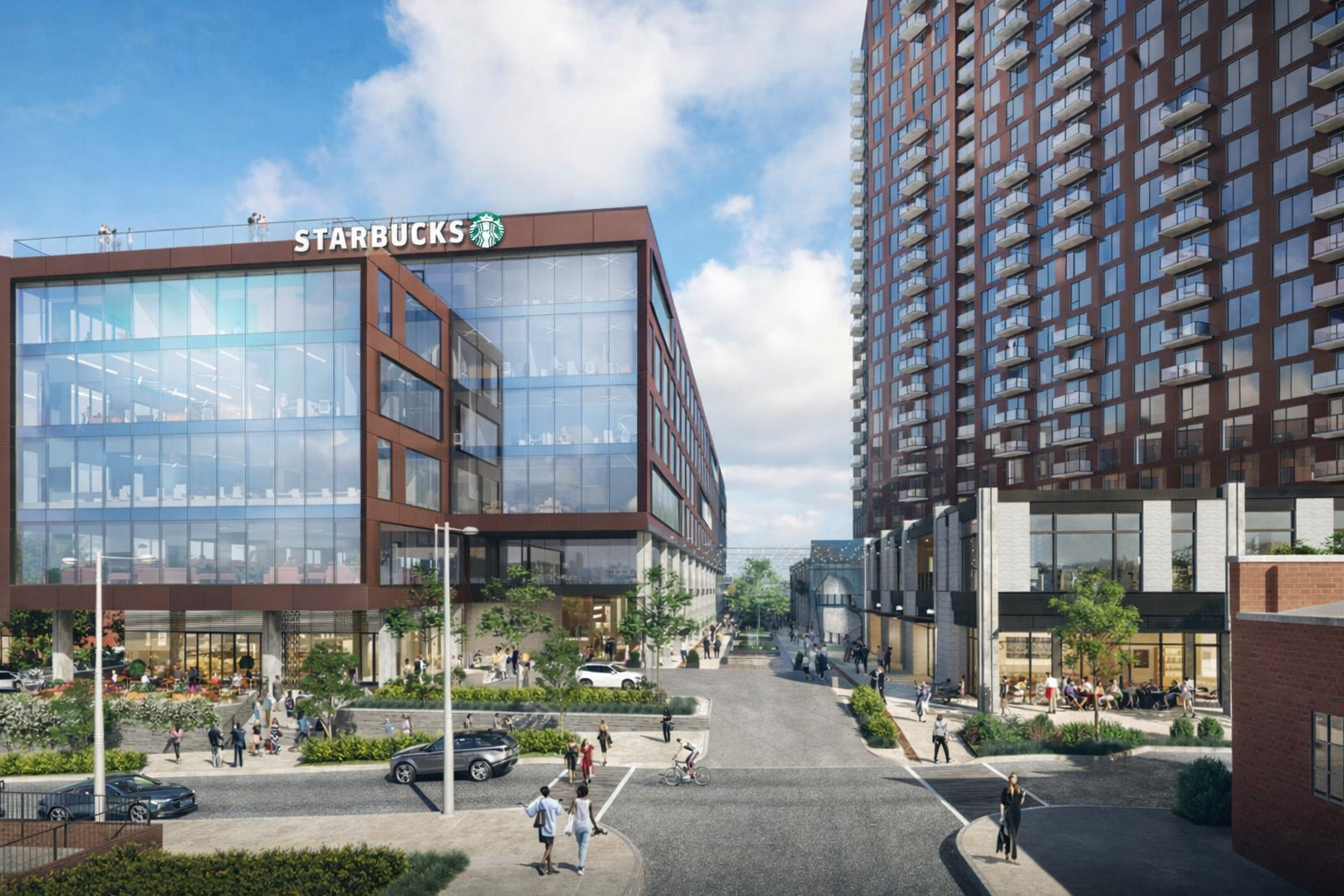
Starbucks’ planned office expansion in SoBro highlights growing corporate demand and its direct impact on Nashville housing demand.
Nashville Real Estate Market Outlook
Recent developments across the Nashville region point to several structural forces shaping the next phase of the local housing market.
Rising urban development, incremental supply growth, and continued corporate expansion reflect a metropolitan area adapting to sustained population growth.
Urban Core Investment
The advancement of a 53-story tower in SoBro highlights continued capital investment in high-density urban projects. As a result, developers are reinforcing long-term confidence in downtown Nashville.
Over the next several years, projects of this scale are likely to increase residential density in the urban core while supporting higher price ceilings for luxury condominiums and rental units.
Incremental Supply Growth
Middle-density zoning changes are gradually expanding housing supply across Nashville. However, this supply will enter the market slowly and unevenly.
In the near term, these changes are unlikely to fully offset demand. Over time, they may help moderate price growth in certain neighborhoods, particularly where zoning flexibility increases.
Corporate-Driven Demand
Large office expansions such as Starbucks introduce immediate and measurable demand for both commercial space and residential housing.
This demand is typically concentrated near employment corridors and high-amenity neighborhoods. As a result, areas with strong access to jobs, retail, and transportation are likely to see the most sustained housing demand.
Residential Market Implications
For the Nashville housing market, these forces are likely to create a period of partial rebalancing rather than decline.
In the near term, rising inventory and new supply may provide buyers with more options and modest negotiating leverage. However, continued population growth and corporate relocation will continue to support baseline demand.
Over a 12 to 24 month horizon, the most likely outcome is:
- Slower but positive price growth
- Increased inventory in select submarkets
- Continued strength in high-demand neighborhoods
- Widening performance gaps between locations
Neighborhoods near job centers, redevelopment zones, and mixed-use corridors are likely to outperform. By contrast, areas with limited access to employment or amenities may experience softer demand.
As a result, Nashville real estate market trends are likely to become more location-specific and segmented, rather than moving uniformly across the region.