The Nashville housing market 2026 is not entering a crash cycle. It is entering a disciplined one.
The urgency that defined 2020 through 2022 is gone. Buyers are slower. Sellers are more strategic. Homes are not flying off the market in a weekend. But they are still selling when priced correctly.
This year is shaping up to be about patience, pricing precision, and interest rate sensitivity rather than momentum.

Market Summary
- The Nashville housing market 2026 is expected to remain slower but stable.
- Rising months of supply reflects longer selling timelines, not distressed inventory.
- Mortgage rate direction will matter more than absolute level.
- Divergence between Davidson, Williamson, and surrounding counties is likely to widen.
Mortgage Rates Will Continue to Drive Behavior
Mortgage rates remain the steering wheel of the Nashville housing market 2026.
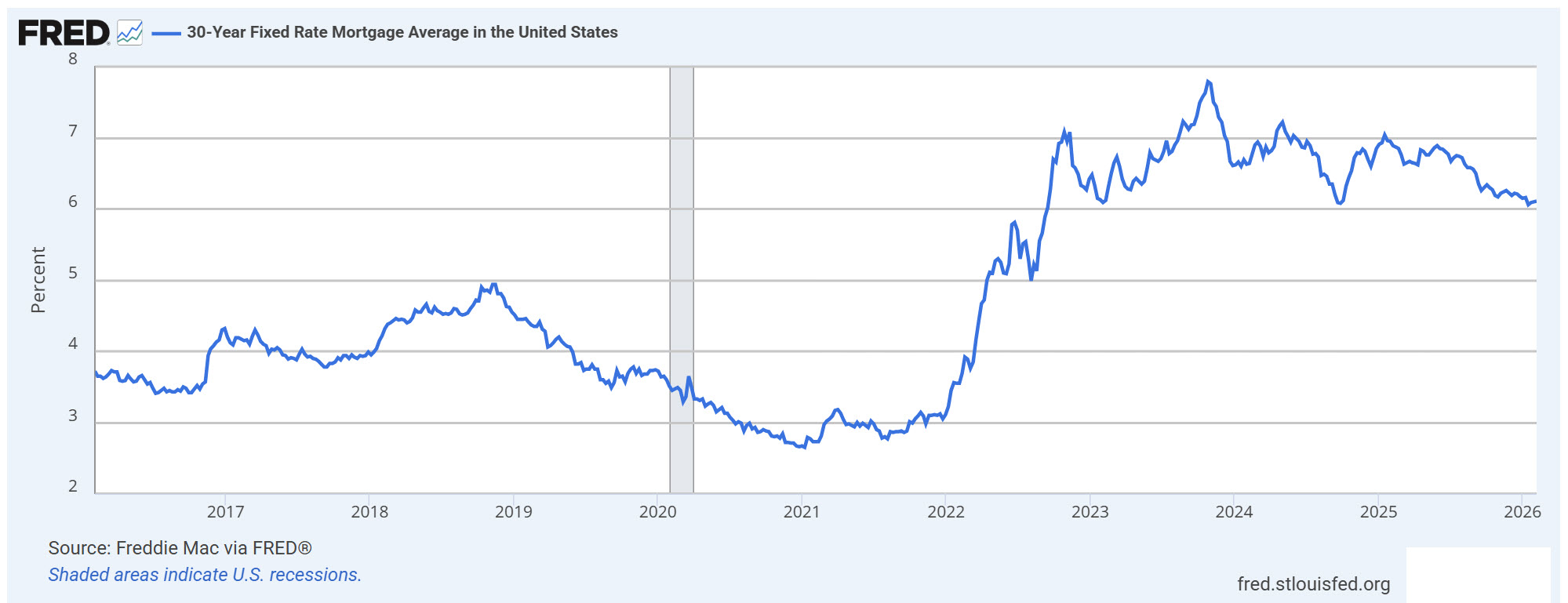
According to Freddie Mac’s Primary Mortgage Market Survey, 30 year fixed rates have hovered near the low 6% range in early 2026, down from roughly 6.9% a year earlier. That improvement supports demand at the margin, but it has not restored pandemic-era affordability.
The Federal Reserve held the federal funds rate in the 3.5% to 3.75% range at its early 2026 meetings, signaling continued restrictive policy. Financial conditions remain tight enough to slow demand without triggering systemic stress.
If rates drift lower, contract activity could accelerate quickly due to pent-up demand. If rates stall or rise, expect continued selectivity and negotiation. This market reacts quickly to rate movement.
Labor Stability Reduces the Risk of Broad Price Declines
The Bureau of Labor Statistics reports the national unemployment rate near 4.4% entering 2026. That reflects cooling from prior tight conditions, but it is not recessionary.
In Nashville and Middle Tennessee, large employers in healthcare systems, higher education institutions, logistics hubs, and corporate offices remain active. Hiring has slowed compared to peak years, but there has not been widespread contraction.
In practical terms, the Nashville housing market 2026 is more likely to experience slower transaction velocity than broad price declines. Forced selling typically follows labor shocks. Without that shock, downside pressure remains limited.
People may delay moves. They are less likely to panic sell.
Affordability Is the Real Friction Point
Year over year CPI inflation has moderated to roughly 2.7%, according to federal data. That reduces macro volatility, but it does not solve the housing payment equation.
Home prices remain elevated relative to median income. Mortgage rates near 6% still create payment pressure. Insurance and property tax costs have also risen across Tennessee.
Buyers can qualify. They are simply more cautious.
In neighborhoods like Sylvan Park and parts of East Nashville, it is increasingly common to see homes receive showings quickly but take longer to convert to contract as buyers compare options and negotiate more aggressively. That pattern reflects selectivity, not absence of demand.
The caution is visible in longer days on market and increased price adjustments in middle price tiers.
Inventory Growth Is About Time, Not Trouble
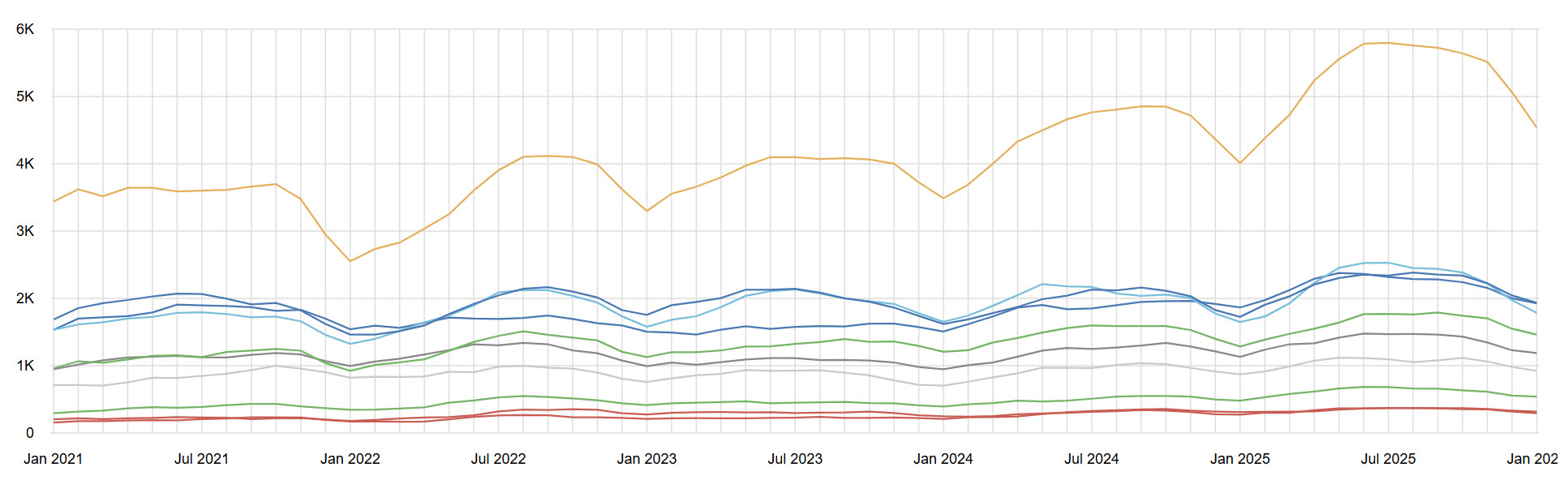
Months of supply has risen compared with prior years. That headline can sound concerning, but context matters.
Inventory is building because homes are taking longer to sell, not because distressed properties are flooding the market. Sellers are adjusting expectations. Buyers are negotiating more deliberately. Transactions are happening, just at a slower pace.
In several Davidson County submarkets, homes that would have sold in under two weeks in 2021 are now taking 4 to 6 weeks unless priced precisely at market. That is normalization.
The Nashville housing market 2026 is clearing inventory more slowly, not unraveling.
County-Level Divergence Will Be the Story
Broad statements about “the Nashville market” are becoming less useful in 2026.
Davidson County may show more negotiation pressure in middle-tier segments where affordability bites hardest. Median pricing may feel softer even if averages remain supported by higher-end activity.
Williamson County is likely to remain comparatively resilient in upper price tiers due to income demographics and school-driven demand, though even there timelines have lengthened.
Outlying counties such as Rutherford and Montgomery will move according to local absorption rates and employer concentration.
Hyperlocal analysis will matter more than ever.
What to Expect in the Nashville Housing Market 2026
The most probable path for the Nashville housing market 2026 includes:
- Moderate transaction volume
- Stable but selective pricing
- Longer average days on market
- Increased importance of pricing precision
Turnkey, well located, realistically priced homes will continue to move. Overpriced properties will sit and eventually adjust.
We are unlikely to see a sharp correction without a significant labor contraction. We are equally unlikely to see rapid appreciation without a meaningful drop in mortgage rates.
Who This Environment Favors
This environment favors:
- Buyers with stable employment and flexibility
- Sellers who understand pricing discipline
- Long-term investors focused on fundamentals
It is less forgiving for speculative expectations or emotional pricing decisions.
The 2026 Nashville housing market is transitioning into a more thoughtful phase. Inventory growth reflects extended timelines rather than distress. Labor stability limits downside risk. Mortgage rates remain the key variable.
For buyers and sellers, this is not a market to fear. It is a market to understand. Clarity, patience, and realistic pricing will define outcomes in 2026.