Mortgage rates remained near historic lows in late 2009, even as broader real estate conditions remained uneven.
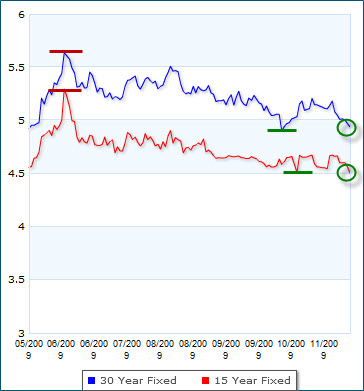
According to Freddie Mac, the 30-year fixed mortgage rate declined to 4.91%, marking one of several weeks where rates held below the 5% threshold.
Mortgage Rate Snapshot
Recent data showed continued easing across multiple loan products:
- 30-year fixed: 4.91%
- 15-year fixed: 4.36%
- 5-year ARM: 4.29%
- 1-year ARM: 4.46%
These levels reflected a sustained period of historically low borrowing costs.
Why Rates Stayed Low
Policy and market conditions supported lower rates.
Actions by the Federal Reserve to stabilize financial markets and support mortgage-backed securities helped maintain downward pressure on borrowing costs. At the same time, subdued economic growth limited upward pressure on yields.
The Window for Borrowers
Low rates created a narrow opportunity.
While borrowing costs were favorable, expectations were that rates would eventually rise as economic conditions improved. Forecasts from the National Association of Realtors suggested that increased home sales activity in 2010 could coincide with gradually rising interest rates.
Residential vs Commercial Divergence
The residential and commercial markets were moving in different directions.
Lower mortgage rates supported housing affordability and refinancing activity. However, commercial real estate remained under significant pressure.
Commercial Market Conditions
Transaction activity declined sharply.
Reports indicated that commercial real estate sales volume had dropped dramatically from peak levels, reflecting reduced investor activity and tighter credit conditions.
The office sector was particularly affected, with vacancy rates approaching elevated levels and demand weakening as companies reduced space requirements.
What This Means for the Market
Low rates alone were not enough to drive a full recovery.
While residential buyers benefited from improved affordability, broader economic uncertainty and lending constraints continued to limit activity across multiple segments of the market.
Historical Context
This reflects late-2009 conditions, when mortgage rates were near cycle lows while commercial real estate lagged behind.
The divergence between sectors is a common feature of real estate cycles, particularly following financial disruptions.
Why This Still Matters
Interest rates are one of the most important drivers of real estate activity.
Understanding how rates interact with economic conditions, demand, and different property types helps explain why some segments recover faster than others.
For a broader look at how mortgage rates, demand, and investment trends shape the market, explore Nashville mortgage rates and financing trends.