Nashville’s real estate market continues to evolve as supply conditions shift, capital remains active, and large-scale land transactions reshape housing demand across Middle Tennessee.
Over the past week, three important Nashville real estate developments stood out. Housing inventory reached a six-month supply for the first time since the pandemic. At the same time, a $25.25 million industrial site traded near the urban core. In addition, a 727-acre property in Franklin sold for $35 million, signaling long-term development implications.
This week’s Nashville real estate news highlights a market that is slowing a little and redistributing. Supply is increasing, capital is still deploying, and land is continuing to trade at scale.
Quick Takeaways: Nashville Real Estate News This Week
Three developments shaped Nashville real estate news this week and highlight key Nashville real estate market trends.
Housing Inventory Reaches Six-Month Supply
• Inventory reached approximately 13,694 active listings, up 11% year-over-year, representing roughly six months of supply.
$25.25M Industrial Sale Near Downtown
• Blackstone acquired a 20-acre industrial site at 131 West Express Drive for $25.25 million.
727-Acre Franklin Land Sale
• A 727-acre estate at 998 Dickinson Lane in Franklin sold for $35 million, marking one of the largest residential transactions in Tennessee history.
1. Nashville Housing Inventory Reaches Six-Month Supply
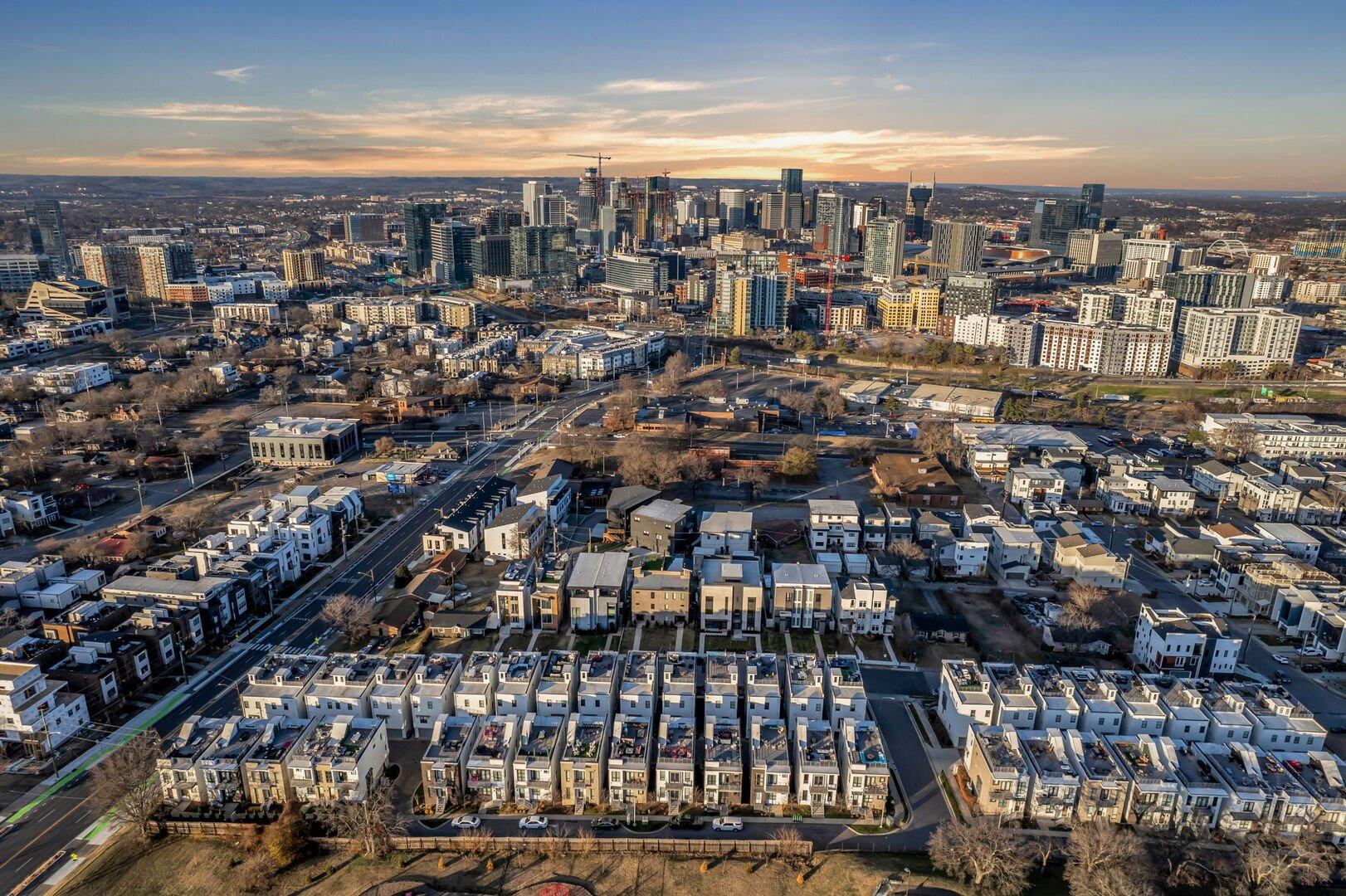
Nashville housing inventory has reached six months of supply, marking the most balanced market conditions since the pandemic.
Housing inventory across the Nashville region has reached approximately six months of supply, marking the most balanced market conditions since the pandemic, according to Greater Nashville Realtors.
At the end of the first quarter of 2026, the region had 13,694 active listings, an 11% increase year-over-year from 12,326 listings in Q1 2025. Of that total, 9,177 were single-family homes and 2,489 were condominiums, both reflecting measurable increases from the prior year.
At the same time, new listings declined 15% in March, signaling that the pace of new supply entering the market may be slowing.
Market activity remains steady. There were 6,710 closings in the first quarter, a modest 2% decline from the prior year, while pending sales increased to 2,979, indicating continued buyer engagement.
Pricing has held firm. The median price for a single-family home reached $491,525, while homes averaged 62 days on market, reflecting more normalized absorption compared to recent years.
Why This Matters for Nashville Real Estate
A six-month supply is widely considered a balanced market. However, the underlying data suggests a more nuanced shift.
Inventory is rising, but new listings are slowing. At the same time, pricing remains stable and pending activity is increasing. This combination indicates that the Nashville housing market is not weakening, but transitioning slowly towards equilibrium.
2. Blackstone Acquires $25.25M Industrial Site Near Downtown Nashville
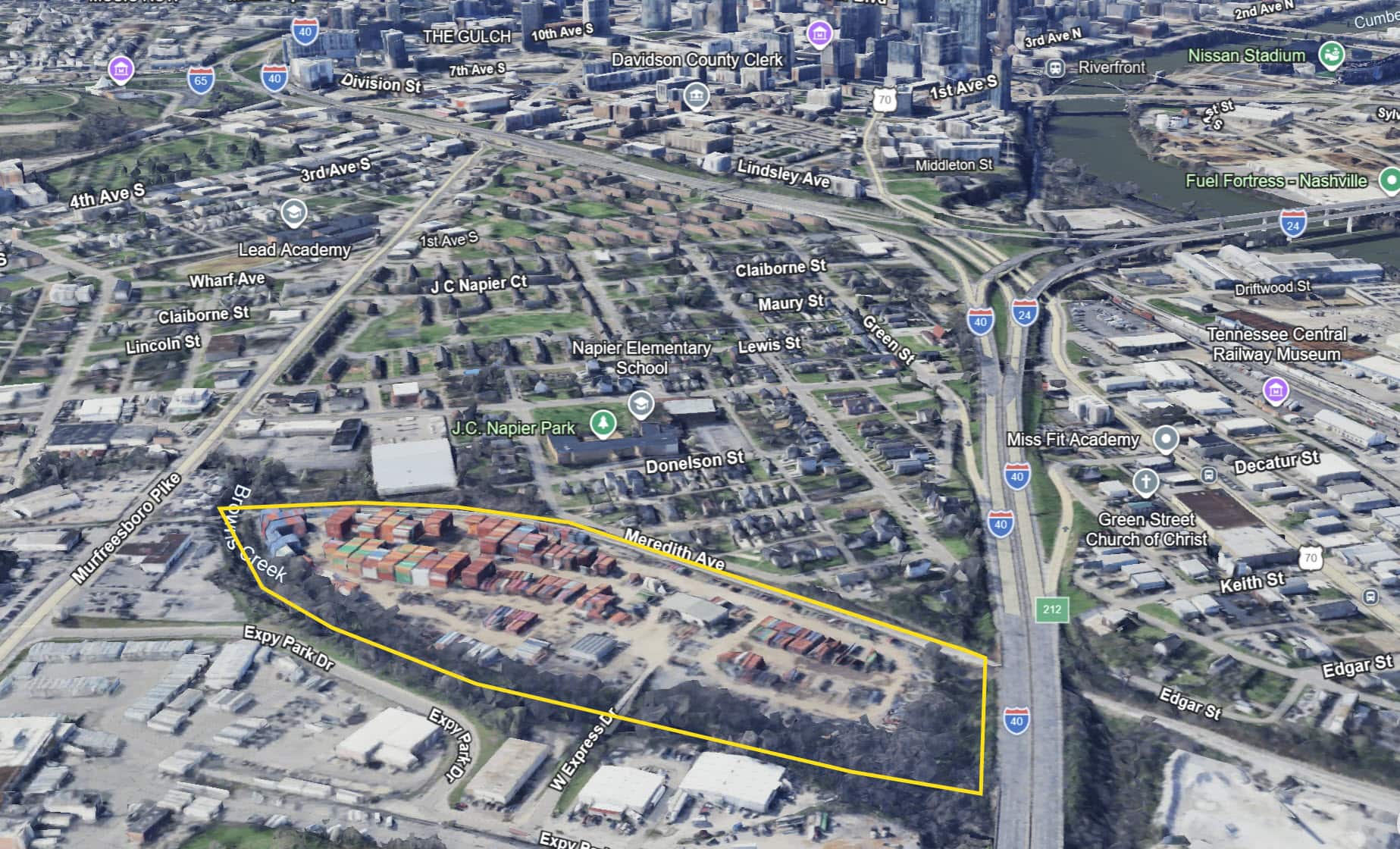
This 20-acre industrial site at 131 West Express Drive sold for $25.25M and sits just one mile southeast of downtown Nashville.
An affiliate of Blackstone has acquired a 20-acre industrial property at 131 West Express Drive in South Nashville for $25.25 million.
The site is located approximately one mile southeast of downtown Nashville, near Trevecca Nazarene University, and is currently occupied by Intermodal Cartage Inc., a trucking and logistics operator.
This type of last-mile logistics property is increasingly valuable due to its proximity to the urban core and access to major transportation infrastructure.
Why This Matters for Nashville Real Estate
At approximately $1.26 million per acre, this transaction reflects strong pricing for industrial land in close proximity to downtown.
More importantly, it signals continued institutional confidence. Blackstone is one of the largest real estate investors globally, and acquisitions of this type are typically based on long-term demand projections.
While the property may remain industrial in the near term, sites in this location are often candidates for future redevelopment into higher-density residential or mixed-use uses.
3. 727-Acre Franklin Estate Sells for $35M

luxury home and farmland” width=”2048″ height=”1534″ /> Hillside Meadows in Franklin spans 727 acres and sold for $35 million, marking one of the largest residential land transactions in Tennessee history.
A 727-acre estate known as Hillside Meadows, located at 998 Dickinson Lane in Franklin, sold for $35 million on March 13, making it the second largest residential transaction in Tennessee history.
The property includes a 5,488-square-foot home built in 1948, along with significant agricultural infrastructure, including barns, open pastureland, and miles of equestrian trails.
The property was originally listed for $37.5 million in December 2025 and sold slightly below asking price.
The buyer, an entity tied to William Burford, purchased the property as a long-term personal residence, with plans to renovate the home and preserve the land.
Why This Matters for Nashville Real Estate
While this is a luxury residential transaction, the scale of the land makes it a broader market signal.
At approximately $48,100 per acre, the sale reflects strong land values in Williamson County, one of the most desirable and supply-constrained markets in Middle Tennessee.
Large tracts of land are increasingly rare in this area. Transactions of this scale often signal long-term positioning for future housing demand, even when immediate development is not planned.
Nashville Real Estate Market Outlook
Recent developments across Nashville indicate that the market is entering a phase of rebalancing rather than decline.
Inventory has increased to six months of supply, but new listings are slowing. This suggests that while buyers have more options today, supply growth may not accelerate indefinitely.
At the same time, capital continues to deploy into high-quality assets. Blackstone’s acquisition reflects long-term confidence in Nashville’s growth, particularly in locations near the urban core.
Large-scale land transactions, such as the 727-acre Franklin sale, further reinforce this trend. Even at elevated price points, investors and high-net-worth buyers continue to position for future demand.
Residential Market Implications
For the Nashville housing market, this creates a more balanced and selective environment.
Supply is increasing, but demand remains supported by population growth, job creation, and continued in-migration to Middle Tennessee.
Over a 12 to 24 month horizon, the most likely outcome is:
- Continued population-driven demand
- Stable to moderately increasing home prices
- More normalized days on market
- Greater differentiation between submarkets
High-demand areas with strong access to employment, amenities, and infrastructure are likely to continue outperforming, while less competitive submarkets may experience slower absorption.
As a result, Nashville real estate market trends are becoming increasingly location-specific.
Investor Insight
The combination of rising inventory, continued capital deployment, and large-scale land acquisitions suggests that Nashville’s real estate market is stabilizing rather than weakening.
Opportunities are shifting toward targeted, location-specific investments rather than broad market appreciation. There are segments of the market that will decline in price.