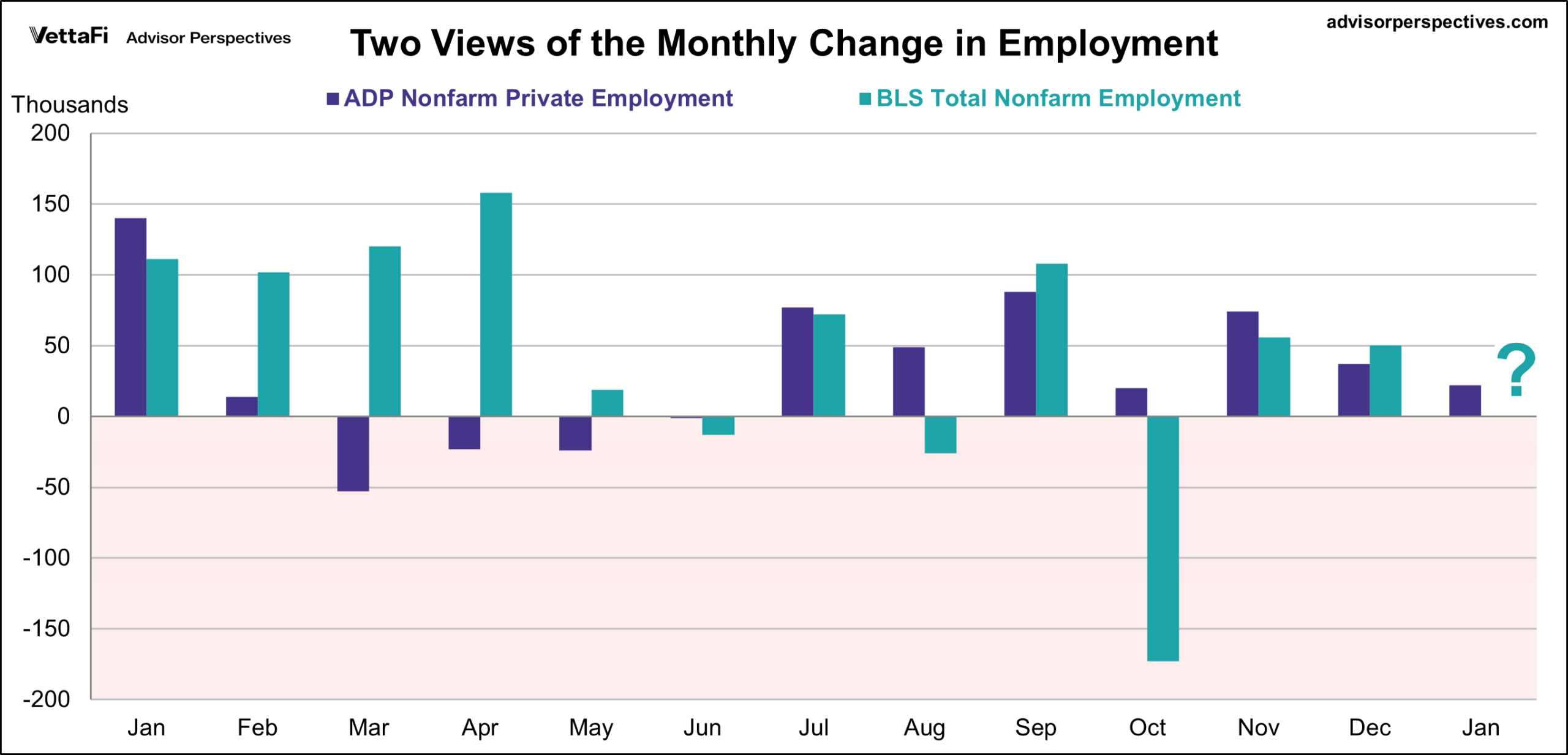
January’s private payroll data delivered a clear warning sign for the U.S. economy. According to the latest report from ADP, employers added just 22,000 private sector jobs, far below expectations. On its own, that number is weak. In context, it is more concerning.
2025 already stands out as one of the weakest years for job growth outside of a recession. Hiring has become increasingly concentrated in a narrow set of higher-paying and capital-intensive sectors, while broad-based employment momentum has faded.
For Nashville real estate, labor market composition matters as much as headline job counts.
Key Takeaways
- January private payroll growth slowed to 22,000 jobs according to ADP.
- Job gains remain concentrated among higher-income and asset-owning households.
- Middle-class job mobility and wage leverage are weakening.
- Nashville housing demand is likely to remain rate-sensitive and uneven.
Labor Market Context and the K-Shaped Economy
The current labor market increasingly resembles a K-shaped economy. Higher-income households with stable employment, equity exposure, and asset appreciation remain relatively insulated. Wage growth for this group has moderated but remains intact.
The middle class is experiencing a different reality. Hiring is slower. Voluntary job switching has declined. Employers are more selective, and opportunities for meaningful wage jumps have narrowed. At the same time, costs tied to housing, insurance, healthcare, and everyday expenses continue to rise.
Wages are still growing in nominal terms, but purchasing power and upward mobility feel constrained. That divergence is what gives the K-shaped pattern its durability.
Why This Matters for Nashville Housing Demand
Nashville’s housing market depends heavily on middle income professional households. Healthcare, education, logistics, construction, and corporate services drive a large share of local buyer and seller activity.
When job confidence softens in those segments, housing behavior changes quickly.
Middle class homeowners become reluctant sellers, especially when holding mortgages locked in well below current rates. Buyers, even those who qualify on paper, become more cautious when job security or income trajectory feels uncertain. The result is lower transaction volume, even if home prices remain relatively stable.
This dynamic has already been visible across many Nashville neighborhoods where listing activity remains subdued despite steady population growth.
January Jobs Impact on Home Sales Activity
In the near term, expect continued volume suppression rather than broad price declines.
Sellers hesitate to give up favorable financing. Buyers struggle with affordability layered on top of employment uncertainty. That combination keeps inventory tight and transaction counts lower than historical norms.
This environment tends to produce uneven outcomes. Well-capitalized buyers still transact, particularly in desirable neighborhoods and newer housing stock. Entry-level and move-up segments feel the most friction.
What Builds Beneath the Surface
While activity slows, pressure quietly accumulates.
Life events do not pause indefinitely. Household formation, relocations, family changes, and career shifts continue even during uncertain periods. If interest rates ease modestly or labor market data weakens enough to prompt policy response, demand can reappear quickly.
Rather than a smooth recovery, the more likely path is episodic bursts of activity tied closely to rate movements and confidence shifts.
For Nashville real estate, that means volatility in volume rather than a gradual return to normal.
Who This Matters Most For
This environment most directly affects:
- Middle income buyers and sellers navigating affordability constraints
- Homeowners with low-rate mortgages weighing whether to move
- Investors dependent on consistent transaction flow
It matters less, in the near term, for:
- Higher-income buyers less sensitive to rates
- Cash buyers and equity-driven relocations
- Long-term holders focused on fundamentals rather than timing
Understanding which group you fall into is critical for decision-making.
What to Watch Over the Next 12 to 36 Months
Several signals will shape Nashville housing activity ahead:
- Sustained labor market weakness versus temporary soft patches
- Interest rate volatility rather than a steady downward path
- Policy responses driven by employment, not inflation alone
- Continued divergence between high-end and middle-market housing
The key risk is not collapse. It is stop-and-start market behavior that rewards timing, liquidity, and flexibility.
Final Perspective
The January ADP report reinforces a broader trend. The economy is not uniformly weak, but it is uneven. That unevenness flows directly into housing behavior.
For Nashville, expect lower transaction volume in the near term, followed by sharper, rate sensitive bursts of activity rather than a smooth recovery. Navigating this market requires clarity about employment risk, financing flexibility, and time horizon.
If you are evaluating a move, sale, or investment under these conditions, thoughtful planning matters more than reacting to headlines.