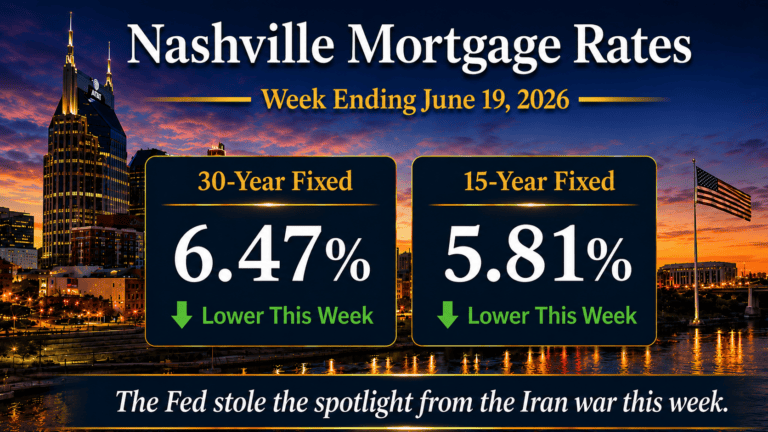
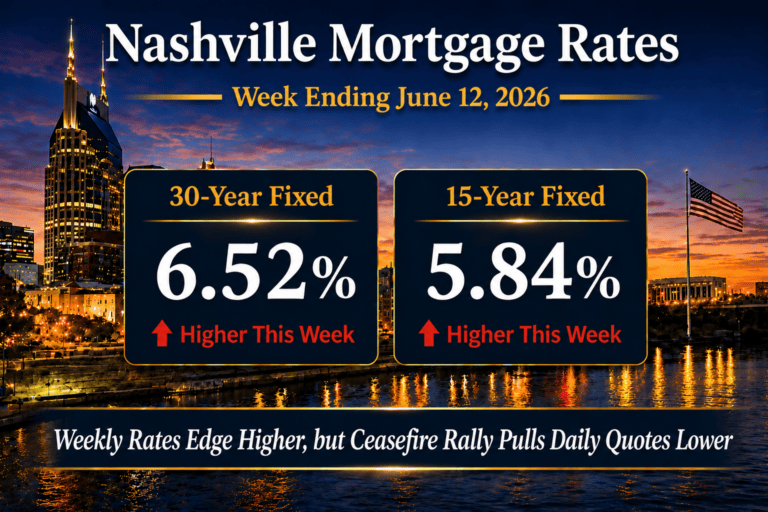
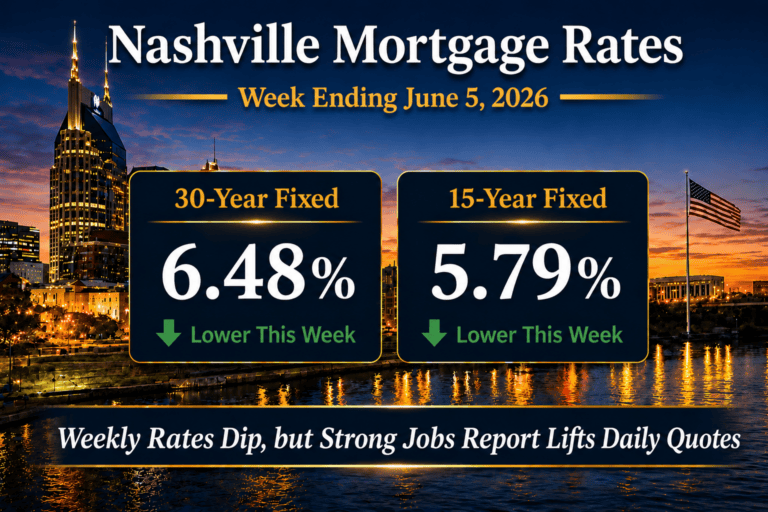
Mortgage rates declined for the third consecutive week, reflecting ongoing shifts in economic conditions.
According to Freddie Mac, the 30-year fixed mortgage rate fell to 6.04%, down from 6.14% the previous week. The 15-year fixed rate declined to 5.73%, while adjustable-rate products also moved lower, with the five-year ARM dropping to 5.87% and the one-year ARM easing to 5.29%.
A Multi-Week Downward Trend
This marks a continuation of a broader softening in borrowing costs.
Sustained declines over multiple weeks often indicate a shift in investor sentiment, typically tied to expectations around economic growth and inflation. In this case, mortgage rates were responding to signs of a slowing economy.
The Relationship Between Rates and the Economy
Mortgage rates are closely linked to bond markets and overall economic conditions.
When economic growth slows, investors often move toward safer assets, which can push yields lower and reduce mortgage rates. However, lower rates do not always translate into immediate increases in housing activity.
Market Conditions at the Time
During this period, housing market activity remained constrained despite lower borrowing costs.
Tighter lending standards, reduced transaction volume, and broader economic uncertainty continued to influence buyer behavior. In many cases, affordability improvements from lower rates were offset by these larger structural factors.
Historical Context
This update was published during the late stages of the 2008 financial crisis, when economic conditions were weakening and mortgage rates were trending downward in response.
The combination of declining rates and limited buyer activity was a defining characteristic of this phase of the market. While borrowing costs improved, recovery in transaction volume lagged due to credit conditions and overall confidence.
Nashville followed these national trends, although its underlying economic stability helped support long-term resilience.
Understanding Rate Trends
Mortgage rates are influenced by inflation expectations, bond market movements, and overall economic performance.
Sustained declines often signal broader economic shifts rather than isolated changes. To compare these historical trends with today’s market, you can follow Nashville mortgage rates today.