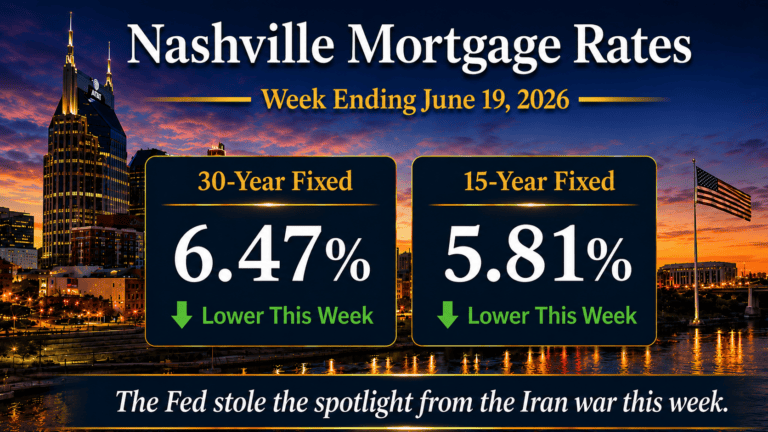
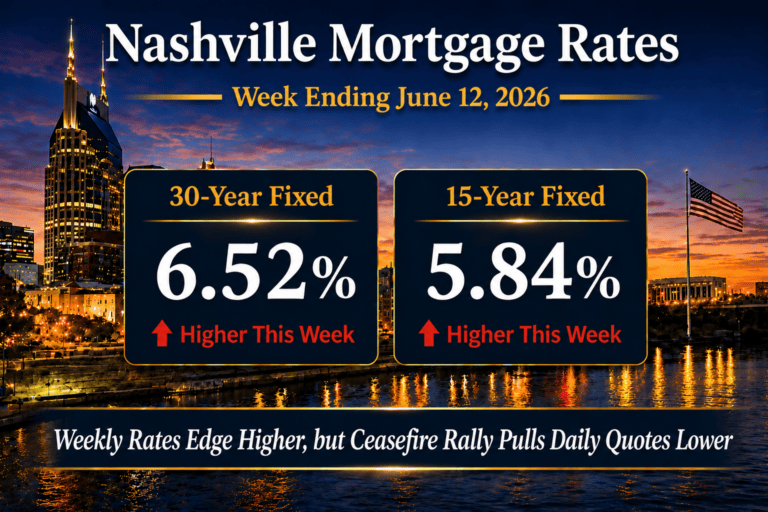
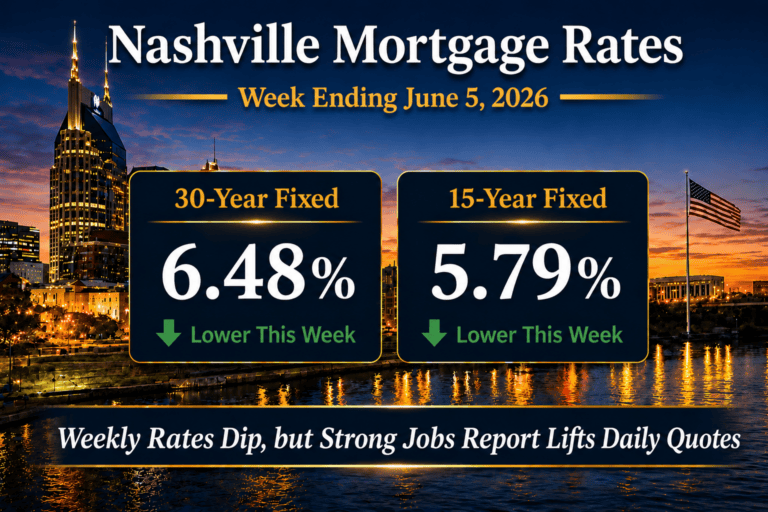
After four consecutive weeks of increases, mortgage rates have shifted direction and moved slightly lower.
According to Freddie Mac, the 30-year fixed mortgage rate declined to 5.98%, slipping just below the 6% threshold again. The 15-year fixed rate also moved lower to 5.55%, continuing a modest easing trend in long-term borrowing costs.
Shorter-term products told a slightly different story. The five-year ARM increased to 5.61%, while the one-year ARM rose to 5.24%, reflecting continued volatility on the short end of the yield curve.
A Turning Point After Recent Volatility
This type of movement often signals a market that is trying to find direction.
After several weeks of rising rates, investors appear to have rotated back into safer assets, which typically puts downward pressure on long-term Treasury yields and, in turn, mortgage rates. While the weekly move was small, crossing back below 6% is psychologically important for both buyers and lenders.
What This Meant for Nashville Buyers
At the time, Nashville was already experiencing a slower housing market compared to prior years. The pullback in mortgage rates provided some much-needed relief for buyers who had been sidelined by rising borrowing costs.
Even small rate movements can meaningfully impact purchasing power, and in softer markets, that shift often creates new negotiating opportunities.
Outlook at the Time
There was a growing expectation that mortgage rates would continue trending lower through the remainder of the year, particularly as broader economic concerns began to weigh on financial markets.
As always, mortgage rates are closely tied to bond market activity, inflation expectations, and Federal Reserve policy, making short-term predictions difficult but directional trends important.
Track Current Nashville Mortgage Rates
For a real-time view of how today’s market compares to prior cycles, visit our guide to current Nashville mortgage rates, updated weekly with 30-year and 15-year trends.