Nashville real estate developments are accelerating across both the urban core and suburban growth corridors, as large-scale entitlement approvals, institutional expansion, and new housing supply begin to align across key submarkets.
Over the past week, three important Nashville real estate developments stood out. Metro Council approved the rezoning of the 47-acre East Bank scrapyard site, clearing the way for one of the largest redevelopment projects in Nashville history. At the same time, Vanderbilt University secured approval for a 43.16-acre Innovation Neighborhood in Midtown. In addition, a new West Nashville project is planning hundreds of residential units, signaling continued expansion of housing supply outside the urban core.
As a result, these Nashville real estate developments highlight how capital, land use, and housing demand are evolving across the region.
Quick Takeaways: Nashville Real Estate Developments This Week
- East Bank Scrapyard Rezoning Approved: 47-acre riverfront site approved for redevelopment with towers up to 40 stories and a $245M land basis.
- Vanderbilt Innovation Neighborhood Moves Forward: 43.16-acre mixed-use district approved in Midtown, representing one of the largest institutional frameworks in Nashville.
- West Nashville Project Adds Hundreds of Units: New development signals continued suburban housing expansion and additional supply outside the urban core.
1. East Bank Scrapyard Rezoning Clears Path for 47-Acre Redevelopment
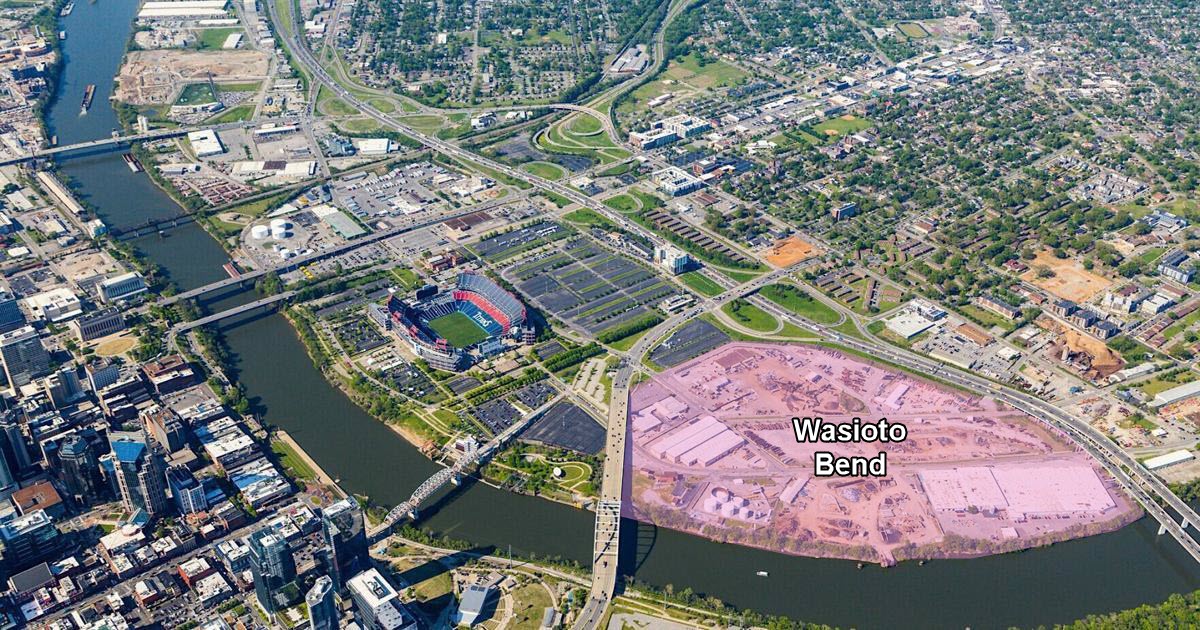
The 47-acre East Bank site at Wasioto Bend is one of the most important redevelopment projects in Nashville.
Metro Council unanimously approved the rezoning of the 47-acre East Bank scrapyard site this week, marking a defining moment in Nashville’s long-term redevelopment strategy. Source reporting confirms the site has now cleared a critical entitlement hurdle.
The property, now referred to as East Bend or Wasioto Bend, sits along the Cumberland River and was acquired for $245 million by a local investor group. The approved plan allows for a large-scale mixed-use district with towers up to 40 stories, along with residential, office, retail, and entertainment uses.
The rezoning divides the site into 22 parcels and includes height limits ranging from 8 to 40 stories depending on proximity to the river. In addition, Metro Council approved 17 amendments designed to regulate density, hotel uses, and long-term infrastructure planning.
More importantly, the site sits within the broader East Bank corridor, one of the most important redevelopment zones in Nashville.
Why This Matters for Nashville Real Estate
This is one of the most important land-use approvals in Nashville in decades.
At the same time, the surrounding district includes Oracle’s $4.5B campus, the new Nissan Stadium, and multiple mixed-use developments led by institutional developers.
As a result, this rezoning does not just unlock one project. It accelerates the transformation of an entire district into a new extension of downtown Nashville and reinforces long-term housing demand in adjacent neighborhoods.
2. Vanderbilt Innovation Neighborhood Approved for 43.16 Acres
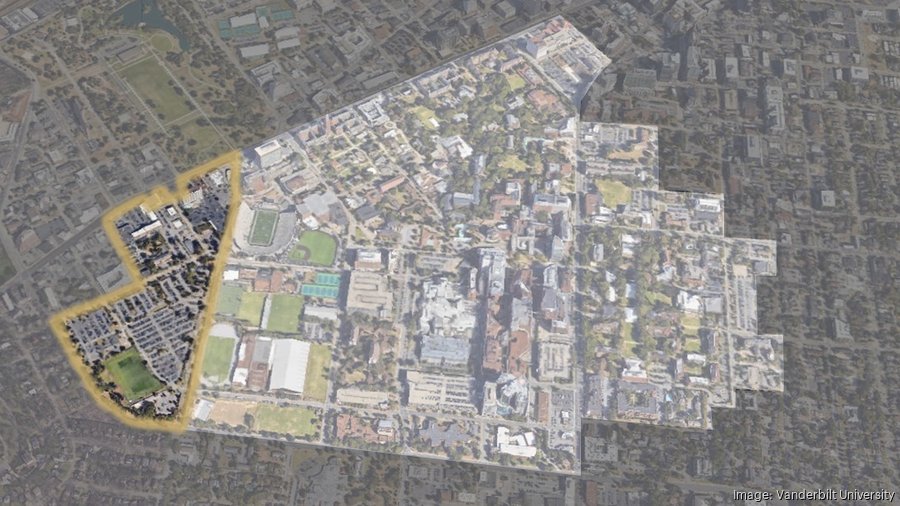
Vanderbilt’s 43.16-acre Innovation Neighborhood signals long-term institutional expansion in Midtown Nashville.
Vanderbilt University secured approval for its 43.16-acre Innovation Neighborhood, a large-scale mixed-use development spanning Midtown and West End along West End Avenue and 30th and 31st Avenue South.
The site sits within one of Nashville’s most important employment corridors. It is anchored by Vanderbilt University, Vanderbilt University Medical Center, and a broader healthcare and research ecosystem.
The approved plan allows Vanderbilt to transition existing zoning into a long-term mixed-use framework. This framework includes residential, office, research, and institutional uses.
At full buildout, developments of this scale typically support millions of square feet of mixed-use density. Developers usually deliver these projects over multiple phases.
As a result, this approval acts less like a single project. It creates a multi-decade institutional expansion platform in one of the highest-demand submarkets in the city.
Why This Matters for Nashville Real Estate
Institutional development drives long-term housing demand.
Midtown already operates as one of Nashville’s primary employment and education hubs. Thousands of jobs are tied to healthcare, research, and higher education.
As a result, continued expansion in this corridor reinforces sustained demand for nearby housing. This is especially true in walkable urban neighborhoods.
Over time, projects of this scale support both rental absorption and condominium pricing. They also increase land values across surrounding submarkets.
3. West Nashville Development Signals Expansion of Housing Supply
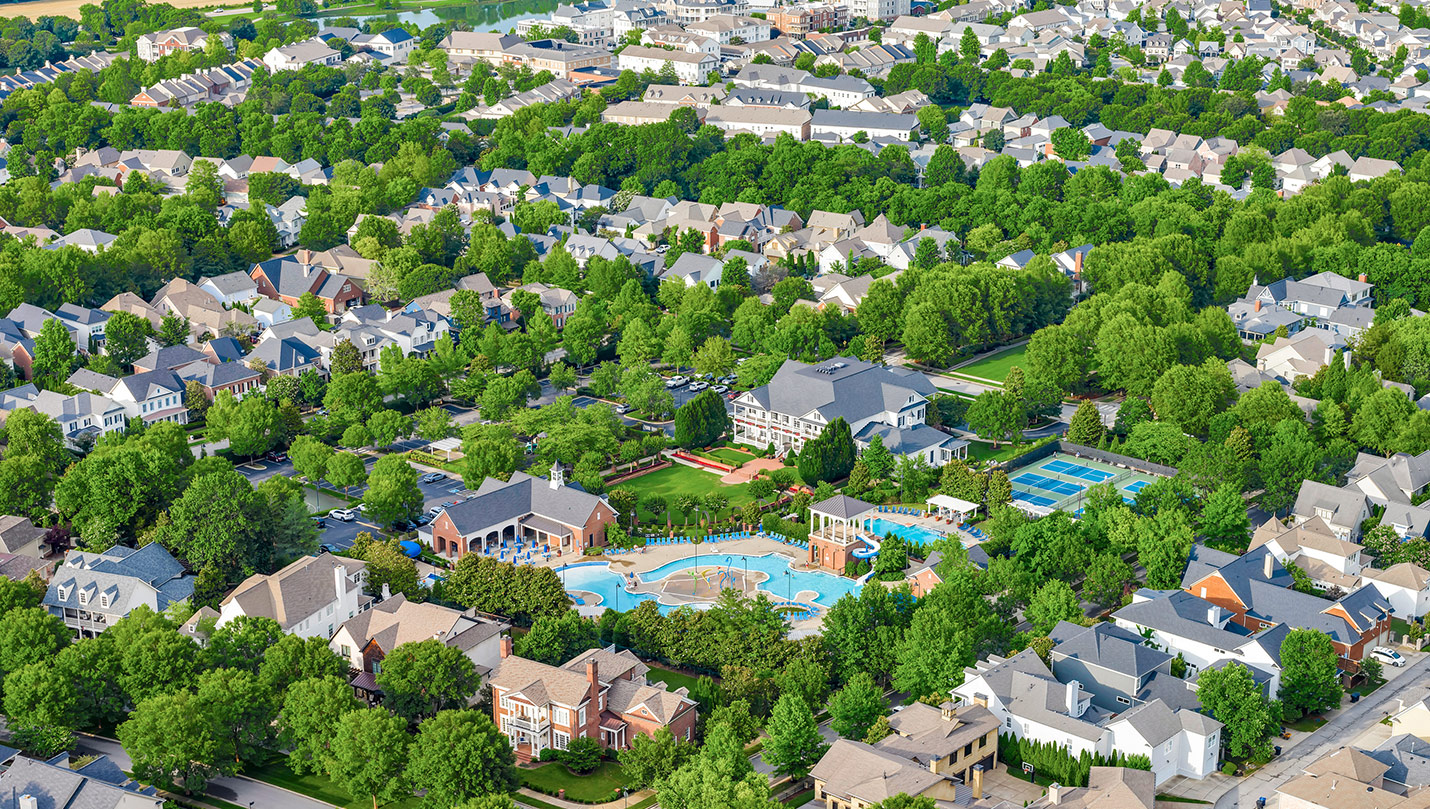
New housing development in West Nashville reflects expanding suburban supply and continued population growth.
An Alabama-based developer is planning a new residential project in West Nashville. The project is expected to deliver hundreds of housing units, adding a meaningful supply signal in one of the city’s key growth corridors.
Full project details are still emerging. However, developments of this type typically range from 200 to 400 units.
Developers usually deliver these projects in phases. This allows them to match absorption trends and infrastructure capacity.
This type of development reflects a broader pattern across Nashville. Residential growth continues to move outward into areas that support larger-scale construction. In contrast, urban infill sites remain more constrained.
Why This Matters for Nashville Real Estate
Suburban and edge-market developments are becoming increasingly important for housing supply.
Unlike the urban core, areas such as West Nashville can accommodate larger projects. These projects deliver meaningful unit counts at scale.
At the same time, population growth continues. Demand remains strong, and inventory constraints persist in central neighborhoods.
As a result, these developments help absorb demand across the broader metro area. Pricing and competition remain elevated in high-demand urban submarkets.
Bonus Insight: East Bank Authority Targets $300M in Tourism Spending
The East Bank Development Authority is planning how to allocate approximately $300 million in tourism-related funding to support infrastructure and public improvements across the district.
While not a direct housing story, infrastructure investment plays a critical role in determining how quickly large-scale developments move from planning into execution.

Tourism remains a key driver of Nashville’s economy and downtown housing demand.
Nashville Real Estate Market Outlook
Recent Nashville real estate developments point to a market that is expanding. Growth is occurring through both large-scale urban redevelopment and incremental housing supply.
On one hand, major entitlement approvals are unlocking long-term development. Institutional investment remains strong.
On the other hand, suburban developments are adding new housing supply. Demand continues to concentrate near employment centers.
A balanced housing market typically includes approximately six months of inventory. At that level, supply and demand remain in equilibrium.
Over a 12 to 24 month horizon, population-driven demand is likely to continue. Price growth should slow but remain positive.
Supply will increase, but unevenly. High-demand submarkets are likely to outperform.
As a result, the Nashville housing market is becoming more location-specific. Capital and demand continue to concentrate in key corridors.
Based on more than 25 years of experience in the Nashville real estate market, demand continues to cluster around employment centers, infrastructure investment, and large-scale redevelopment zones.