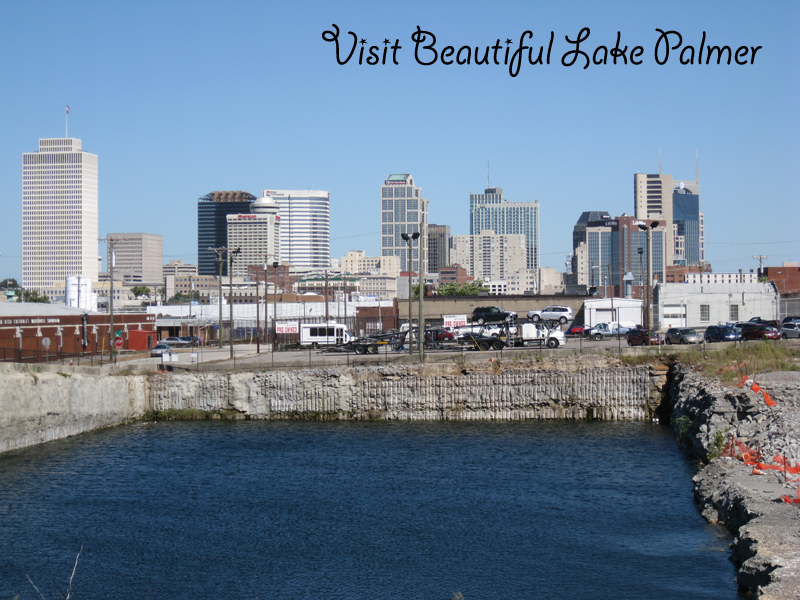
At the gateway to Nashville’s West End corridor, a stalled development site informally became known as “Lake Palmer,” a reflection of how quickly large-scale projects can shift when market conditions deteriorate.
The Project Behind the Site
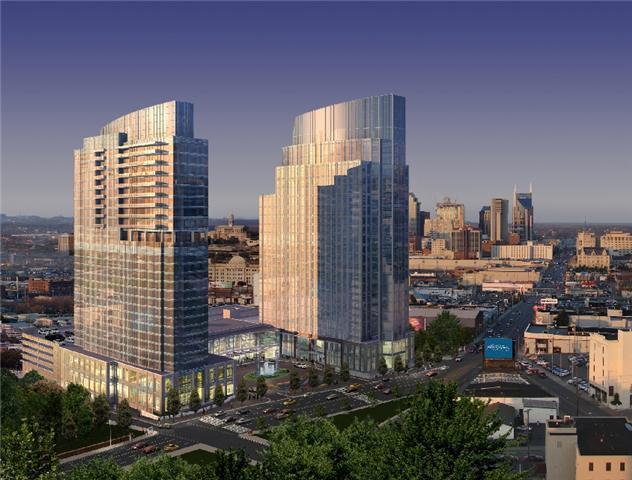
The West End Summit was designed as a major mixed-use development.
Plans called for twin 25-story towers combining office space, a hotel, luxury condominiums, retail, and structured parking. The project was ultimately scaled back from approximately 1.6 million square feet to just over 900,000 square feet as market conditions began to soften.
What Happened
Construction halted before vertical development began.
The excavation site filled with water over time, creating what became a visible symbol of stalled development in the city. While partially secured, the site raised concerns about safety and completion timelines.
Financing Constraints
The primary issue was not design. It was financing.
Large mixed-use developments rely on a combination of construction loans, pre-leasing, and pre-sales. In this case, reports indicated that permanent financing required a significant portion of office space to be pre-leased at pricing above prevailing market rates.
At the same time, the developer carried substantial debt tied to the property, further complicating forward progress.
Office Market Reality
The office component faced a difficult environment.
At the time, the West End submarket had elevated vacancy levels and lower average lease rates than those projected for the project. This created a gap between underwriting assumptions and actual market demand.
Condo and Hotel Components
The residential and hospitality elements also faced headwinds.
Luxury condos were priced at the top of the market, limiting absorption during a period of declining demand. Meanwhile, uncertainty around the hotel partner added another layer of execution risk.
Broader Development Pattern
This was not an isolated case.
The scaling back of project size, rising financing hurdles, and delayed timelines closely mirrored challenges faced by other major developments during the same period, including high-profile downtown proposals.
Legal and Construction Issues
Additional complications emerged through contractor disputes.
Lawsuits related to unpaid work are common in stalled developments and can further delay progress by increasing financial and legal pressure on a project.
Historical Context
This reflects conditions in 2008 to 2009, when the financial crisis disrupted capital markets.
Projects that depended on aggressive assumptions around leasing, pricing, and absorption were particularly vulnerable to sudden shifts in credit availability.
Why This Still Matters
West End Summit is a clear example of development risk in real estate cycles.
Even well-located, large-scale projects can stall if financing, demand, and timing fall out of alignment. Understanding these dynamics is essential when evaluating future developments.
For a broader look at how large projects succeed or fail based on market conditions, explore Nashville real estate development trends.




October 4, 2009, 2:42 pm
So I take it there is no lifeguard on duty? Maybe Photoshop a high dive into the photo…lol.
October 4, 2009, 7:42 pm
So I take it there is no lifeguard on duty? Maybe Photoshop a high dive into the photo…lol.
May 13, 2010, 2:43 am
Looks like a very good place to visit.
May 23, 2010, 9:30 am
Why has the city not sued Mr. Palmer to make him fill this eyesore up? The super wealthy get away with every disaster just like the executives at BP!
May 23, 2010, 2:30 pm
Why has the city not sued Mr. Palmer to make him fill this eyesore up? The super wealthy get away with every disaster just like the executives at BP!
August 8, 2010, 11:20 pm
Fill the hole already! Make the entire lot a park or maybe a satellite parking lot for Vanderbilt. Either way this is embarrassing for the city!
March 21, 2011, 2:42 am
I used to live just down the street and had to see this thing just sit there for 3 years. Nashville needs to fill the void with a new project or with dirt. Either way, what was an understandable result of a downturn in the economy has become an embarrassment for the city. We need to get it done.
March 21, 2011, 2:42 am
I used to live just down the street and had to see this thing just sit there for 3 years. Nashville needs to fill the void with a new project or with dirt. Either way, what was an understandable result of a downturn in the economy has become an embarrassment for the city. We need to get it done.