East Nashville is the city’s most architecturally eclectic submarket and one of its most original. The neighborhood spans three Davidson County ZIP codes (37206, 37216, 37207), more than thirty named sub-neighborhoods, and roughly 150 years of accumulated housing stock. A 1899 Victorian on Russell Street sits within walking distance of a 2025 modern infill on Pennington Avenue, and both transact in the same market within weeks of each other. Five Points concentrates the commercial life: the original Pied Piper Eatery corner, The 5 Spot, Margot Cafe and Bar, and a continuously evolving roster of restaurants, bars, and independent retail that has shaped East Nashville’s identity for two decades. Beyond Five Points, the neighborhood opens into quiet residential streets, Shelby Park’s 336 acres along the Cumberland River, the Lockeland Springs and Edgefield historic districts, and the Inglewood and Rosebank pockets that have become some of the city’s most reliable mid-luxury investments.
East Nashville Market at a Glance
| Closed sales (36 months, all three ZIPs) | 3,187 |
| Overall median closed sale | $600,000 |
| Median price per square foot | $335 |
| Median days on market | 12 days |
| Median year built (closed inventory) | 1962 |
| Active inventory | 354 listings, $660,000 median list |
| 37206 (core East Nashville) | 1,351 closed, $720,000 median |
| 37216 (Inglewood) | 1,126 closed, $570,000 median |
| 37207 (East Trinity, Joywood) | 709 closed, $528,900 median |
| Top recent closed sale | $3,912,000 (2623 A Pennington Ave, Inglewood, 2025 build, 2,143 sqft, $1,825/sqft) |
| Top active listing | $4,300,000 (211 N 11th St, Bellview, 25,249 sqft) |
Source: RealTracs MLS, 36-month trailing closed sales through 2026-05-21, ZIPs 37206, 37216, 37207.
Current East Nashville Listings
Live active and pending inventory from the MLS feed, refreshed continuously.
- List View
- Map View
- Grid View
-
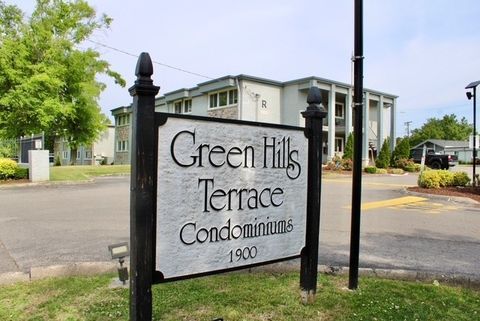
 $364,900
-
Lot Size872 sqft
-
Home Size1,600 sqft
-
Beds3 Beds
-
Baths2.5 Baths
-
Year Built1967
-
-
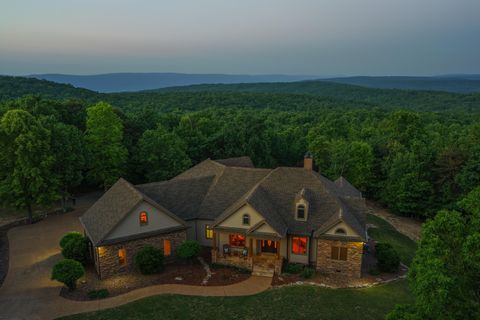 $1,197,000
-
Lot Size5.60 ac
-
Home Size4,410 sqft
-
Beds5 Beds
-
Baths4 Baths
-
Year Built2008
-
-
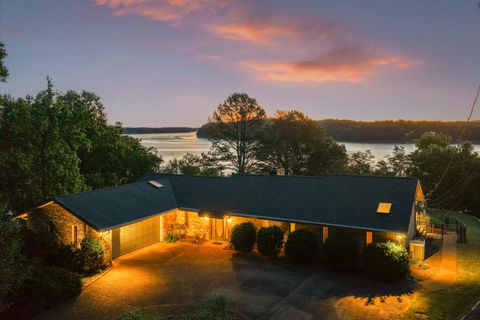 $989,000
-
Lot Size1.26 ac
-
Home Size5,090 sqft
-
Beds5 Beds
-
Baths3 Baths
-
Year Built1984
-
-
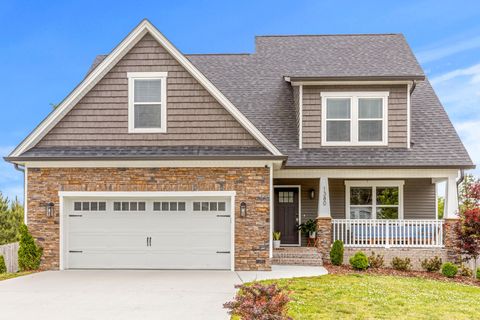 $485,000
-
Lot Size10,019 sqft
-
Home Size2,881 sqft
-
Beds4 Beds
-
Baths2.5 Baths
-
Year Built2020
-
-
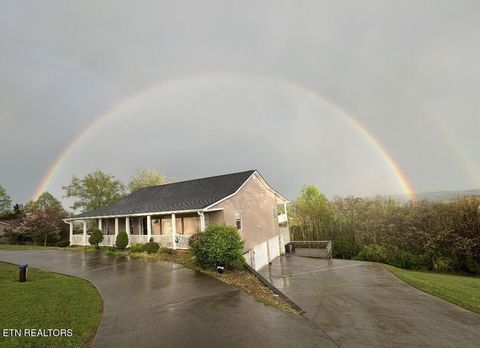 $649,900
-
Lot Size29,621 sqft
-
Home Size3,448 sqft
-
Beds3 Beds
-
Baths3 Baths
-
Year Built2007
-
-
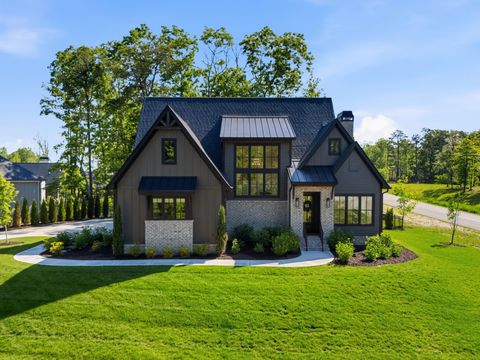 $1,250,000
-
Lot Size11,762 sqft
-
Home Size3,242 sqft
-
Beds4 Beds
-
Baths2.5 Baths
-
Year Built2024
-
See all Real estate matching your search.
(all data current as of
5/21/2026)
Listing information deemed reliable but not guaranteed. Read full disclaimer.
What Makes East Nashville Different
Four structural factors define East Nashville’s identity within Davidson County’s broader market.
Architectural depth across 150 years. The neighborhood’s housing stock spans roughly 1880 to present, with significant concentrations of 1890s-1910s Victorians and Craftsman bungalows, 1920s-1940s shotgun and four-square homes, mid-century ranches, and an active wave of post-2015 modern infill. Few American urban neighborhoods preserve this level of architectural continuity while also accommodating thoughtful new construction at scale. The result is that East Nashville buyers can choose architecture as deliberately as they choose location.
Three distinct ZIPs, one identity. The 37206 core (Edgefield, East End, Lockeland Springs, Eastwood, Shelby Park area), 37216 (Inglewood, Rosebank, Riverwood, McGavock Pike corridor), and 37207 (Joywood, East Trinity Lane, Trinity Hills) each have their own character and price band, but residents and the broader market identify all three as “East Nashville.” Cross-ZIP comparison matters because the price ranges are not uniform.
Five Points and Eastland commercial corridors. The Five Points intersection at Woodland and South 11th defines East Nashville’s commercial identity, anchored by long-tenured independents like The 5 Spot, Margot Cafe and Bar, Holland House, and Pied Piper Eatery. The Eastland Avenue corridor running through Inglewood extends the dining and retail life eastward. These commercial nodes shape property values in measurable ways, particularly along the walking-radius streets feeding each corridor.
Renovation and infill economics. East Nashville’s permitting environment, lot patterns, and architectural review obligations produce one of the most active renovation and tear-down-replace markets in Davidson County. A meaningful share of recent closed inventory is either freshly renovated historic stock or recently completed new construction infill. The neighborhood rewards both careful preservation and quality new design.
East Nashville Sub-Neighborhoods
Lockeland Springs (37206)
111 closed sales over 36 months. Historic residential district immediately east of Five Points. Restored Victorians and Craftsman bungalows, mature canopy, walkable to Five Points commercial. Top recent closing $2.59M at 1707 Holly Street (1939 restored).
Edgefield (37206)
The neighborhood’s most established historic district, on the National Register. East Edgefield (20 closed sales) and Historic Edgefield include some of East Nashville’s most architecturally significant homes. Top recent closing $3.84M at 714 Russell Street (1899 build).
East End (37206)
24 closed sales in East Hill plus another concentration in East End and East End Village (48 sales). Mix of historic restoration and new construction. Top recent closing $3.20M at 122 S 12th Street (1890 restored).
Eastwood (37206)
23 closed sales plus 29 in Eastwood Neighbors. Established 1930s-1950s residential, increasingly luxury-tier renovations and infill.
Rosebank (37206)
30 closed sales. Pocket of historic and recently renovated inventory north of Shelby Park. Top recent closing $3.5M at 2616 Tiffany Drive (2017 build).
Cleveland Park (37207)
71 closed sales. Mid-luxury and entry-luxury inventory, with active investor and owner-occupier interest. Crosses the 37207/37206 boundary.
Inglewood (37216)
98 closed sales, plus another 42 in Inglewood Place. The largest 37216 submarket. Established 1940s-1960s residential with significant recent renovation and new construction infill. Top recent closing $3.77M at 1426 McGavock Pike (2025 new construction).
High View Cottages and Maple Grove (37216)
66 plus 47 closed sales respectively. Newer attached and detached infill product that has reshaped the 37216 inventory mix.
Joywood Heights and East Trinity (37207)
39 plus broader Trinity Lane corridor sales. The northernmost East Nashville zone. Active investor market, mix of historic restoration and modern new construction.
Riverwood, Riverside, Shelby Hills, Sharpe and Horns, Sunnymeade, Burchwood Gardens, Highland Gardens, Maplewood Heights, Porter Heights, Country Club Estates, Dalewood
Each with 20-35 closed sales. The connective tissue of East Nashville’s broader residential map. Sub-neighborhood selection at this tier often comes down to specific street and lot rather than overall pocket character.
East Nashville Pricing Tiers
Entry to Mid-Market: Under $700,000
The deepest band of East Nashville inventory, primarily in 37207 (Joywood, Trinity Lane corridor) and the eastern stretches of 37216. Includes most of the smaller historic stock pre-renovation and entry-level new construction. This tier moves fastest and competes with the strongest Davidson County entry market.
Mid-Luxury: $700,000 to $1.5M
The heart of the East Nashville market. Covers most renovated Lockeland Springs and Edgefield inventory, Inglewood’s mid-market range, Eastwood, Rosebank, and significant new construction across all three ZIPs. The neighborhood’s overall $600,000 median and 37206’s $720,000 median both fall on the lower end of this band.
Luxury: $1.5M to $3M
Concentrated in the best Lockeland Springs and Edgefield restored homes, top-tier Rosebank, the largest Inglewood new construction, and several quality 2020s infill projects. Recent closings include $2.59M Holly Street, $2.55M Inglewood, $2.45M Greenwood Avenue, and $2.39M Ordway Place.
Top Tier: $3M and Above
Limited and notable inventory. Recent closings include $3.91M Pennington Avenue (Inglewood, 2025 build), $3.84M Russell Street (Historic Edgefield, 1899), $3.77M McGavock Pike (Inglewood, 2025), $3.50M Tiffany Drive (Rosebank, 2017), and $3.20M S 12th Street (Historic East End, 1890). Active inventory at this tier currently includes $4.30M at 211 N 11th Street (Bellview, 25,249 sqft) and $4.00M at 2616 Tiffany Drive.
Living in East Nashville
East Nashville’s daily rhythm centers on walkability and neighborhood identity. Most residents in the core 37206 area walk to morning coffee, weeknight dinners, and weekend events. Five Points anchors the commercial core. The Eastland Avenue corridor running through Inglewood extends the dining and retail life. Specific named anchors include Margot Cafe and Bar, The 5 Spot, Holland House, Pied Piper Eatery, Marche Artisan Foods, Lockeland Table, Two Ten Jack, Rosepepper Cantina, and the continually evolving roster of independent restaurants the neighborhood is known for.
Shelby Park sits at the southeastern edge of 37206, providing 336 acres of preserved parkland, Cumberland River frontage, the Shelby Bottoms Greenway, and the Shelby Golf Course. The greenway connects East Nashville to downtown via a pedestrian-bike corridor reaching the river crossing in under twenty minutes on foot or seven minutes by bike.
East Nashville sits five to ten minutes from downtown Nashville depending on the specific address, fifteen minutes from the airport, and twelve to fifteen minutes from Vanderbilt and the Belmont area. The neighborhood’s central Davidson County position is one of its core advantages for buyers prioritizing short commutes.
East Nashville is served by Metro Nashville Public Schools with assigned attendance zones by street address. Several private schools (USN, MLK, Magnet) draw enrollment from East Nashville as alternatives to neighborhood-zoned options. Specific public school assignments depend on the exact street address and Grant verifies zoning during showings.
Working with Grant Hammond in East Nashville
East Nashville rewards sub-neighborhood literacy more than any other Davidson County submarket. Pricing precision matters because a $100,000 difference in price band can place a buyer in entirely different architectural inventory: a Lockeland Springs restored Victorian, an Inglewood mid-century, or a 2025 Maple Grove infill. Off-market awareness matters because the most aggressive investors and renovation specialists transact in this neighborhood at speed, often before listings hit the open MLS feed. Comparable analysis matters because the inventory mix is wide enough that direct comparables require nuanced selection.
Grant Hammond has been a Nashville real estate broker for 25 years with more than $1 billion in career sales. While Grant’s luxury practice concentrates in Davidson County’s western corridor (Belle Meade, Green Hills, Forest Hills) plus Brentwood, his Davidson-wide transaction depth includes meaningful East Nashville representation. He has direct relationships with several long-tenured East Nashville owners, builders active in current Inglewood and Joywood new construction, and the inspection, title, and lending professionals who specialize in this submarket.
For East Nashville buyers and sellers, the value of an experienced broker compounds across the transaction. Broker fees are not set by law and are fully negotiable.
Related Davidson County Submarkets
Germantown Homes for Sale – Walkable urban luxury north of downtown, Hanover anchor
Belle Meade Homes for Sale – Top-tier Davidson luxury, Country Club anchor
Green Hills Homes for Sale – Established mid-luxury, Hill Center anchor
Forest Hills Homes for Sale – Trophy estates, Chickering corridor
Brentwood Homes for Sale – Williamson County luxury suburb
Nashville Homes for Sale – Davidson County overview