The most sophisticated capital in Nashville short-term rentals stopped buying spreadsheets about two years ago. The buyers I represent now, physicians, founders, and executives carrying seven-figure W-2 income, open with a different question entirely: show me what the unit actually earned. That single question is reshaping turnkey Airbnb investment in Nashville, and it explains why one development model is quietly pulling away from the rest of the market.
I have watched the shift happen closing by closing across my coverage of the Nashville Airbnb and STR market. The pro forma, that optimistic one-page projection of what a unit might earn, is losing its power to move serious money. In its place, a small number of developers are selling something categorically different: an asset already in motion.
An asset in motion is a short-term rental that transfers as a running business. The furniture is installed, a top management company is operating the unit, the income is documented rather than projected, and the booking calendar carries revenue forward past the closing date. Very few developers in the country can execute this model. In Nashville, exactly one is doing it at the highest level, and I will get to them shortly.
Bottom line: Nashville’s short-term rental market is shifting from pro forma projections to income-verified, professionally managed assets that transfer with documented revenue, forward bookings, and a one-week permit path. With 100% bonus depreciation now permanent for property acquired after January 19, 2025, the turnkey non-owner-occupied STR is one of the most complete investment structures available in Nashville today, and Alora Nashville is the development executing this model most fully.

The Spreadsheet Era of Nashville Airbnb Is Ending
Pro forma income is a marketing document. It rests on assumed nightly rates, assumed occupancy, and assumed expenses, and the party who wrote it carries none of the operating risk. Lenders discount it. Appraisers wrestle with it. Consequently, the buyer absorbs the entire gap between promise and performance.
Verified trailing income changes every one of those conversations. A DSCR loan (Debt-Service Coverage Ratio loan) underwrites cleanly against twelve months of management-company statements. A CPA can model year-one tax outcomes against real revenue instead of a developer’s optimism. In my 550+ Airbnb and short-term rental transactions across Nashville, the properties that finance smoothly and appraise confidently are consistently the ones with verifiable operating history behind them.
The market is sorting accordingly. Promised income is speculation. Proven income is acquisition. Wealthy buyers have noticed the difference, and the product that satisfies them is scarce by design.
Who Is Writing These Checks
The buyer profile for income-verified Nashville product is remarkably consistent. It is the surgeon offsetting a $900K W-2. It is the founder redeploying exit proceeds into cash-flowing hard assets. It is the executive who already understands cost segregation and simply needs an asset clean enough to run the strategy through. These are not hobbyist hosts. They are operators of their own balance sheets, and they buy the way institutions buy: on documentation.
Notably, this cohort shares one more trait. They have no interest in spending a quarter furnishing a unit, hiring a manager, chasing a permit, and building review history from zero. Their scarcest resource is time. A turnkey asset that produces revenue the week after closing is not a convenience for this buyer. It is the entire point. The transaction they want is simple: wire funds at closing, and the unit is earning under professional management the same week, with the furnishings schedule already in their CPA’s hands.
Why Now: The Tax Window That Reopened

The timing argument is unusually concrete. Under the old phase-down schedule, bonus depreciation was set to fall to just 20% in 2026. Instead, the One Big Beautiful Bill Act, signed July 4, 2025, permanently restored 100% bonus depreciation for qualifying property acquired and placed in service after January 19, 2025. A deduction that was scheduled to nearly vanish this year is now fully available, with no sunset on the books. The IRS has published guidance on the permanent 100% bonus depreciation deduction (Notice 2026-11), and the specifics belong in a conversation with your CPA.
Purpose-built short-term rental product is unusually well positioned for this rule. A cost segregation study on a fully furnished non-owner-occupied short-term rental (NOOSTR) typically reclassifies a meaningful share of the purchase price into 5-year, 7-year, and 15-year property: furniture, appliances, flooring, fixtures, and land improvements. Industry analyses commonly place that share at roughly 20% to 30% for well-equipped short-term rentals, substantially higher than standard long-term rental product. I walk through how cost segregation and bonus depreciation interact for Nashville short-term rentals in my Nashville STR tax guide.
Consider an illustrative example, not a projection. On a $1.2M furnished NOOSTR, a cost segregation study reclassifying 25% to 30% of basis could support a year-one deduction in the range of $300K to $360K under 100% bonus depreciation. For a high-income buyer who materially participates and whose average guest stay is 7 days or fewer, those losses may be treated as non-passive and applied against active income. Every element of that sentence requires professional verification for your situation, which is why my most sophisticated clients bring their CPA into the transaction before the offer, not after.
Here is the detail most buyers miss. Bonus depreciation attaches to property placed in service. A furnished, managed, revenue-producing unit is placed in service by definition on day one. A pro forma unit is producing nothing until the buyer furnishes it, lists it, permits it, and books it. The asset in motion compresses months of ramp into a closing date, and in a tax strategy built on the calendar year, that compression has real dollar value.
The Anatomy of an Asset in Motion
Four traits separate genuine assets in motion from turnkey marketing language. Each one requires developer capital, which is precisely why the complete package is rare.
Professional Furnishing, Documented for the Tax Strategy
Hospitality-grade furniture, fixtures, and equipment are installed before the first guest arrives. Beyond the guest experience, the furnishings package arrives fully documented at closing, which is exactly what a cost segregation study needs to support the year-one deduction.
Institutional Management From the First Booking
The strongest developments place every unit with a top STR management company before sales begin. As a result, the revenue history buyers review was produced under the same professional operation that continues after closing. Nothing about the income depends on the buyer becoming a hotelier.
Real Income, Independently Produced
The dividing line of the entire category. Trailing statements of gross booking revenue, occupancy, and average daily rate, generated by an independent management company rather than the seller, are what convert a listing into an underwritable asset.
Forward Bookings and a One-Week Permit Path
The sale should include the future, not just the past. Closings at the top of the market transfer with forward-looking bookings already on the calendar. Additionally, because Nashville non-owner-occupied STR (Type 2) permits do not transfer between owners, the best developers operate a permit concierge that secures the new permit in the buyer’s name. In my experience, that process rarely takes longer than a week when a dedicated team handles it. Metro’s rules are published on the Nashville Codes short-term rental page, and I cover eligibility in my Nashville STR zoning and permits guide and the current permitted-supply picture in my live Nashville short-term rental permit tracker.
The Alora Standard

Alora Nashville is, in my assessment, the clearest example in this market of the full model executed at scale. The development pairs resort-style amenities with professionally furnished units, building-wide management by a top STR operator, documented operating income in place of projections, forward bookings that transfer at closing, and a permit concierge that in my experience rarely exceeds one week. Community details are available at Alora Nashville’s official site.
The scarcity here is structural, not promotional. Furnishing and operating an entire community before sales revenue arrives requires a balance sheet most developers simply do not have. That capital requirement functions as a filter, and the filter is the point. A developer willing to prove income before asking for yours is making a fundamentally different statement than one handing you a spreadsheet. Nashville has produced a small number of purpose-built NOOSTR communities over the years, Lucy among them, but the complete asset-in-motion package, income verified and bookings attached, currently belongs to Alora.
The market backdrop supports the model. Nashville remains one of the strongest short-term rental markets in the country across leisure, bachelorette, corporate, and event demand. Independent data from AirDNA’s Nashville market page provides demand context, and my annual Nashville Airbnb market report covers local performance in depth.
What I Tell Buyers to Demand
Before purchasing any turnkey short-term rental in Nashville, including inventory among the current Nashville Airbnb properties for sale, I advise clients to require the following:
- Trailing revenue statements produced by the management company, not the developer
- Occupancy and average daily rate history for the specific unit or true comparables in the building
- The forward booking calendar and how deposits and payouts transfer at closing
- A written furnishings inventory with cost documentation to support the cost segregation study
- Confirmation of Type 2 permit eligibility and the concierge’s re-permitting timeline
- The management agreement terms that survive closing, including fees and termination rights
Financing deserves equal scrutiny, since rate and structure decisions materially change net yield. My weekly mortgage rate and financing coverage tracks the DSCR and conventional lending environment STR buyers are underwriting against.
Frequently Asked Questions
What is a turnkey Airbnb investment in Nashville?
A turnkey Airbnb investment in Nashville is a fully furnished, professionally managed short-term rental that transfers with verified operating income, forward bookings, and an active management contract. The buyer acquires a running business rather than vacant real estate, which supports cleaner financing, immediate revenue, and day-one placed-in-service treatment for tax planning.
Does 100% bonus depreciation apply to Nashville Airbnb purchases in 2026?
Yes, 100% bonus depreciation applies in 2026 to qualifying property acquired after January 19, 2025, under the One Big Beautiful Bill Act signed July 4, 2025. A cost segregation study identifies the furniture, fixtures, and land improvements eligible for the year-one deduction, and buyers should confirm treatment with a CPA before closing.
Can Airbnb losses offset W-2 income for Nashville investors?
Airbnb losses can offset W-2 income when the average guest stay is 7 days or fewer and the owner materially participates under IRS rules. Both conditions must be met in the same tax year, and hours should be documented contemporaneously, so investors should structure participation with a qualified tax advisor from the start.
Do Nashville short-term rental permits transfer to a new owner?
No, Nashville non-owner-occupied STR (Type 2) permits do not transfer, and every new owner must obtain a permit in their own name. At developments with a permit concierge, such as Alora Nashville, my experience is that re-permitting rarely takes longer than one week when the paperwork is handled by a dedicated team.
What makes Alora Nashville different from other Airbnb developments?
Alora Nashville sells professionally furnished, professionally managed units with documented real income, forward bookings that transfer at closing, and a permit concierge for fast re-permitting. Most Nashville STR developments sell on pro forma projections instead, which is why Alora represents the current gold standard for the asset-in-motion model.
Outlook
I expect the gap between pro forma product and income-verified product to widen through 2026 and 2027 as capital grows more selective. After 25 years in this market, more than $1B in career transactions, and more than 20 NOOSTRs that I personally own and operate, my conviction is simple: buy the asset that is already in motion. Proven income, transferred bookings, a one-week permit path, and a permanent 100% bonus depreciation rule make the turnkey NOOSTR one of the most complete investment structures available in Nashville real estate today.
If you want to see which Alora Nashville units are transferring with documented income and forward bookings already on the calendar, reach out and I will walk you through what is currently available.
Current Alora Nashville listings
- List View
- Map View
- Grid View
-

 $1,325,000
-
Lot Size872 sqft
-
Home Size2,294 sqft
-
Beds4 Beds
-
Baths4.5 Baths
-
Year Built2024
-
-
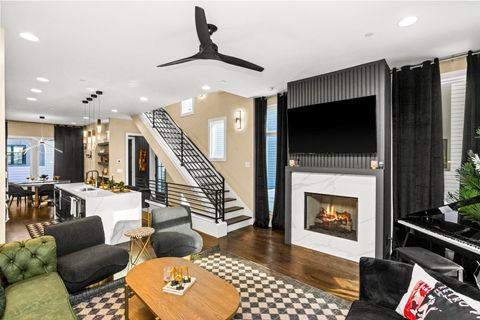 $1,225,000
-
Lot Size872 sqft
-
Home Size2,231 sqft
-
Beds4 Beds
-
Baths4.5 Baths
-
Year Built2024
-
-
 $1,225,000
-
Lot Size872 sqft
-
Home Size2,231 sqft
-
Beds4 Beds
-
Baths4.5 Baths
-
Year Built2024
-

See all Real estate matching your search.
(all data current as of
8/25/2026)
Listing information deemed reliable but not guaranteed. Read full disclaimer.
Disclosure: Grant Hammond and BDG Partners represent the seller of Alora Nashville. This post describes a development I represent, and the assessment above reflects my independent professional opinion based on documented income, forward bookings, and permit data. Buyers should conduct their own due diligence and consult their own tax and legal advisors.
Forward-looking statements in this post, including expectations about buyer behavior through 2026 and 2027, are opinions based on current market conditions and are not guarantees. Tax outcomes depend on individual circumstances and current law, which can change. Consult a qualified CPA and attorney before acting on any strategy described here.