Newer edition: 3 biggest Nashville Real Estate Stories: September 13, 2026
Three Nashville real estate stories this week, and every one of them is really about a calendar. Metro Council cleared 43 acres of Vanderbilt parking lots for towers up to 425 feet. A full downtown block that sold for $34 million in 2021 went back to its lender without a shovel ever touching the ground. And the downtown core is now sitting on more than two years of condo inventory at the pace it is actually selling. Three stories, one clock.
Quick Takeaways: This Week in Nashville Real Estate Stories
- Vanderbilt clears its final vote: Metro Council gave third and final approval on Tuesday, September 1. The 43-acre Innovation Neighborhood allows 30 stories near West End.
- Downtown’s core holds more than two years of condo inventory: 90 active listings against 22 closings in six months. Count shadow inventory and it is worse.
- A 3 tower plan ends in a deed in lieu: the SoBro block bought for $34 million in August 2021 went back to its lender this month. The developers had won every round in court.
- Bonus, institutional money is still buying the Gulch: Camden Property Trust paid $88.6 million for the 16-story Harlowe, close to $300,000 a door.
On This Page
- 1. Council clears Vanderbilt’s 43 acres
- 2. The downtown condo core is thin
- 3. A $34 million block goes back to the lender
- Bonus: Camden pays $88.6 million in the Gulch
- Nashville Market Outlook
- FAQ
1. Metro Council Clears Vanderbilt’s 43-Acre Innovation Neighborhood, With Towers Allowed to 425 Feet

On Tuesday, September 1, Metro Council gave third and final approval to the Specific Plan zoning for Vanderbilt’s Midtown campus edge. It converts roughly 43 acres of surface parking into housing, retail, research and lab space. The university calls it the Innovation Neighborhood. Most coverage has called it a district. Either way it is the largest land-use decision this city made all year.
The tallest buildings, near West End Avenue and Natchez Trace, may now reach 30 stories or 425 feet. That cap arrived by amendment, after Hillsboro-West End residents pushed back on height and density. Vanderbilt’s release also promises roughly a 300% increase in greenspace and about a 175% increase in tree canopy, plus new sidewalks and bike lanes. The Nashville Scene reports the buildout could run 30 years.
Read the verbs carefully, because they are doing real work. Council approved zoning on third reading. Nobody has broken ground. A 30-year buildout makes most of this a horizon rather than a schedule, and I would not price a West End listing today off a rendering of 2050.
Why does a 425-foot cap on West End matter for West End condo owners?
Because it sets the ceiling that every future comparable in West End will be measured against, and it does so in a submarket that is already the tightest condo market near downtown.
The 37212 ZIP code covers Hillsboro-West End and Belmont, which is the neighborhood that negotiated that height cap. Condo supply there currently sits at 4.1 months, against 87 active listings. One ZIP over, in 37203, the same measure runs 9.8 months. Same product type, same week, same basis, and roughly double the supply.
I read that delta as the market already pricing proximity to Vanderbilt. If you own attached product in 37212, this vote did not hurt you. Thirty years of construction next door is a different conversation, and anyone buying there should ask about it out loud. A height cap settles height. It does not settle cranes, noise, or what your view looks like in year nine.
2. Downtown Added 24,700 Units Since 2020, and Its Core Is Holding More Than Two Years of Condo Inventory
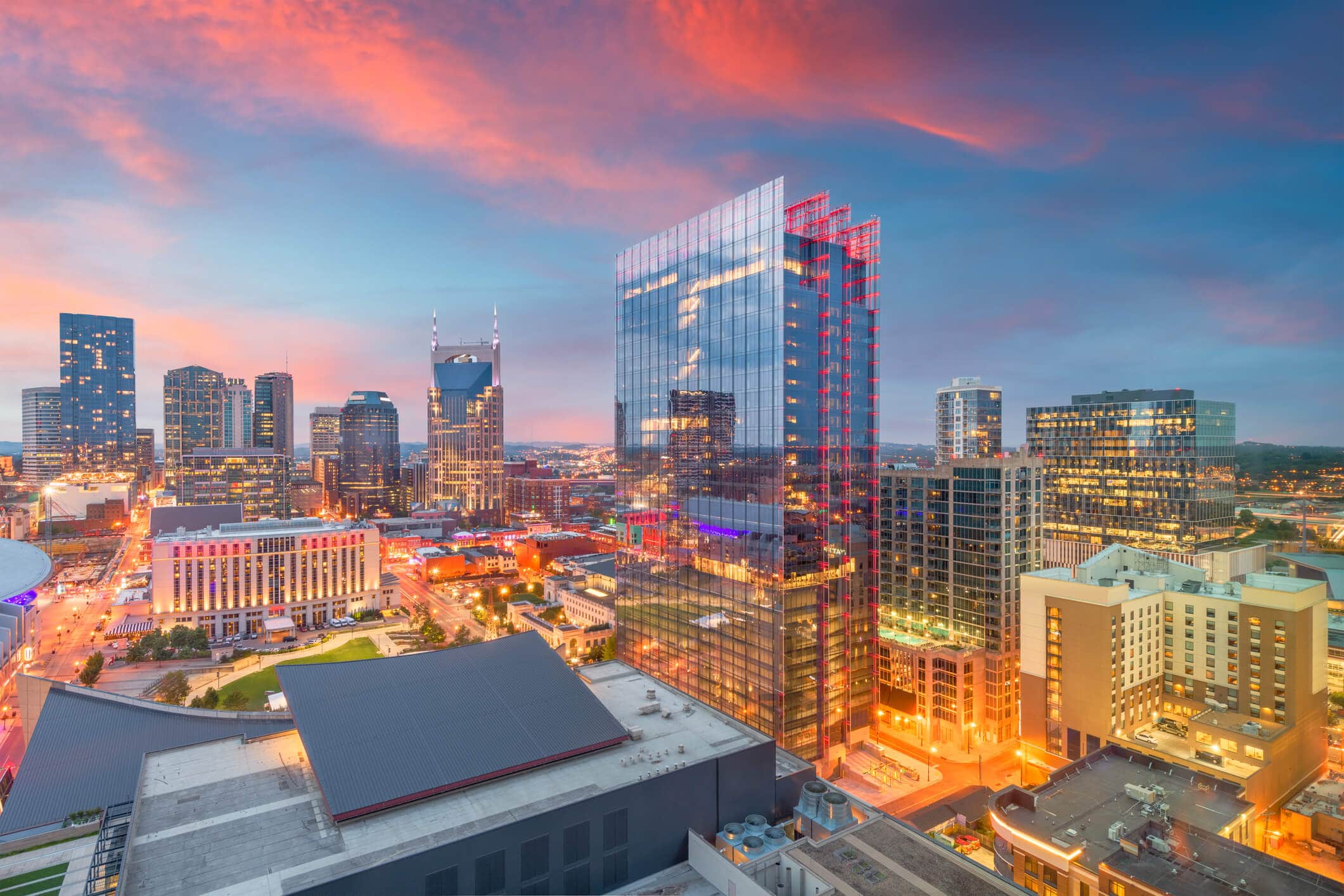
The Nashville Business Journal reported on August 31 that downtown has added 24,700 units since 2020, leading the nation in downtown housing production. It put downtown condo inventory at 15.6 months. That number is in the right neighborhood, but it is softer than what I see, and the reason is that “downtown” means four different things depending on who is saying it.
When people here say downtown, they mean the interstate loop plus the river: the core, SoBro, and the Gulch. Not Midtown, not Capitol View, not East Nashville. Split that way the picture gets worse, and the reason is not price. It is volume.
Take 37201 and 37219, the two ZIP codes sitting almost entirely inside that loop. As of September 6 they are carrying 48 and 36 active condos between them. Over the trailing 180 days those same two ZIP codes produced 22 closings. Run those numbers and the core is holding more than two years of inventory at the pace it is actually selling.
That is the optimistic version, because it counts only what is listed. It does not count the units owners have quietly pulled to wait out the market, the developer inventory that never came on, or the sellers who would list tomorrow if the first twenty sold. Add the shadow inventory and my honest read on the core is closer to three years. Inventory is not the problem here. Sales are. You cannot sell a tower’s worth of condos to a market that has closed 22 of them since March.
Why does a thin market matter more than a slow one for downtown condo sellers?
Because a slow market still produces comparables, and a thin one stops producing the evidence an appraiser and a lender need to close your sale.
22 closings in half a year, spread across dozens of buildings, means some towers go two or three quarters without a single sale. Then the last sale in your building starts doing work it was never meant to do. The appraisal comes back leaning on a comp from a different building, with a different HOA, view corridor and assessment history. I have watched that turn a clean contract into a renegotiation more than once this year.
The practical version, if you own in a Downtown Nashville condo tower: know your building’s own last three closings before you set a price, not the neighborhood’s. In the Gulch, where volume is better, that rule is less urgent and still worth ten minutes.
3. A Full SoBro Block Bought for $34 Million Goes Back to Its Lender, 5 Years and 3 Towers Later

Chicago-based Centrum Realty and Development paid $34 million in August 2021 for the Rutledge Hill block that last housed Cumulus Media. Its equity partner was Brentwood-based Nashville Capital Group. The plan was three towers, 39, 32 and 29 stories, with a landscaped public park between them. This month the block went back to its lender, California-based ABP Capital, by deed in lieu of foreclosure. No tower was ever built.
In 2022 three unit owners at the CityLights condominium sued Centrum, The Congress Group and Metro, arguing that Planning had improperly permitted the rezoning. Congress Group’s adjacent Park Place plan added towers of 36, 32 and 18 stories, and the objection was scale.
The developers won in Chancery. The Court of Appeals affirmed on November 2, 2023. The Tennessee Supreme Court declined the case on April 11, 2024.
They won every round, and it did not save them. The deal that penciled in August 2021 did not exist by the time the last appeal died.
Why did winning the lawsuit still cost them the project?
Because the suit never had to succeed to be fatal. It only had to last two years, and two years was long enough for the cost of money to more than double.
Centrum bought in August 2021, when prime was 3.25%. By the time the Court of Appeals cleared them in November 2023, prime was 8.50%. That is more than double, across eleven increases. The first cut of that cycle did not arrive until September 19, 2024, five months after the final appeal died. They won the case and lost the window.
Construction costs moved the same direction at the same time. Construction Analytics puts nonresidential building inflation at 8% in 2021, 12.1% in 2022 and another 5.4% in 2023, which compounds to roughly 28% on a project that had not poured a foundation. It also notes that high-rise residential tracks the nonresidential index, not the residential one. Its standing rule for a delayed project is that “construction cost inflation must be calculated and added to the previous budget”. Nobody underwriting in 2021 carried three years of that.
So the project was legally clear in April 2024 and finished anyway, because the numbers no longer worked. The site was listed fourteen months later, after the sponsor failed to secure construction financing. The lawsuit killed this project. Not by winning, but by lasting. I have been selling in this market for twenty-five years and I have never watched a downtown block die in a single bad month. They die two years at a time, quietly, while the money reprices around a calendar nobody controls. I wrote up the longer version in the projects that did not get built. What is still standing sits on the proposed developments tracker.
Bonus: Camden Property Trust Pays $88.6 Million for the Harlowe in the Gulch

Houston-based Camden Property Trust bought the 16-story Harlowe at 908 Division Street for $88.6 million. That is close to $300,000 a door across 300 units, with the building 93.7% occupied. Greystar developed it and sold it. Camden is renaming it Camden Gulch, its sixth apartment community here after a $43.5 million Franklin purchase in June.
Set that against the story above and you get the shape of this market. Rental capital is underwriting Gulch verticality at institutional pricing, in the same quarter a for-sale tower plan across downtown went back to a lender. Different products, different economics, and I would not hand a condo seller that per-door number as a comparable. As a read on who can still get a deal financed in this town, though, it is about as clear as it gets. Somebody is still writing nine-figure checks in the Gulch. They are just not writing them for condos.
Nashville Market Outlook
Forward-Looking Signals to Watch
The next 60 days carry more scheduled events than usual, and three of them will tell you more than any forecast.
- Metro Planning’s Design and Development Strategy. The department released its Existing Conditions and Trends Report on Wednesday, September 2, closing the analysis phase. Nothing is adopted yet. What comes next shapes downtown entitlement risk for years.
- The airport board meets September 17 on renaming BNA for Dolly Parton, a change the Tennessean reported on August 31 could cost roughly $10 million.
- The Titans start construction in November on a $25 million extension of the John Seigenthaler Pedestrian Bridge to Wasioto Park.
- Whether ABP Capital holds or re-trades the Rutledge Hill block. A lender that takes a site back is not a developer. Watch for a listing.
- The cost of money. Prime sat at 6.75% as of its last change on December 11, 2025. That is well off the peak and still 350 basis points above where Centrum underwrote.
What This Means for Buyers, Sellers, and Investors
Buyers. Downtown core condos are a genuine buyer’s market by every reading available, mine and the Business Journal’s. Ask for building-level closing history before you write, and treat a long days-on-market number as leverage rather than a warning. In this core, days on market is not telling you something is wrong with the unit. It is telling you how few people have walked through it.
Sellers. Price against your own building’s last three sales, not against a neighborhood average that a handful of Gulch closings are propping up. In a thin market, the first honest price beats three optimistic ones.
Investors. The Vanderbilt approval creates a 30-year construction horizon in Midtown and a hard 425-foot ceiling near West End. Both are now knowable, which is worth something. If you are underwriting new construction anywhere in Davidson County, carry a real entitlement-delay line and price the inflation that comes with it. More of my data work is in the research archive.
FAQ: Nashville Real Estate Stories This Week
What did Metro Council approve for Vanderbilt on September 1, 2026?
Council gave third and final approval to Specific Plan zoning for Vanderbilt’s 43-acre Innovation Neighborhood in Midtown. Buildings near West End Avenue and Natchez Trace may now reach 30 stories or 425 feet. Vanderbilt’s September 3, 2026 release describes roughly a 300% increase in greenspace and about a 175% increase in tree canopy. Source: Vanderbilt University and Nashville Scene, September 2 and 3, 2026.
How much condo inventory does downtown Nashville have right now?
It depends entirely on where you draw downtown. The Nashville Business Journal reported 15.6 months of downtown condo inventory on August 31, 2026. Inside the interstate loop, in 37201 and 37219, the picture is worse: 90 active condos as of September 6, 2026 against 22 closings over the trailing 180 days, which is more than two years of supply at that pace. Adjacent 37203, which takes in the Gulch and Midtown, read 16.6 months as of September 5, 2026, on active inventory divided by the trailing six-month closed rate, not seasonally adjusted. Source: Realtracs via IDX, and NBJ, August 31, 2026.
Why did the SoBro three-tower project fail if the developers won the lawsuit?
Because winning took two years and the money repriced while they waited. The Court of Appeals ruled for the developers on November 2, 2023, and the Tennessee Supreme Court declined the appeal on April 11, 2024. Over that stretch prime went from 3.25% in August 2021 to 8.50%, more than double, across eleven increases, while nonresidential construction costs rose 8% in 2021, 12.1% in 2022 and 5.4% in 2023. The site was listed for sale on June 16, 2025 after the sponsor failed to secure construction financing, and the lender took it back by deed in lieu in September 2026. Source: Nashville Post, WSJ Prime Rate history, and Construction Analytics.
What did Camden Property Trust pay for the Harlowe in the Gulch?
Camden Property Trust paid $88.6 million for the 16-story Harlowe at 908 Division Street, which works out to close to $300,000 a door across 300 units, with the building 93.7% occupied at sale. It is Camden’s sixth apartment community in the Nashville area, following a $43.5 million Franklin purchase in June 2026. Source: Nashville Business Journal and Nashville Post, September 1 and 2, 2026.
What do these Nashville real estate stories have in common?
Time, and what it costs. Vanderbilt won zoning for a buildout the Nashville Scene reports could run 30 years. The Rutledge Hill block spent 2022 through April 2024 in court and lost its financing window while it waited. And downtown’s core is holding more than two years of condo inventory at its current sales pace, which is what makes pricing hard. Each one is a story about duration rather than demand. Source: engine data as of September 6, 2026, and reporting cited above.
Forward-Looking Statement Disclosure
This post contains forward-looking observations about Nashville and Middle Tennessee real estate conditions. Those observations are based on market data, public filings and news reporting available as of September 6, 2026, and they are not guarantees of future results. Market figures sourced from Realtracs via IDX reflect active and closed listing data as of the date shown beside each figure and are subject to revision as records update. Nothing here is investment, legal or tax advice. Broker fees are not set by law and are fully negotiable.