Nashville Mortgage Rates | February 23 to 27 2026
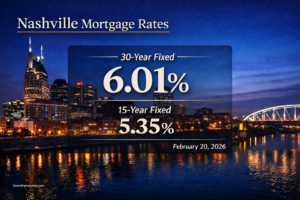
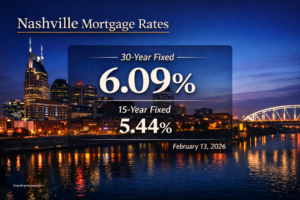
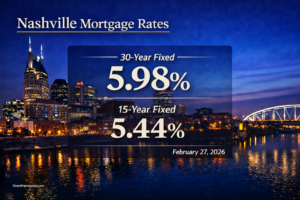
Nashville mortgage rates for February 23 to 27, 2026 averaged 5.98% for 30-year fixed and 5.44% for 15-year loans. The 10-year Treasury...
30-year mortgage rate analysis from Grant Hammond, broker at Compass RE with 25 years of continuous Nashville mortgage rate reporting. This archive collects every 30-year mortgage rate post, organized chronologically. Each post covers the current 30-year fixed mortgage rate and the impact on Nashville buyer affordability. Additionally, every post tracks the same fundamental relationship: 30-year rate movements, Freddie Mac PMMS data, and the spread to the 10-year Treasury yield.
This archive is the historical reference for 30-year mortgage rate coverage. For current Nashville mortgage rates and weekly updates, see the Nashville Mortgage Rates Today pillar. This tag archive provides the deeper historical context across multiple rate cycles.
Every 30-year mortgage rate post covers the same data points consistently. It provides the current 30-year fixed rate and weekly change. Then it analyzes the rate-versus-Treasury spread. Additionally, every post features Federal Reserve policy context. Each post also calculates Nashville buyer payment impact at current rates. Furthermore, every analysis closes with a forward-looking framing about the next several weeks of rate movement.
30-year mortgage rate analysis matters because the 30-year fixed rate determines monthly payment affordability for the majority of Nashville buyers. Specifically, the 30-year rate reflects Treasury yield movements plus a credit spread that varies with lender risk appetite. These factors include Federal Reserve quantitative policy, inflation expectations, and mortgage lender capacity. Furthermore, even small rate movements translate to meaningful changes in qualifying loan amounts. Additionally, the methodology stays consistent across every entry.
Every 30-year mortgage rate post covers Nashville and Middle Tennessee buyer implications. Specifically, the coverage includes payment impact across Davidson County and Williamson County. These include Brentwood, Franklin, Belle Meade, Green Hills, East Nashville, The Gulch, Downtown Nashville, Germantown, Hendersonville, and Spring Hill. Additionally, the analysis tracks buyer affordability across multiple price bands. These bands range from entry-level Nashville homes under $400K through Williamson County luxury estates above $2.5M.
Grant Hammond is a Nashville real estate broker at Compass RE. He has 25 years of experience and over $1 billion in career sales, including 350+ downtown high-rise condo transactions and 550+ Davidson County Airbnb and short-term rental transactions. Furthermore, his market analysis appears regularly in major publications. These include the Wall Street Journal, the Los Angeles Times, The Tennessean, and the Nashville Business Journal. Grant Hammond holds Tennessee Real Estate Broker License #261980.