Nashville real estate stories last week marked a major identity shift for Music City: a Super Bowl bid won, a luxury sub-market accelerated, and a century-old industrial plant closing.
The NFL awarded Nashville its first Super Bowl LXIV for 2030, with Nissan Stadium hosting. Meanwhile, AJ Capital Partners’ 18-acre Wedgewood Village added five luxury retailers including Hermès, Brunello Cucinelli, and Malbon. Finally, U.S. Smokeless Tobacco announced it will shutter its 30-acre Nashville campus in early 2028. The company has operated downtown for more than 100 years.
On the surface, the stories have little in common. One is a sports announcement. Another is a retail story. The third is an industrial closure.
But together, they signal something larger. Specifically, Nashville is moving into a new phase as a major American city. See more in the New Construction and Development category.
Quick Takeaways: Nashville Real Estate Stories This Week
- Nashville Wins Super Bowl LXIV (2030): The NFL awarded Nashville its first Super Bowl at a May 20 press conference at Nissan Stadium, with the 2030 game set for the new enclosed stadium. NFL EVP Peter O’Reilly called it “a game-changer for the Super Bowl.”
- Wedgewood-Houston Booms After Hermès: AJ Capital Partners’ 18-acre Wedgewood Village added five luxury retailers in 2026 after Hermès opened in October 2025, including Brunello Cucinelli, Zimmermann, Staud, Malbon, and Eberjey. Memoir May Hosiery opens 109 residential units in March 2026.
- U.S. Smokeless Tobacco Closes Nashville Plant After 100+ Years: Altria Group subsidiary U.S. Smokeless Tobacco will shutter its 30-acre Nashville campus in early 2028 and transition operations to Hopkinsville, Kentucky. The property sits across from the Nashville Farmers Market and across Rosa Parks Boulevard from Germantown.
- Bonus: 1880s Victorian Lists for $1.8M After 50+ Years: The Belair House at 2500 Woodlawn Drive in 37212 hit the market for $1.8 million, the first listing in over 50 years. The 4,243-square-foot Victorian features two fireplaces, pocket doors, and original 1883 flooring.
1. Nashville Wins First Super Bowl Bid for 2030 at Nissan Stadium

Speakers at the May 20, 2026 Super Bowl LXIV announcement at Nissan Stadium included Mayor Freddie O’Connell, Gov. Bill Lee, Titans CEO Burke Nihill, NFL EVP Peter O’Reilly, and broadcaster Jim Nantz.
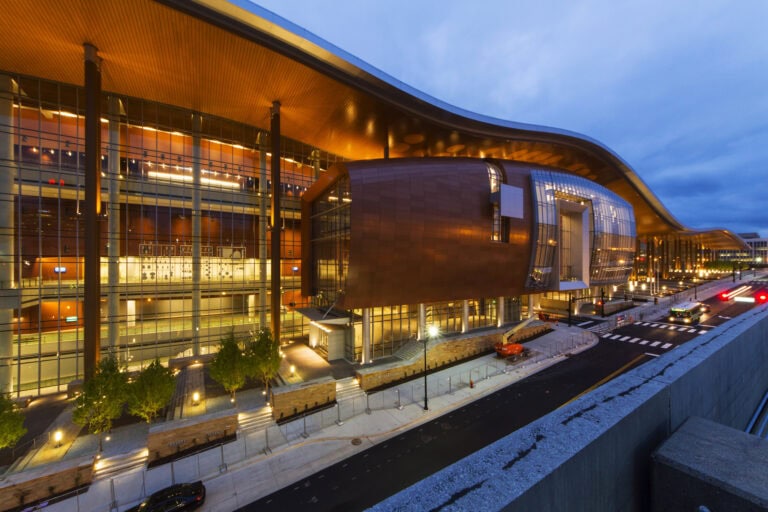
The NFL awarded Nashville its first Super Bowl on Tuesday, May 19, 2026. Super Bowl LXIV will be played at the new enclosed Nissan Stadium in February 2030. The announcement came at a May 20 press conference at the stadium itself. The room held Mayor Freddie O’Connell, Gov. Bill Lee, Titans CEO Burke Nihill, and national sports broadcaster Jim Nantz.
Nantz, co-chair of Nashville’s Super Bowl Bid Committee, said the win validates his move to Tennessee five years ago. “It’s almost impossible to quantify just how big this moment is,” Nantz said at the press conference. He framed the audience reach as larger than the World Series, NBA Finals, Final Four, and a presidential nominating convention. “In the pantheon of American sports … it doesn’t get any bigger,” Nantz said.
Peter O’Reilly, the NFL EVP overseeing the Super Bowl, called the bid “a game-changer” for Nashville and the league. O’Reilly also helped bring the 2019 NFL Draft to Music City. According to O’Reilly, the new stadium alone did not win Nashville the bid. Specifically, the city’s multi-decade growth as an entertainment center was the determining factor. O’Reilly told Sports Business Journal that new stadiums are “not the element” that delivers a Super Bowl bid.
The Super Bowl typically brings approximately 200,000 visitors to a host city. Specifically, the NFL requires tens of thousands of hotel rooms and airport capacity to match. Commissioner Roger Goodell has called the infrastructure threshold “the biggest challenge” for prospective host cities. Additionally, Nashville’s 2019 NFL Draft demonstrated the city’s capacity to handle a marquee-event crowd. The Draft set attendance records and put Nashville on the major-event map.
Weather emerged as the key risk factor for Nashville’s Super Bowl bid. Nashville will be the most northern Super Bowl host since Minneapolis in 2018 most likely to face extreme cold. Notably, Nashville’s average February high is 55 degrees Fahrenheit. That sits “right in the range” the league is comfortable with, O’Reilly told Sports Business Journal. Anything below 32 degrees would be a “true outlier event,” O’Reilly added. The new Nissan Stadium is enclosed, which protects the game itself but not the week of events around it.
Burke Nihill, Titans president and CEO, framed the win as the product of years of coordination. “In micro moments from across the city and state, people giving their support … we’ve done something awesome,” Nihill said. The Titans franchise was founded as the Houston Oilers in 1960. Nashville’s win marks 70 years of franchise history culminating in a Super Bowl host bid.
Why this Super Bowl bid matters for Nashville real estate
Related coverage: For ongoing analysis of how major events reshape Nashville short-term rental performance, see the Nashville Airbnb investment market overview and the Nashville STR zoning and permits guide.
A Super Bowl host bid is one of the few events that can permanently reset a city’s national perception. In my experience, that kind of perception reset moves real estate prices long before the event itself happens. Specifically, hotel demand pulls forward 3 to 5 years out. Office and residential investment usually follow.
Nashville’s hotel pipeline is already among the deepest in the country. Notably, the metro added more than 10,000 hotel rooms between 2020 and 2025, with several thousand more in the pipeline. The Super Bowl bid validates that buildout and likely accelerates the next wave. Importantly, hotel construction typically pulls high-end residential development with it. Specifically, condo and multifamily projects within walking distance of major event venues tend to see disproportionate absorption.
For residential buyers and investors, the practical takeaway is timing. The Super Bowl itself is 45 months out. Investors with conviction on Nashville’s growth have a short window to position before institutional capital prices the event in. Importantly, downtown condo, East Bank residential, and SoBro multifamily tie most directly to Super Bowl economics. I’d watch all three for cap-rate compression over the next 18 months. For Airbnb investors specifically, I’ve broken down what the Super Bowl bid means for Nashville Airbnb revenue in a separate analysis.
2. Wedgewood-Houston Explodes With Luxury Retail Growth After Hermès
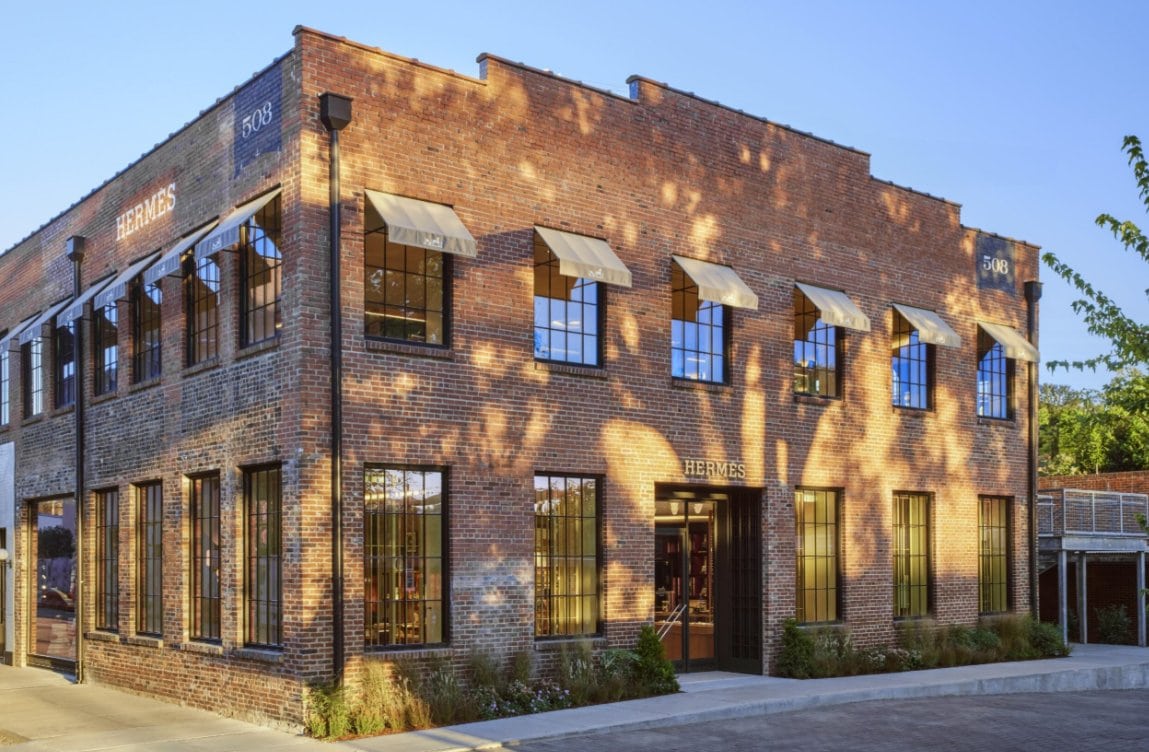
AJ Capital Partners’ 18-acre Wedgewood Village in Nashville’s Wedgewood-Houston neighborhood, anchored by Hermès, Brunello Cucinelli, Soho House, Pastis, and Live Nation’s 4,400-capacity venue The Truth.
AJ Capital Partners’ 18-acre Wedgewood Village development in Nashville’s Wedgewood-Houston neighborhood has become the South’s most consequential luxury retail story. Hermès opened a two-story location at the development in October 2025. Brunello Cucinelli followed in March 2026. Coming this summer: Zimmermann, Staud, Malbon, and Eberjey, all opening their first stand-alone Tennessee locations.
Hermès America president Diane Mahady told WWD the Wedgewood-Houston location was deliberate. “We love the location; the store is absolutely beautiful,” Mahady said. “It’s in an old hosiery mill so it sort of speaks to the industrial past of Nashville.” The store occupies the former May Hosiery Mills building. Notably, socks made there were worn by Neil Armstrong on the moon. “We’re not downtown, we’re not at the mall,” Mahady added. “The store itself will be an expression of the community.”
Kyle Allen, AJ Capital’s senior vice president of retail, has framed Wedgewood Village as urban placemaking with national reference points. “You can think of it as the Meatpacking District in New York or West Hollywood in L.A.,” Allen told WWD. “The neighborhood has become an enclave for artists and creativity.” Specifically, AJ Capital sought brands that “embody craftsmanship and the spirit of entrepreneurship,” according to Allen. The firm also operates Belle Meade Village and Little River in Miami. Additionally, AJ Capital has more than 100 properties in over 50 markets.
Aaron Heiser, Malbon’s CEO, told WWD his team did “significant market mapping” before choosing Wedgewood-Houston. “We found 20 key cities with our target demographic and golf density,” Heiser said. “Nashville was on that list.” Heiser specifically chose Wedgewood-Houston over 12South because the development “matches what we’re trying to do as a brand.” The Malbon store will open at 2,534 square feet. Eberjey takes 919 square feet, Zimmermann 2,186, and Staud 1,742.
Wedgewood Village is not retail-only. Memoir May Hosiery, AJ Capital’s second rental property in the neighborhood, opens 109 residential units in March 2026. The development sits next to other anchors. Soho House, Pastis, the Academy of Country Music, and Live Nation’s 4,400-capacity music venue The Truth all sit in Wedgewood Village. Pastis comes from restaurateurs Stephen Starr and Keith McNally. Additionally, Wedgewood Village’s restaurant lineup includes Momotaro, Alla Vita, and Middleman, all from Boka Restaurant Group. Other tenants include Bell Bird Books, Bower nail salon, Culture Club frozen Greek yogurt, and Perenn Grocery. Fifteen stores and restaurants are open or opening this year.
Why the Hermès effect matters for Wedgewood-Houston values
Related coverage: For pricing context across the broader market, see condo prices by Nashville neighborhood and the luxury high-rise condo market.
Hermès does not enter markets casually. The brand operates fewer than 25 stores in the entire United States. Specifically, Hermès stores tend to anchor districts the brand has identified as long-term wealth concentrations. Nashville’s selection signals that the global luxury market now treats the Middle Tennessee buyer as durable, not speculative.
Wedgewood-Houston was an industrial sub-market just a decade ago. Specifically, May Hosiery Mills was producing socks for the U.S. military in the 1960s. Today, the same building houses Hermès and Soho House. That transformation typically takes a generation in most American cities, but Wedgewood-Houston compressed it into about 12 years.
For residential buyers and investors watching Wedgewood-Houston, the implications are concrete. First, Memoir May Hosiery’s 109 units opening in March 2026 set a new price benchmark for the neighborhood. Second, the surrounding single-family and small multifamily inventory should see continued appreciation as the retail anchors mature. Importantly, Wedgewood-Houston is now in the same conversation as The Gulch, 12South, and Germantown for high-end Nashville urban living.
In my experience, sub-markets that attract Hermès do not de-anchor. The brand’s location strategy is multi-decade. Once Hermès opens, the surrounding three to five blocks tend to see permanent retail rent inflation. Residential prices typically follow within 24 to 36 months. I’d treat Wedgewood-Houston as a structurally higher-priced sub-market going forward, not a temporary luxury moment.
3. U.S. Smokeless Tobacco to Close Nashville Plant After More Than a Century

U.S. Smokeless Tobacco’s 30-acre Nashville campus on Harrison Street, across from the Nashville Farmers Market, will close in early 2028 after more than 100 years and the parcel will be sold.
U.S. Smokeless Tobacco will close its Nashville manufacturing operations in early 2028 after more than 100 years. The Altria Group subsidiary announced the closure in a May 21 release. The company will transition production to a new facility in Hopkinsville, Kentucky. Notably, the 30-acre Nashville campus will be sold.
Michael Brace, U.S. Smokeless Tobacco president and CEO, framed the closure as part of long-term modernization. “By streamlining operations and concentrating production at a purpose-built facility, we can improve efficiency,” Brace said. The CEO added the move will “enhance resilience and better support the future needs of our business.” The new Hopkinsville facility will produce U.S. Smokeless Tobacco’s brands from start to finish. Currently, the Nashville plant primarily handles finishing and packaging for Copenhagen and Red Seal.
The Nashville campus assembled in pieces over more than a century. U.S. Smokeless Tobacco and its predecessors spent at least $39.6 million acquiring property between 1912 and 2018, per Metro records. Notably, in 2018 the company bought Goodwill Industries of Middle Tennessee’s neighboring campus for $38 million alone. Several of the earliest land transactions are too old to view digitally.
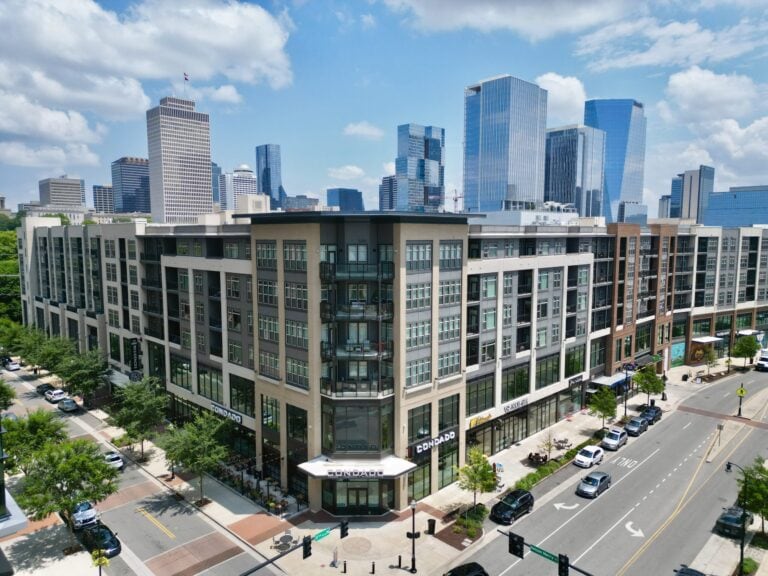
The location is the headline. The 30-acre campus sits on Harrison Street, across from the Nashville Farmers Market. Specifically, it sits across Rosa Parks Boulevard from Germantown, where Atlanta-based New City Properties continues investing heavily. The site sits steps from the state property where The Boring Company launched its tunneling machine in 2024. Additionally, the campus is minutes from Capitol View, downtown, and Nashville Yards.
Brace’s closing statement framed the closure as a separation from Nashville but not Tennessee. “While our operation in Nashville will close in 2028, we remain committed to our brands and American tobacco,” Brace said. “Our connection to both states runs deep, and we value our growers and partners.” U.S. Smokeless Tobacco’s parent company, Altria Group, trades on the New York Stock Exchange under the ticker MO.
Why the plant closure matters for the southeast submarket
A 30-acre downtown-adjacent parcel hitting the market is rare in Nashville. Specifically, parcels of that size with that level of surrounding development potential almost never come available. The U.S. Smokeless Tobacco campus is bordered by Germantown to the east. Additionally, the Boring Company tunneling site sits to the south, and Nashville Yards to the southwest. In my experience, sites with that adjacency clear at premium pricing because the surrounding infrastructure investment is already locked in.
The redevelopment trajectory is the question. The site could host high-density multifamily, office, mixed-use, or hospitality. Specifically, proximity to Nashville Yards and Germantown suggests the buyer will likely pursue a mixed-use program. The closure won’t happen until early 2028. That gives 18 to 24 months for the disposition process to play out.
For residential buyers in Germantown, this is meaningfully positive long-term news. Specifically, the existing Germantown market will benefit from any high-density residential program built on the former tobacco campus. Importantly, the early-2028 closure timeline means construction probably starts no earlier than 2029, with delivery in 2031 or later. That timeline maps to the same window when Super Bowl-related infrastructure benefits will be reaching the area.
Bonus Insight: Historic 1880s Victorian Lists in 37212 After 50+ Years

The Belair House at 2500 Woodlawn Drive in Nashville’s 37212 zip code, an 1883 Victorian on the market for the first time in over 50 years for $1.8 million.
The Belair House at 2500 Woodlawn Drive hit the market this week for $1.8 million. Notably, this is the first time the 1883 Victorian has been listed in over 50 years. The 4,243-square-foot home includes four bedrooms, three bathrooms, two fireplaces, pocket doors, intricate moldings, and original flooring. Realtracs MLS lists the property as #3155633.
The location places the home in zip code 37212, the Belmont/Hillsboro/Vanderbilt sub-market. Specifically, the parcel sits minutes from Vanderbilt, Belmont, St. Thomas, Music Row, Hillsboro Village, downtown, and Green Hills. Additionally, the current owner kept a ledger of every home improvement during ownership. The new buyer will inherit it.
The Belair House listing rounds out a week of Nashville real estate stories spanning four different transaction types. Specifically, this week covered institutional events, retail growth, industrial closures, and heritage residential offerings. Each story represents a different dimension of Nashville’s transition from regional capital to nationally-relevant city. In my experience, heritage homes within walking distance of Vanderbilt and Belmont tend to outperform Davidson County appreciation. The Belair House’s 50-year hold underscores how rarely properties of this character come available.
Nashville Real Estate Market Outlook
For deeper analysis across our weekly coverage, visit the Nashville real estate market research archive.
These four Nashville real estate stories test different parts of the same thesis. Specifically, Nashville is transitioning from regional capital to nationally-relevant American city. First, the Super Bowl bid is the most visible symbol of that transition. Second, Wedgewood-Houston’s luxury retail buildout signals that the global luxury market now treats Nashville as durable. Third, U.S. Smokeless Tobacco’s closure represents the structural shift away from legacy industrial employers. Finally, the Belair House represents the heritage residential category that anchors the city’s character through the transition.
On one hand, all four stories represent forward momentum, continuing the pattern from last week’s Fisk Quantum Leap and Oracle Radius Building stories. The Super Bowl bid validates Nashville’s marquee-event capacity. Hermès and Brunello Cucinelli validate Nashville’s luxury market. The tobacco plant closure validates that Nashville’s economy is large enough to absorb the loss of a century-old employer. Additionally, the Belair House listing tests whether heritage character commands premium pricing in an increasingly modern downtown.
On the other hand, there are real headwinds. Nashville consumer sentiment has dropped in recent months as the Iran conflict weighs on the broader economy. Importantly, that macro pressure interacts with rate-environment headwinds that have already constrained for-sale residential production. Specifically, the gap between announced developments and actual deliveries continues to widen across multiple sub-markets. Ultimately, what gets built versus what gets announced matters more than the headline pipeline.
The balanced single-family market remains anchored at the 6-month inventory benchmark. Specifically, Nashville’s MLS sub-markets continue to run below this level for entry-price single-family stock. Consequently, price stability holds through the next 12 to 24 months despite the for-sale development slowdown. Ultimately, the forward picture through 2027 depends on whether these institutional bets actually print returns.
Forward-Looking Signals to Watch
Super Bowl LXIV (2030): If Nashville’s hotel pipeline adds another 5,000+ rooms between now and 2029, the bid moves from announcement to event readiness. Specifically, watch for hotel construction starts in downtown, SoBro, and the East Bank over the next 18 months. According to NFL EVP Peter O’Reilly, infrastructure capacity remains the league’s biggest concern for any host city.
Wedgewood-Houston: If Memoir May Hosiery rents at the upper end of Nashville urban multifamily, the WeHo residential premium is real. Specifically, the 109 units opening in March 2026 will be the first concrete test of post-Hermès pricing. Importantly, if Zimmermann, Staud, Malbon, and Eberjey all open on schedule this summer, the retail anchor thesis confirms.
U.S. Smokeless Tobacco Site: If the 30-acre campus trades at land-only pricing, that signals weakness in surrounding Germantown/Capitol View office demand. Conversely, if the parcel trades at mixed-use program pricing, institutional capital is pricing in the surrounding infrastructure. According to the company, the closure happens in early 2028. Watch for the disposition timeline announcement in the next 12 months.
What This Means for Buyers, Sellers, and Investors
Buyers: Buyers with conviction on Nashville’s growth have 18 to 24 months to position before Super Bowl capital prices in. Specifically, downtown condo, East Bank residential, and SoBro multifamily are the most directly impacted sub-markets. Buyers should focus on assets within walking distance of the new Nissan Stadium.
Sellers: Sellers of downtown condo and East Bank residential should consider holding rather than listing in the next 12 months. Specifically, the Super Bowl bid creates a forward-pricing tailwind. Pricing today versus pricing in 12 to 18 months will likely show a meaningful spread.
Investors: Investors should watch the U.S. Smokeless Tobacco disposition closely. Specifically, the trade outcome will set the bar for any large-parcel downtown-adjacent acquisition over the next 24 months. Additionally, Wedgewood-Houston multifamily acquisitions in the next 12 months may catch the post-Hermès pricing wave before it fully clears.
Move-up buyers: Move-up buyers targeting Wedgewood-Houston, Germantown, the 37212 Vanderbilt/Belmont corridor, or Brentwood face a narrow window. Specifically, all three sub-markets sit at the intersection of multiple positive catalysts this week. Additionally, inventory in those corridors typically runs 30 to 45 days on market versus the 60-day Davidson County median.
I’ve sold more than 350 high-rise condos in downtown Nashville. Over those decades, I’ve watched Nashville real estate stories repeat in cycles. The Super Bowl bid is the loudest signal yet that the transition from regional capital to nationally-relevant city is complete. Importantly, this is the kind of moment where positioning matters more than timing. In my experience, buyers who wait for the Super Bowl itself to validate their conviction usually pay 20 to 30% more. Buyers who position 24 months out tend to do better.
FAQ: Nashville Real Estate Stories This Week
When did Nashville win its Super Bowl bid?
Nashville won its first Super Bowl bid on Tuesday, May 19, 2026. Super Bowl LXIV will be played at the new enclosed Nissan Stadium in February 2030. Mayor Freddie O’Connell, Gov. Bill Lee, Titans CEO Burke Nihill, and broadcaster Jim Nantz attended the May 20 press conference. Notably, Nantz co-chairs Nashville’s Super Bowl Bid Committee.
How many luxury retailers has Wedgewood-Houston added in 2026?
AJ Capital Partners’ Wedgewood Village added at least six luxury retailers in 2026. Specifically, Brunello Cucinelli opened in March 2026, with Zimmermann, Staud, Malbon, and Eberjey opening this summer. Hermès opened at Wedgewood Village in October 2025. All five summer 2026 openings are first stand-alone Tennessee locations for those brands.
When will U.S. Smokeless Tobacco close its Nashville plant?
U.S. Smokeless Tobacco will close its Nashville plant in early 2028 after more than 100 years. The Altria Group subsidiary will transition operations to a new facility in Hopkinsville, Kentucky. Additionally, the 30-acre downtown campus on Harrison Street will be sold. The site sits across from the Nashville Farmers Market and across Rosa Parks Boulevard from Germantown.
What is The Belair House, and how much is it listed for?
The Belair House at 2500 Woodlawn Drive in Nashville is listed for $1.8 million. The 1883 Victorian is on the market for the first time in over 50 years. The 4,243-square-foot home includes four bedrooms, three bathrooms, two fireplaces, pocket doors, intricate moldings, and original flooring. The property sits in zip code 37212, minutes from Vanderbilt, Belmont, Music Row, and downtown.
What links these three Nashville real estate stories together?
These three Nashville real estate stories signal one larger trend: Nashville is transitioning from regional capital to nationally-relevant American city. Specifically, the Super Bowl bid, Wedgewood-Houston luxury buildout, and Smokeless Tobacco closure each represent a different dimension. Importantly, the next 18 to 24 months will determine how the transition reprices Middle Tennessee real estate.
Forward-Looking Statement Disclosure
Forward-looking statements in this post reflect current market signals and cited forecasts as of May 24, 2026. Future performance may differ materially. This is not investment advice. Grant Hammond is a Tennessee-licensed broker (#261980) at Compass RE.
Broker fees are not set by law and are fully negotiable. All commission and buyer-agency details should be discussed before contract.