
During the early stages of the housing downturn, major developments began adjusting to changing financial realities.
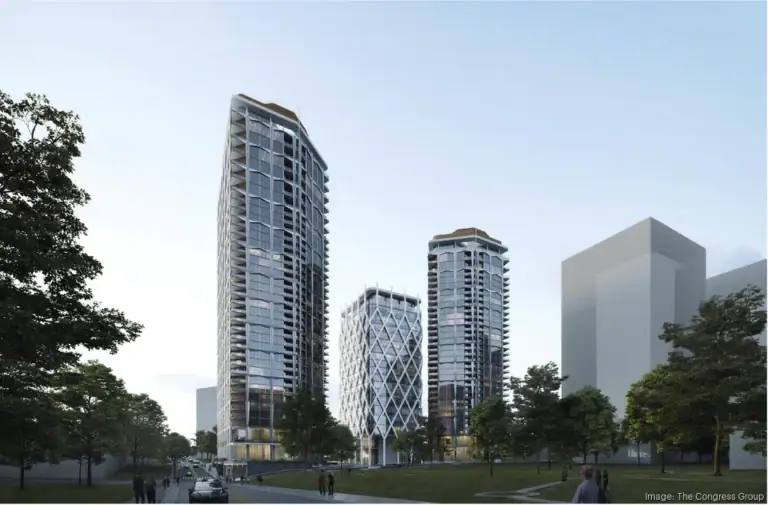
A report from NewsChannel 5 Nashville outlined significant revisions to the proposed Signature Tower Nashville, one of the most ambitious projects planned for downtown Nashville.
Original Vision vs Revised Plan
The initial concept called for a 70-story tower with a substantial residential component.
Plans included approximately 400 condominium units, along with hotel and office space. However, as market conditions shifted, the residential portion was significantly reduced.
The revised plan scaled condo units down to approximately 125 units, concentrated on the upper floors, while maintaining the building’s overall height and mixed-use structure.
Why the Plan Changed
Financing constraints drove the adjustment.
Large-scale developments require alignment between capital availability and projected demand. As the housing market weakened, securing financing for a high volume of luxury condos became more difficult.
Reducing the number of residential units was a strategic attempt to improve the project’s financial feasibility.
Impact on Pre-Construction Buyers
Early buyers were directly affected.
Approximately 100 prospective buyers had expressed interest or placed deposits under the original plan. With the revised structure, some of those units were no longer available, prompting options for deposit returns.
This reflects a broader pattern during the downturn, where pre-construction contracts became more fluid as projects evolved.
Mixed-Use Strategy Adjustment
The revised structure emphasized diversification.
By shifting more of the building toward office and hotel uses, the developer aimed to balance revenue streams and reduce reliance on condo absorption during a weaker residential cycle.
Broader Development Implications
This change illustrates how developers respond to market pressure.
Rather than cancel projects outright, developers often reconfigure unit mix, pricing, or phasing strategies to better align with current demand and financing conditions.
Historical Context
This reflects 2008 conditions, when early signs of the housing downturn began impacting large urban developments.
Projects that depended heavily on luxury condo sales were among the first to adjust as demand softened and credit tightened.
Why This Still Matters
Development feasibility is highly sensitive to product mix and market timing.
Understanding how and why projects shift between residential, office, and hospitality components provides valuable insight into how developers manage risk across cycles.
For a broader look at downtown condo trends, pricing dynamics, and building performance, explore condos for sale in downtown Nashville.


August 9, 2009, 2:48 pm
August 30, 2010, 10:06 pm
COME ON WITH IT, THERE WAS SO MUCH EXCITEMENT FOR IT….PLEASE!
September 3, 2010, 3:40 pm
If anyone can build it, Tony Giarratana is the guy. There are many challenges for the project including some very vocal opposition, but I am completely behind it for a number reasons.