Newer edition: Read this week’s 3 biggest Nashville real estate stories for August 2, 2026.
Licensed Tennessee real estate broker (TN #261980), specializing in Nashville short-term rentals, downtown high-rise condos, luxury, and new construction.
Three Nashville real estate stories this week tell the same story: the supply side is being built, not talked about. Music City Center dropped $52 million on downtown land. Southwest is pushing for more BNA gates. The Tennessee legislature just cracked the permit process wide open. I track these Nashville real estate stories every Sunday so my buyer and investor clients see structural shifts before they show up in pricing.
Quick Takeaways: Nashville Real Estate Stories This Week
- Music City Center buys the former Estes Kefauver federal garage for $52 million: The convention center’s CEO told the Business Journal that “this won’t be the only purchase,” signaling a multi-parcel SoBro land assembly that will reshape downtown’s south flank for years.
- BNA expansion adds Southwest interest at the satellite concourse: Southwest Airlines is eyeing gates at Nashville International Airport’s satellite concourse while the airport closes a surface parking lot to keep the New Horizon expansion moving.
- New Tennessee law automatically approves development permits past a deadline: A bill out of the General Assembly forces local governments to act on permit applications within a set window or the application is approved by default. Impact “yet to be seen,” but the intent is to compress build timelines statewide.
- Bonus: A Chicago developer landed rezoning for an I-840 site in Murfreesboro: Institutional capital from outside Tennessee is now planting flags in the Middle Tennessee exurb ring, not just inside the Davidson County core.
1. Music City Center buys $52M Estes Kefauver federal garage, says “this won’t be the only purchase”

The biggest of this week’s Nashville real estate stories wasn’t a listing or a closing. It was a land buy that hands the convention center control of its next decade.
On June 10, the Tennessean reported that Music City Center bought the former Estes Kefauver Federal Building garage for $52 million. The garage sits adjacent to the existing convention center in SoBro, the south-of-Broadway district that has been Nashville’s most-watched development corridor for the last five years. The Business Journal followed up on June 11 with a piece that quoted MCC leadership making the line that should get every downtown investor’s attention: “this won’t be the only purchase.”
That posture matters. Most second-tier convention centers wait until bookings overflow, then go hat-in-hand to City Hall for adjacent parcels. MCC is doing the opposite: buying ahead of demand, in cash, with public messaging that more deals are coming. Closing the $52M was the easy part. What gets built on that site will define SoBro for the rest of the decade.
Why does this Music City Center expansion matter for downtown condo values and Airbnb investors?
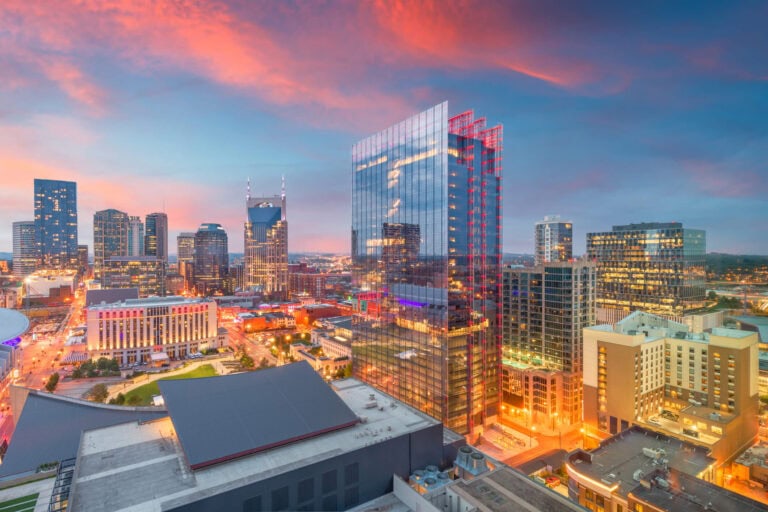
I’ve sold 350+ downtown high-rise condos, and the single biggest variable for resale and nightly-rate performance isn’t finish level or square footage. It’s what the convention center is doing two blocks away. When MCC books a strong year, every downtown Nashville condo within walking distance sees more showings, faster closings, and higher Airbnb nightly rates. Twelve Twelve in The Gulch and the Pullman in SoBro are the two I’d be watching most closely. When MCC has a soft year, that demand layer thins out fast.
My read: this demand doesn’t show up in 2026. It hits in 2028-2031 as expanded MCC capacity converts into bigger bookings. The buildings best positioned are the ones already standing within four blocks of MCC: 505, the Pullman, Twelve Twelve, the Adelicia (Midtown-adjacent), and the new SoBro towers including Horizon Nashville. Smart money positions before the new space opens, not after.
For STR investors, the same logic compounds. Convention attendees are the highest-paying short-stay guests Nashville hosts: mid-week bookings, 3+ nights average, willing to pay for that one-block walk back to the hotel. When I underwrite Nashville Airbnb investment properties in OOSTR or NOOSTR-eligible downtown buildings, the MCC booking calendar is line item one. The same dynamic is exactly what’s coming with Super Bowl LXIV in February 2030, on a single-week scale. Pricing units off 2024-2025 comps will undershoot what’s actually coming. My data-driven best buildings guide ranks every downtown contender on closed-sale volume and $/SF.
2. Southwest Airlines eyes Nashville airport satellite concourse gates as BNA expansion continues

The second Nashville real estate story is about runway capacity, gate space, and the airline math that decides how many people can land in Nashville on any given day.
On June 8, the Tennessean reported that BNA will close a surface parking lot for ongoing New Horizon expansion work. Four days later, the Business Journal followed with the bigger story: Southwest Airlines is eyeing more gates at BNA’s satellite concourse. Southwest is already a top-three carrier here. Stacked together: the airport is making room for more planes, and a major LCC is staking its claim.
I sat through enough relocation closings during the 2021-2024 boom to know the consultants who modeled New Horizon back in the late 2010s missed badly on where Nashville would be by now. BNA is playing catch-up to a passenger base that’s already here.

Why do the BNA expansion and Southwest gates matter for East Nashville and relocation buyers?
Airport growth and East Nashville home values move together. I’ve walked clients through East Nashville homes for years, and BNA proximity matters two ways. First, commute economics: relocation buyers who picked Nashville over Austin and now fly twice a month for hybrid work value the 12-to-18-minute drive. Second, STR demand: East Nashville’s NOOSTR-eligible buildings (like The Jesse, just delivered) draw longer-stay music-industry guests that downtown rarely sees. More inbound flights mean more of those bookings.
For anyone looking at homes in Davidson County: when the LCC expands, the flywheel speeds up. Executives relocate, contractors fly in, leisure trips stretch longer. Atlanta, Charlotte, Austin, and Denver all rode this exact arc over the last decade. Nashville is mid-flywheel, and Southwest’s gate request is one more turn of it.
3. New Tennessee law could automatically approve development permits past a deadline

The third Nashville real estate story is the one most people will sleep on, and it could quietly reshape construction timelines across Middle Tennessee for years. On June 10, the Nashville Business Journal reported that a new Tennessee law will force local governments to act on permit applications within a defined window, with automatic approval as the default if the window closes without action.
This is a structural change, and I’ll bet most of my developer clients are reading the same article right now and quietly recalculating. The bottleneck on Middle Tennessee builds is almost never the design. It’s the queue. Permits sit for weeks or months, developers carry land, costs accrue, projects get repriced at higher rates that arrived during the wait, and marginal deals die in the queue.
The Business Journal called the impact “yet to be seen,” which is the right framing. Statutory floors look great on paper. The real question is whether local jurisdictions staff up to meet the deadlines, or whether under-resourced offices issue blanket denials inside the window to stop the clock and force resubmission. Next 12 months tells us which path Middle Tennessee picks.
Why does the new Tennessee permit law matter for Williamson County build-out and Franklin pipeline?
The submarket I expect to feel this first is Brentwood and Franklin, where developable parcels still exist but Williamson’s review has historically been slow and conservative. I’ve watched subdivision approvals there stretch 9 to 18 months past submission, with carrying costs that flow straight into final list prices. A statutory clock changes the carrying-cost math for every Williamson site under consideration.
For buyers: more inventory, faster, if implementation actually works. That’s the structural relief Middle Tennessee actually needs. Williamson median prices have outpaced wage growth for most of the decade because supply hasn’t kept up. Cutting three to six months off permit-to-shovel on the next wave of subdivisions would put real downward pressure on the runaway end of pricing.
For sellers in Williamson today, nothing changes this summer. The homes hitting the market now were permitted on the old timeline. But if you’re selling in 2027 or 2028, you’re selling into a more supply-responsive market: a different competitive landscape worth tracking in my Nashville real estate market research.
For ground-up Airbnb investors, the calculus changes faster. STR conversions and new builds with Metro Codes review are the most permit-sensitive deals on the board. A predictable approval clock makes the underwriting math cleaner, which makes more deals pencil.
Bonus Insight: Chicago developer lands rezoning for I-840 site in Murfreesboro

The bonus Nashville real estate story is the proof point that the three above aren’t isolated. The Nashville Post reported a Chicago developer landed rezoning approval for an I-840 site in Murfreesboro. Out-of-state institutional capital is now planting flags in the Middle Tennessee exurb ring, not just inside Davidson County. That’s what happens when a metro’s growth story gets durable enough to attract sponsors who weren’t born here, don’t have a local Rolodex, and price risk strictly on demographics and infrastructure trajectory.
Add it up: a convention center buying land in cash, a major LCC pushing for more airport gates, a state law clearing the permit clock, and out-of-state institutional sponsors moving into the exurbs. Four Nashville real estate stories. One thesis.
Nashville Real Estate Market Outlook
Forward-Looking Signals to Watch
The next 30 to 90 days will tell us how each of these Nashville real estate stories evolves from announcement into market impact. What I’m watching in my weekly Nashville real estate intelligence work:
- MCC’s next land buy. “This won’t be the only purchase” demands a follow-up. Watch for a second SoBro parcel before Labor Day; the geographic pattern will reveal whether expansion runs east, west, or south.
- Southwest’s gate timeline. Carriers don’t announce gate interest without an agreement framework in place. Expect a more concrete BNA-Southwest announcement in the next 60-90 days.
- First Williamson project to test the permit clock. The first developer to publicly invoke the new statute sets the precedent every other developer studies.
- Mortgage rates. Freddie Mac PMMS closed week ending June 12 at 6.42% on the 30-year fixed and 5.84% on the 15-year. Inventory unlock plus rate stability is the real affordability shift.
- Murfreesboro institutional pipeline. If the Chicago developer breaks ground this fall, expect more out-of-state sponsors to surface site control in Rutherford and Wilson counties.
What This Means for Buyers, Sellers, and Investors
Buyers: If you’re house hunting in Davidson or Williamson with a 12-to-24-month horizon, don’t wait for these stories to play out. Inventory unlock from the permit law is real but slow. Prices respond to MCC and BNA growth before supply catches up. Today’s pricing is closer to the floor than the ceiling for most submarkets I cover.
Sellers: Macro tailwinds are real, but pricing is still a block-by-block discipline. Brentwood and Franklin sellers shouldn’t assume the permit law buys them another year. Downtown condo sellers near MCC have the strongest structural story of any submarket in Middle Tennessee right now. Want a number for your specific address? My free Nashville home valuation gives you a real comparative range, not a Zestimate.
Investors: Convention demand and airport growth together are the highest-confidence STR demand drivers I track. Buildings inside the four-block walk of MCC are the cleanest plays. The permit clock change matters more for ground-up developers than buy-and-hold operators, but it improves the underwriting for both.
FAQ: Nashville Real Estate Stories This Week
Common questions readers send me about these Nashville real estate stories every week, with broker-level answers:
How much did Music City Center pay for the former Estes Kefauver federal garage?
The Tennessean reported on June 10, 2026 that Music City Center bought the former Estes Kefauver Federal Building garage for $52 million. The Business Journal followed up on June 11 with leadership signaling that “this won’t be the only purchase,” suggesting that the MCC’s SoBro land assembly will continue with additional parcels in the coming months.
Is Southwest Airlines adding gates at Nashville International Airport?
The Nashville Business Journal reported on June 12, 2026 that Southwest Airlines is eyeing additional gates at BNA’s satellite concourse. The story comes in the same week that the airport announced a surface parking lot closure to keep its New Horizon expansion moving. More gates would mean more flights, more inbound seats, and additional pressure on Davidson County housing demand.
What does the new Tennessee permit law do for developers?
The Nashville Business Journal reported on June 10, 2026 that a new state law would force local governments to act on permit applications within a defined window, with automatic approval as the default if the window closes without action. The intent is to compress development timelines statewide. Implementation impact is “yet to be seen,” and the next 12 months will reveal whether local jurisdictions staff up to meet the deadlines or use blanket denials to reset the clock.
What is the Chicago developer building on the I-840 site in Murfreesboro?
The Nashville Post reported this week that a Chicago-based developer landed rezoning approval for a project on an I-840 site in Murfreesboro. The story is most notable for what it signals: out-of-state institutional capital is now actively pursuing Middle Tennessee exurb opportunities, not just sites inside the Davidson County core.
What links these three Nashville real estate stories together?
All three stories are growth-infrastructure signals. The convention center is committing to its next decade. The airport is making room for more flights. The state legislature is compressing the construction permit pipeline. Together they mean that the supply side of the Middle Tennessee real estate market is being actively built up, not just discussed. The bonus Murfreesboro story is the proof that out-of-state institutional capital is pricing in the same thesis.
Forward-Looking Statement Disclosure
Forward-looking claims in these Nashville real estate stories are based on current market conditions and publicly reported news as of June 14, 2026, and are not guarantees of future results. Real estate markets are influenced by interest rates, employment, construction activity, regulatory changes, and macroeconomic conditions that can shift without notice. Broker fees are not set by law and are fully negotiable. For specific guidance on a transaction or investment decision, consult a licensed broker, attorney, or financial advisor.
Newer edition: 3 biggest Nashville Real Estate Stories: July 26, 2026.