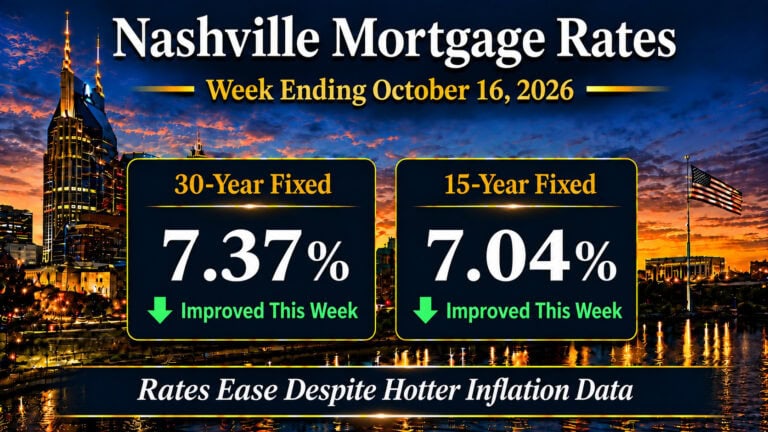
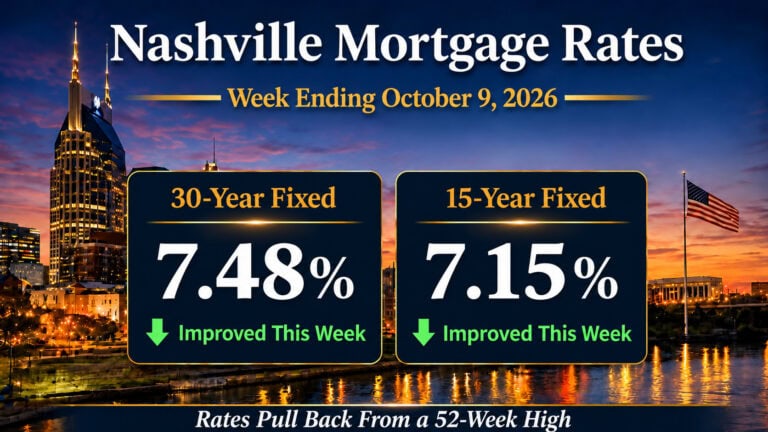
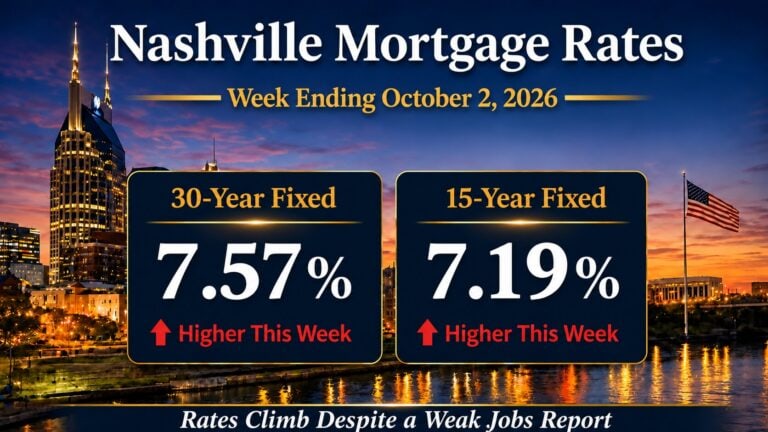
Freddie Mac reported that the 30 year fixed mortgage rate increased to 6.40% from 6.37% the prior week. The 15 year fixed rate moved higher to 6.06% from 6.03%.
Adjustable products also increased, with the one year ARM rising to 5.73% and the five year hybrid adjustable rate ticking up to 6.12%.
Historical Context
This article was originally published during the mid 2000s housing cycle transition. The figures below reflect mortgage market conditions and economic expectations at that time.
Small Moves, Real Payment Impact
While a change from 6.37% to 6.40% appears modest, incremental rate drift can meaningfully affect monthly payments, especially for larger loan balances.
Mortgage markets often move in tight ranges during transitional economic periods. Small weekly fluctuations reflect adjustments in bond pricing rather than dramatic structural shifts.
For a broader perspective on how weekly movements fit within longer term mortgage trends, review our Nashville mortgage rates today page.
Trading Within a Range
Periods of sideways rate movement are common when markets are balancing mixed economic data. Rates may edge up one week and retrace the next, creating a narrow trading band.
During these phases, affordability pressure tends to build gradually rather than abruptly. Borrower behavior often becomes more sensitive to small rate changes, particularly when home prices remain elevated relative to income growth.
Understanding range bound environments is essential when evaluating financing strategy during cyclical housing transitions.