Mortgage rates remained historically low as buyer and seller expectations stayed far apart
November Nashville mortgage rate update showed mortgage rates drifting slightly higher, even as government intervention continued supporting historically low borrowing costs.
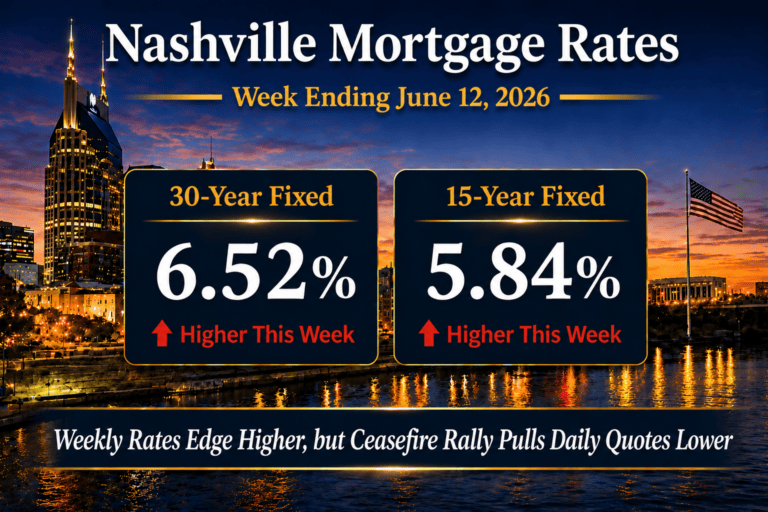
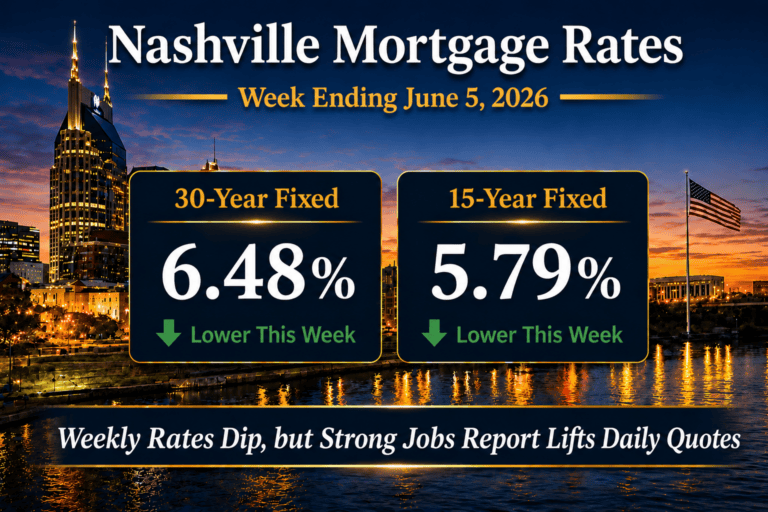
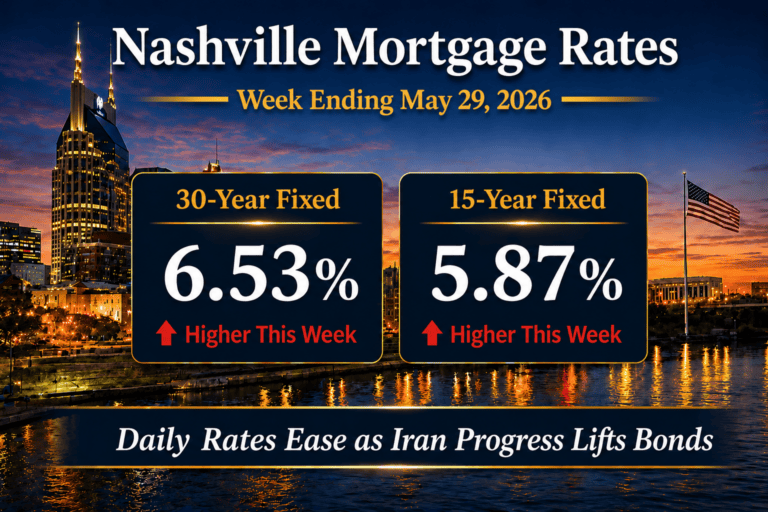
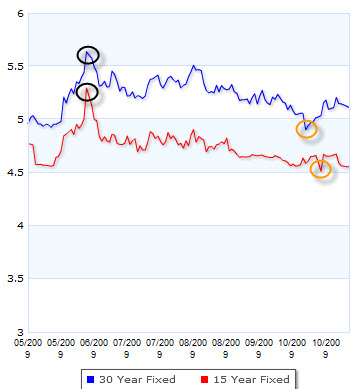
According to Freddie Mac, the average 30-year fixed mortgage rate increased to 5.03%, up slightly from the previous week. Meanwhile, 15-year fixed rates rose to 4.46%.
These financing conditions continued to influence buyer activity across the Nashville real estate market, particularly among buyers focused on affordability and long-term payment stability.
November Nashville Mortgage Rate Update
Mortgage rates during this period remained heavily influenced by federal policy. Government purchases of mortgage-backed securities helped keep rates near the 5% threshold.
This environment triggered a major refinancing wave. Refinances reportedly accounted for nearly 70% of mortgage activity during the year.
Lower rates improved affordability and reduced monthly payments for many homeowners.
Mortgage Applications Begin to Slow
While rates remained historically attractive, mortgage application activity declined in the short term. The Mortgage Bankers Association reported that applications had fallen more than 25% over a two-week period.
However, expectations remained that rates would move lower again, potentially bringing buyers and refinance activity back into the market.
This highlights how sensitive housing demand can be to even small movements in financing costs.
Why Mortgage Rates Were Not the Main Problem
Despite favorable borrowing conditions, transaction activity remained uneven. Mortgage rates themselves were not the primary obstacle.
Instead, the market was experiencing a pricing disconnect. Many buyers expected lower prices, while sellers were still anchored to prior valuations.
This gap slowed transaction volume and delayed broader market normalization.
Distressed Sellers Continue to Drive Activity
The properties moving most consistently were tied to motivated sellers. This included builders, developers, corporate relocations, and distressed homeowners.
Well-priced listings continued to attract attention quickly, particularly when sellers adjusted expectations to current market conditions.
This pattern aligns with broader housing market trends, where pricing realism becomes increasingly important during transitional markets.
What This Meant for Nashville Buyers
For qualified buyers, the environment still presented opportunity. Financing costs remained relatively low, and motivated sellers created additional negotiating leverage.
At the same time, buyers needed to move decisively when attractive properties became available. Inventory that was priced correctly often sold quickly despite broader uncertainty.
Why This Still Matters
Housing markets depend on both affordability and psychology. Low mortgage rates alone do not create strong transaction volume if buyers and sellers remain far apart on pricing expectations.
Understanding how financing conditions interact with seller behavior is essential for evaluating market cycles and identifying opportunity.
For more financing insights, explore Nashville mortgage rates and financing.