Mortgage rates moved modestly lower this week, continuing the pattern of small fluctuations seen throughout the summer.
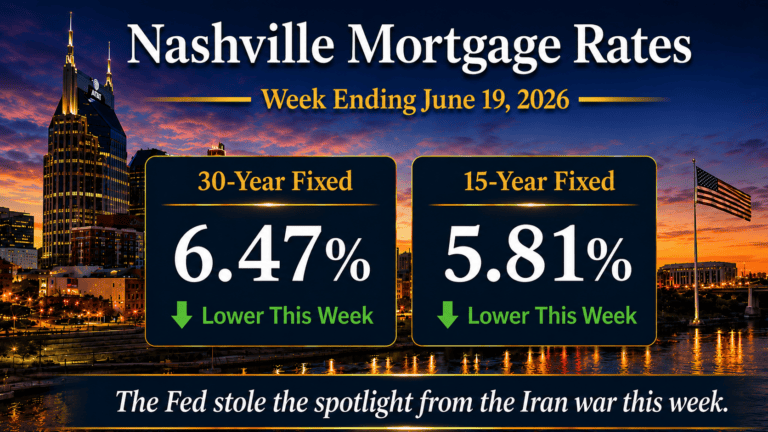
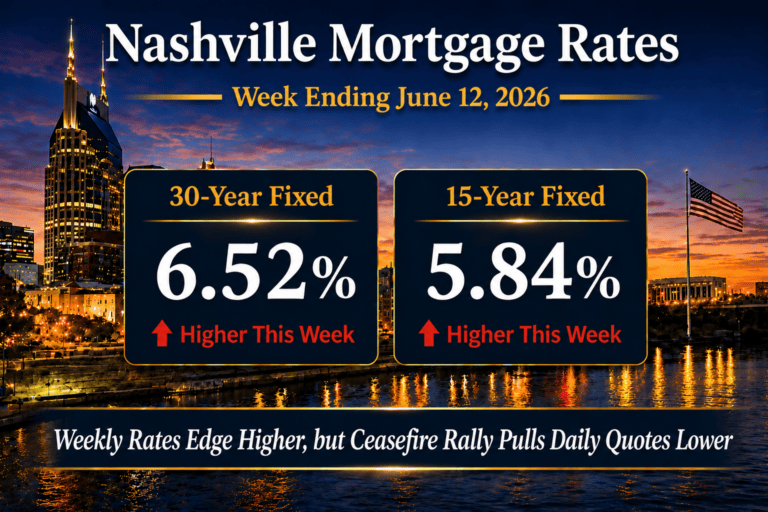
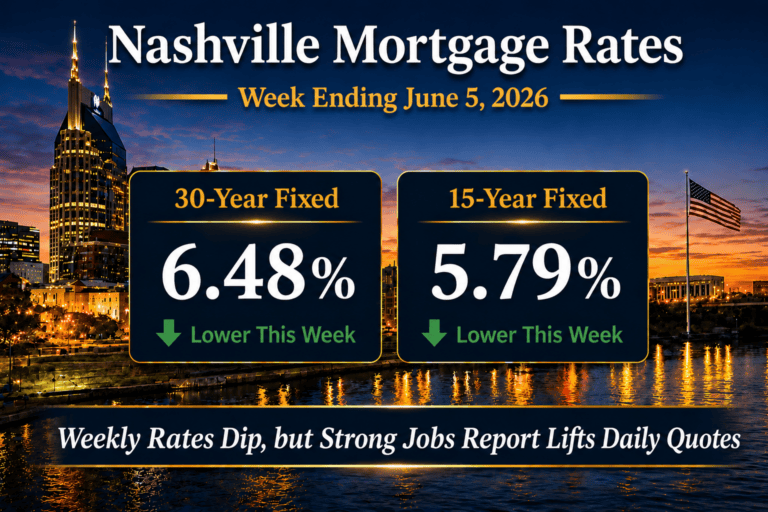
According to Freddie Mac, the 30-year fixed mortgage rate declined to 6.47%, down from 6.52% over the prior three weeks. The 15-year fixed rate also eased to 6.00%, while the five-year adjustable mortgage rate slipped to 5.99%. The one-year ARM moved higher to 5.29%, reflecting mixed movement across loan types.
A Gradual Shift in Borrowing Costs
The slight decline in long-term rates suggests a modest shift in investor sentiment.
Mortgage rates are closely tied to bond market activity, and small decreases like this often indicate movement toward safer assets or reduced inflation expectations. However, the mixed behavior across adjustable-rate products highlights the uncertainty that continued to define the market.
Market Conditions in Nashville
At the same time, the broader Nashville housing market was continuing to adjust.
Sales activity had slowed compared to the previous year, and inventory levels were building. These conditions created a more competitive environment, where buyers had more options and sellers faced increased pressure to differentiate their properties.
Even with slightly lower mortgage rates, overall market momentum remained influenced by supply levels and broader economic conditions.
Historical Context
This update was originally published during the late-2000s housing downturn, when mortgage rates were fluctuating within a relatively narrow range while housing markets across the country were experiencing declining transaction volume.
During this period, financial institutions were navigating liquidity challenges and tightening lending standards. These factors contributed to ongoing volatility in mortgage markets, even as rates showed occasional downward movement.
Nashville followed similar patterns, although its more stable fundamentals helped limit the severity of the downturn compared to more heavily impacted regions.
Watching Mortgage Rate Trends
Mortgage rates are shaped by inflation expectations, bond market movements, and overall economic conditions.
Understanding how these forces interact helps provide context for both short-term changes and long-term cycles. To see how current conditions compare, you can follow Nashville mortgage rates today.